

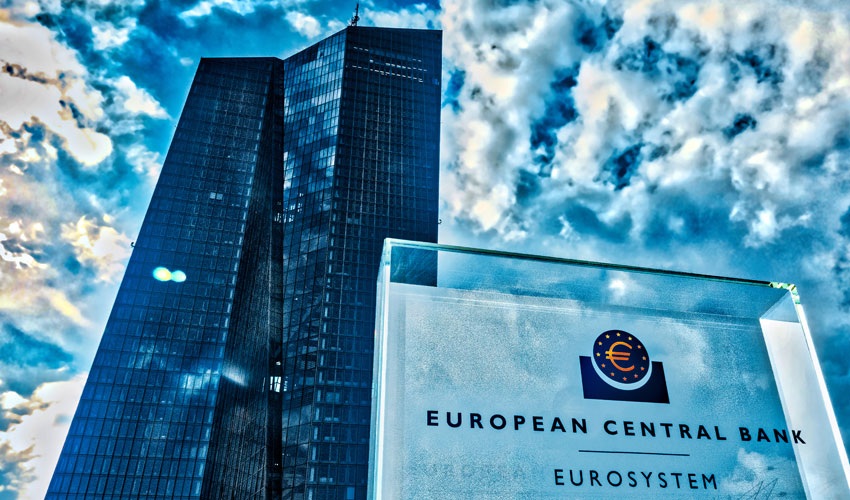
The European Central Bank raised its key interest rate by 25 basis points to 2.25% on Thursday, marking its first increase in nearly three years as the ongoing U.S.-Iran war continues to drive energy costs higher and push inflation further from target.
The decision, widely anticipated by markets with near-100% odds priced in according to LSEG data, reflects the ECB’s determination to anchor inflation expectations amid a global energy shock that has disrupted supply chains and complicated the policy outlook across the euro zone.
In its statement, the Governing Council explicitly linked the move to the Middle East conflict.
Register for the next Tekedia Mini-MBA.
Register for Tekedia AI in Business Masterclass.
Join Tekedia Capital Syndicate and co-invest in great global startups.
“The war in the Middle East is generating inflation pressures, and the decision to raise rates is robust across a range of scenarios mapping out how the shock might evolve and affect the medium-term outlook for the euro area,” it said.
The bank also revised its economic forecasts significantly. Headline inflation is now projected to average 3% in 2026, well above the 2% target, before moderating to 2.3% in 2027 and 2% in 2028. These upward revisions stem from expectations of sustained higher energy prices feeding through to food, goods, and services costs.
Growth projections were cut, with the ECB now forecasting euro zone expansion of just 0.8% in 2026, followed by 1.2% in 2027 and 1.5% in 2028. Officials cited a “more pronounced impact of the war on commodity markets, real incomes and confidence” as the primary reason for the downgrades.

ECB President Christine Lagarde, speaking after the decision, struck a cautious tone while emphasizing flexibility.
“The outlook remains uncertain, with upside risks for inflation, and downside risks for economic growth. We are not pre-committing to a particular rate path. The full implications of the war for medium-term inflation and growth will depend on the intensity and duration of the energy price shock, as well as the scale of its indirect and second-round effects,” she said.
The War’s Enduring Economic Shock
Now past the 100-day mark, the U.S.-Iran conflict has created one of the most severe energy supply disruptions in recent history. The effective closure of the Strait of Hormuz and damage to production facilities have tightened global oil and gas markets, driving up costs for importers across Europe. This has compounded existing challenges for the eurozone economy, which was already navigating subdued growth and sticky core inflation even before the war began.

The ECB’s decision is seen as a difficult trade-off: acting to prevent second-round effects, such as wage-price spirals, while acknowledging that aggressive tightening could further weigh on an already fragile recovery. Lagarde’s refusal to signal a clear tightening cycle preserves optionality, allowing the bank to respond to evolving developments in the Middle East.
The hike comes at a moment of heightened uncertainty. Analysts note that while markets had priced it in, the accompanying forecast revisions underscore the war’s lasting impact on the outlook. Higher energy prices are squeezing real incomes, dampening consumer spending, and complicating fiscal policy for governments already facing elevated borrowing costs.
For businesses, the combination of higher input costs and rising borrowing rates adds pressure at a time when confidence is already subdued. Export-oriented sectors are expected to benefit from a weaker euro, but domestic demand remains vulnerable.
Analysts also note that the decision underpins the limits of monetary policy in addressing supply-driven shocks. According to them, the ECB can influence demand and expectations, but it cannot directly resolve geopolitical disruptions in energy markets. This reality has prompted calls for greater coordination between fiscal, energy, and monetary authorities across the euro zone.
However, the Iran war has exposed Europe’s lingering dependence on imported energy and the vulnerabilities in global supply chains. Even with some diplomatic progress reported in recent days, the risk of renewed escalation remains high, keeping energy prices volatile and inflation risks tilted to the upside.
Lagarde and her colleagues are expected to face continued scrutiny over how they balance these pressures. This is because, according to economists, a “one and done” hike could reassure markets that the ECB is not embarking on an aggressive tightening cycle, but persistent energy costs or second-round effects could force further action. Conversely, holding back too much risks de-anchoring inflation expectations at a sensitive time.
Policymakers in national capitals may be expected to step up with targeted fiscal support, particularly for energy-intensive industries and vulnerable households, to complement the ECB’s efforts.