

El Salvador is making a bold counter-cyclical move, stepping into the gold market during a price dip while maintaining its unwavering stance on Bitcoin.
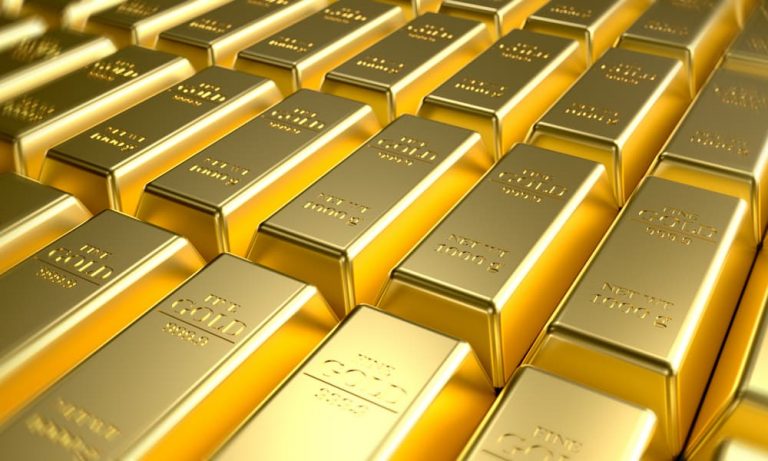
The Latin American country is reported to have purchased 9,298 troy ounces of Gold worth $50 million during a sharp price drop after the asset hit a record high near $5,600 per ounce.
Between September 2025 and January 2026, El Salvador has acquired a total of 23,297 troy ounces of gold. This is the second operation of this type carried out by the country’s Central Bank since 1990, with reserves rising to 67,403 ounces, valued at about $360 million.
Register for Tekedia Mini-MBA edition 20 (June 8 – Sept 5, 2026).
Register for Tekedia AI in Business Masterclass.
Join Tekedia Capital Syndicate and co-invest in great global startups.
Register for Tekedia AI Lab.
El Salvador’s recent purchase of Gold signals a diversified reserve approach as global economic uncertainty continues to reshape how nations think about store-of-value assets. It also aligns with international trends in which central banks hold 20% of reserves in gold for stability, as peer-reviewed IMF data show gold’s role in hedging inflation and currency risks relative to fiat alternatives.
The Latin American country has pursued one of the world’s most unconventional sovereign reserve strategies since adopting Bitcoin as legal tender in 2021. The government currently holds roughly 7,547 BTC (valued at approximately $635 million at current levels), making it one of the largest nation-state Bitcoin holders.
Adding physical gold provides classic diversification and inflation-hedge characteristics that central banks worldwide have relied on for decades. Gold’s role as a non-correlated store of value becomes especially attractive during periods of fiat currency volatility, geopolitical tension, or uncertainty around digital-asset regulation.

By contrast, Bitcoin offers scarcity (21 million cap), portability, divisibility, and, in El Salvador’s view, asymmetric upside potential as global adoption grows. Holding both asset positions positions the country to benefit from strength in either traditional safe-haven or next-generation digital-reserve narratives.
Gold has reportedly outperformed Bitcoin over the past five years for the first time. As of January 30, 2026, Bitcoin sat at $84,500 after dropping over 30% from its $125,000 peak, while Gold held steady near $5,200 per ounce. From 2021 levels, Bitcoin was at $34,300, and Gold traded at $1,850, the latter has delivered 181% return compared to BTC’s 146%, underscoring Gold as a safe haven amid global liquidity and risks.
The rally accelerated as the US dollar slid toward four-year lows, pushing investors out of fiat currencies and into hard assets. When confidence in the paper fades, gold tends to become the default parking spot.

Amid Gold’s surging price and Bitcoin decline, American investor and Gold advocate Peter Schiff has predicted a U.S dollar collapse and crisis worse than 2008, with central banks dumping dollars for Gold, explaining the rush into precious metals. Gold hit a record $5,400 on January 27, 2026, up over 100% since late 2024, driven by Trump’s tariff threats, geopolitical risks, and low U.S. interest rates weakening the dollar.
Central banks bought 297 tons of gold through November 2025, led by emerging markets like Poland, with 2026 forecasts indicating sustained demand for diversification amid global uncertainty.
Schiff further notes that those who currently own Bitcoin would have been better off buying Gold.
He wrote on X,
“Bitcoin is now worth just 15.5 ounces of gold, down 57% from its 2021 high and just 10% above its 2017 high. Despite all the hype and support from Wall Street and the Trump administration, most people who now own Bitcoin would have been better off buying gold or silver instead.”
Looking ahead
While El Salvador’s $50 million Gold purchase is modest compared to the balance sheets of major central banks, the symbolic and strategic value for a small nation is significant. The country continues to experiment with a hybrid hard-asset reserve model that few other countries are replicating at the sovereign level.
Whether this dual-track approach (gold for stability, Bitcoin for growth) proves prescient remains an open question. However, as global confidence in fiat currencies continues to face pressure, El Salvador’s willingness to buy both gold and Bitcoin during market dips positions it as a unique case study in sovereign-level financial experimentation.