

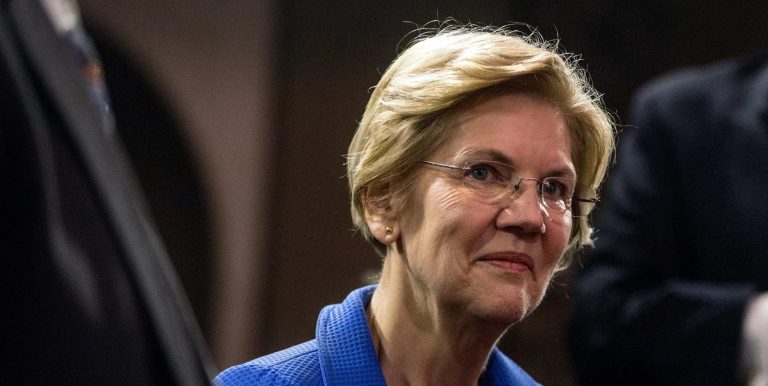
U.S. Senator Elizabeth Warren has criticised Nvidia’s decision to reinstate Jensen Huang as chief executive officer, calling the move “reckless” and warning it could put American national security at risk.
Warren argues that Huang’s return as NVIDIA’s chief executive does not resolve the outstanding questions surrounding the company’s business dealings with China and its compliance with American restrictions on advanced semiconductor exports.
In a statement, she said,
Register for the next Tekedia Mini-MBA.
Register for Tekedia AI in Business Masterclass.
Join Tekedia Capital Syndicate and co-invest in great global startups.
“The reckless decision to bring Jensen Huang back as CEO does not change the fact that Mr. Huang, NVIDIA executives, and the company’s board still owe Congress answers about the company’s compliance with U.S. export controls.
“The Trump Administration also needs to explain to Congress what ‘input’ was given and by which senior officials in the United States government to support his reinstatement. Jensen Huang’s return only increases the urgency of passing bipartisan export control bills into law and making sure NVIDIA does not lobby to kill that legislation and put our national security at risk.”
Warren believes NVIDIA’s executives, its board and Huang must explain to Congress whether the company has fully complied with these restrictions and whether any of its business activities have undermined U.S. national security interests.

Her criticism comes amid growing scrutiny of Nvidia’s corporate leadership, alleged foreign intelligence connections and the company’s compliance with US restrictions on advanced semiconductor exports to China.
Reports revealed that Nvidia’s board voted unanimously to reinstate Huang as president, CEO, and board director on November 23, less than two weeks after he resigned on November 12.
His departure followed reports concerning alleged personal relationships and an alleged connection involving a Chinese businesswoman suspected by US intelligence officials of having links to Chinese intelligence operations.

The allegations raised questions about potential security vulnerabilities involving one of America’s most strategically important technology companies.
Nvidia initially accepted Huang’s resignation and appointed Chief Financial Officer Colette Kress as interim CEO before reversing its decision following further discussions and input from senior US government officials.
However, Warren believes the decision does not resolve the outstanding national security questions surrounding the company and its leadership.
At the centre of Warren’s concerns is Nvidia’s position in the global artificial intelligence industry. The company manufactures some of the world’s most powerful graphics processing units (GPUs), which are essential for training advanced AI models, developing sophisticated computing systems and supporting applications with potential military and intelligence uses.
The United States has increasingly treated advanced semiconductor technology as a national security asset, introducing export restrictions to prevent China from accessing computing capabilities that could accelerate its military and technological development.
Washington is particularly concerned that access to high-performance AI processors could strengthen China’s capabilities in autonomous weapons, military intelligence, surveillance, supercomputing and advanced artificial intelligence systems.
Consequently, any potential compromise involving Nvidia’s leadership, confidential corporate information or export-control procedures carries implications beyond the company’s commercial operations.
Warren’s criticism also comes amid questions about President Donald Trump’s involvement in Huang’s reinstatement. Nvidia disclosed that its board received input from senior US government officials before making the decision, while Trump subsequently acknowledged playing a role in encouraging the board to bring back the company’s founder.
The administration’s involvement has prompted lawmakers to question the circumstances surrounding the reinstatement, the information provided to Nvidia’s board and the basis for assurances that Huang’s return presents no national security threat.
The controversy has also attracted criticism from Republican lawmakers, with Senator John Cornyn questioning the administration’s assurances and asking what evidence supported the conclusion that the decision posed no security risk.
Meanwhile, Nvidia has maintained confidence in its decision and indicated that an independent investigation into the reported foreign intelligence effort targeting Huang would continue.
The company has also outlined additional compliance measures, including establishing a National Security and Export Control Committee comprising independent directors and recruiting a Chief Compliance Officer to oversee company-wide compliance.
The developments could lead to further congressional investigations, with lawmakers seeking explanations about the alleged foreign intelligence operation, Nvidia’s export-control compliance and the circumstances surrounding Huang’s return.
For Nvidia, the controversy introduces another layer of regulatory and governance risk at a time when its chips remain central to the global AI race.
Although Huang’s reinstatement could reassure investors who view his leadership as critical to the company’s competitive position, prolonged congressional scrutiny could expose Nvidia to tighter regulatory oversight and additional restrictions on its international business.