

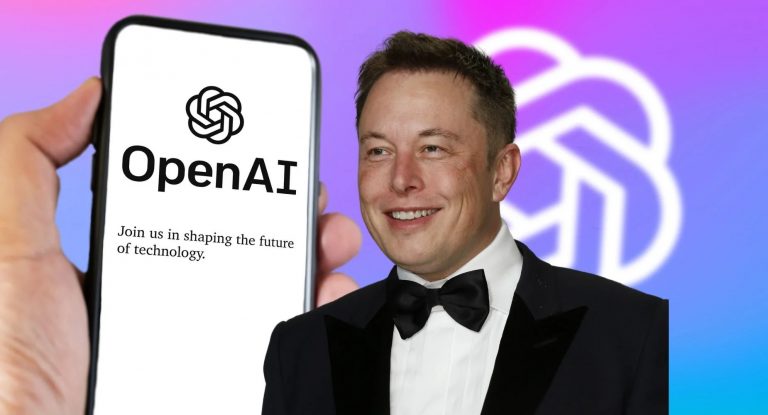
Elon Musk, along with a consortium of investors, has submitted an unsolicited offer to take control of OpenAI, valuing the artificial intelligence startup at $97.4 billion.
The bid, which was confirmed by CNBC on Monday, seeks to acquire the nonprofit entity that oversees OpenAI, with Musk and his backers arguing that the company has strayed from its original mission. Musk, who co-founded OpenAI in 2015 as a nonprofit research lab focused on AI safety, has been openly critical of its transformation into a for-profit entity, particularly its partnership with Microsoft.
Musk’s attorney, Marc Toberoff, formally submitted the offer on Monday, stating that the proposed funds would be used exclusively to further OpenAI’s original charitable mission. In a statement sent to CNBC, Toberoff emphasized the need for OpenAI to return to its roots, saying, “It’s time for OpenAI to return to the open-source, safety-focused force for good it once was.”
Register for Tekedia Mini-MBA edition 20 (June 8 – Sept 5, 2026).
Register for Tekedia AI in Business Masterclass.
Join Tekedia Capital Syndicate and co-invest in great global startups.
Register for Tekedia AI Lab.
The investor group backing Musk’s bid includes several of his long-time allies and financial supporters across his various ventures. Among them are Baron Capital Group, Valor, Atreides, Vy Capital, Joe Lonsdale’s 8VC, and an investment vehicle led by Endeavor CEO Ari Emanuel. The bid, however, comes amid heightened tensions between Musk and OpenAI CEO Sam Altman, with the two engaged in a bitter public and legal feud over the company’s direction.
OpenAI quickly rejected Musk’s bid, with Altman ridiculing the offer in a post on X (formerly Twitter). In response to the $97.4 billion offer, Altman quipped, “No thank you, but we will buy Twitter for $9.74 billion if you want.” The comment was a pointed jab at Musk’s troubled $44 billion acquisition of Twitter, which has since been rebranded as X. The platform has struggled financially under Musk’s leadership, with declining user engagement and a loss of advertisers.
Musk, known for his unfiltered social media presence, fired back at Altman by calling him a “swindler.” In another response to a different user, he referred to him as “Scam Altman.” The public exchange underlines the deepening hostility between the two former OpenAI co-founders.

Musk’s bid to acquire OpenAI comes at a time when the company has solidified its position as a dominant force in artificial intelligence. Since the launch of ChatGPT in 2022, OpenAI has attracted billions in investment, spurring a race among tech giants to develop cutting-edge AI technologies. The company is now on track for an even higher valuation, with reports indicating that SoftBank is close to finalizing a $40 billion investment in OpenAI, pushing its estimated worth to $260 billion.
Microsoft, OpenAI’s largest backer, has invested more than $13 billion in the company, a partnership that has fueled Musk’s grievances. He has accused OpenAI of essentially becoming a subsidiary of Microsoft, despite its nonprofit origins. His lawsuit against OpenAI claims that the organization has violated its founding agreement by transitioning into a profit-driven enterprise and forming a close financial relationship with a major corporate entity.
Adding a political dimension to the unfolding saga, OpenAI has also partnered with SoftBank and Oracle in a project called Stargate, which was announced by President Donald Trump after his inauguration. The initiative is designed to funnel billions of dollars into AI infrastructure in the United States, further entrenching OpenAI’s influence in the global AI industry.

The project’s announcement under Trump’s administration raises questions about whether OpenAI is aligning itself with certain political and corporate interests, a concern that Musk has repeatedly raised.
Musk’s bid for OpenAI, if successful, could lead to a dramatic restructuring of the AI industry. Reports suggest that xAI, Musk’s own artificial intelligence startup, could merge with OpenAI in the event of an acquisition. Such a move would position Musk at the helm of one of the most powerful AI research organizations in the world, giving him significant leverage over the future of artificial intelligence development.
Beyond the battle for control, regulatory hurdles may also determine OpenAI’s future. On January 7, Musk’s legal team sent a letter to the attorneys general of California and Delaware urging them to open the bidding process for OpenAI to external investors. By doing so, Musk aims to challenge OpenAI’s current trajectory, which heavily favors SoftBank’s investment and Microsoft’s influence.
Musk’s latest move underlines his determination to reclaim a role in shaping the company he once co-founded. His lawsuit against OpenAI, coupled with his aggressive takeover attempt, illustrates his belief that the company has abandoned its commitment to open-source AI research and transparency.
However, critics argue that Musk’s motivations may not be purely altruistic. With his own AI startup, xAI, attempting to gain ground in the AI arms race, some analysts speculate that his bid to acquire OpenAI is as much about eliminating a competitor as it is about restoring its nonprofit values.
The battle for OpenAI is now unfolding on multiple fronts—legal, financial, and personal. With OpenAI standing firm against Musk’s advances, Microsoft deepening its ties to the company, and SoftBank poised to inject billions into its operations, Musk’s takeover bid has slim chances.