

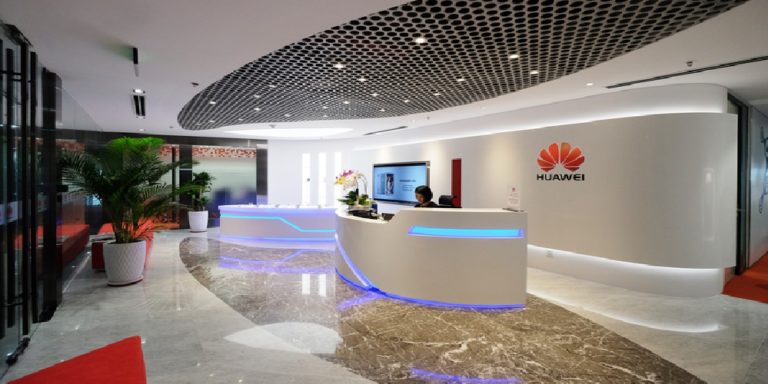
The European Union is moving closer to a binding crackdown on Chinese-made technology in sensitive sectors, signaling a sharp escalation in its effort to reduce strategic dependence on Beijing amid rising geopolitical tensions and intensifying pressure from Washington.
According to the Financial Times, Brussels is preparing a proposal that would force EU member states to phase out equipment from companies deemed “high-risk vendors,” including Huawei and ZTE, from critical infrastructure such as telecommunications networks and solar energy systems. The plan would effectively end the bloc’s current voluntary approach and replace it with a mandatory regime under its broader cybersecurity framework.
If adopted, the shift would mark one of the EU’s most consequential security-driven technology interventions to date, with far-reaching implications for telecom operators, energy providers, supply chains, and EU–China relations.
Register for Tekedia Mini-MBA edition 20 (June 8 – Sept 5, 2026).
Register for Tekedia AI in Business Masterclass.
Join Tekedia Capital Syndicate and co-invest in great global startups.
Register for Tekedia AI Lab.
From voluntary guidelines to binding rules
Since 2020, the EU has relied on a non-binding “toolbox” that encourages member states to assess and mitigate risks from foreign vendors in 5G and other critical networks. While some countries, including Sweden and Denmark, moved quickly to restrict Chinese suppliers, others took a far more cautious stance.
Large economies such as Germany and Spain resisted outright bans, citing the cost of replacing existing equipment, potential disruptions to network stability, and the lack of sufficient alternatives at scale. As a result, Huawei equipment remains deeply embedded in parts of Europe’s telecom infrastructure, particularly in legacy 4G networks that underpin 5G roll-outs.
EU officials now appear convinced that the voluntary model has reached its limits. The proposed cybersecurity initiative, expected to be unveiled on Tuesday, would compel governments to act, closing loopholes that have allowed national discretion to override bloc-wide security concerns.

Notably, the scope of the proposal goes beyond telecommunications. By extending restrictions to solar energy systems, the EU is signaling that it now views energy infrastructure through the same national security lens as digital networks.
China dominates large segments of the global solar supply chain, from polysilicon to finished panels, and European policymakers have grown increasingly uneasy about that reliance as renewable energy becomes central to economic and industrial strategy. For Brussels, the issue is no longer just cybersecurity, but long-term resilience, control over critical inputs, and protection against coercive leverage.
The timelines for phasing out Chinese equipment would vary depending on the sector, perceived risk, and the availability of alternative suppliers. Officials cited in the report said cost considerations would also be factored in, suggesting a gradual transition rather than an abrupt dismantling of existing infrastructure.

Industry resistance and economic trade-offs
Telecom operators are likely to push back. Industry groups have repeatedly warned that forced equipment replacement could cost billions of euros, slow network upgrades, and weaken Europe’s competitiveness in 5G and future 6G technologies. Many operators are already grappling with heavy capital expenditure, weak revenue growth, and rising energy costs.
Replacing Chinese equipment is not simply a matter of switching vendors. Networks are deeply integrated systems, and removing one supplier often requires broader redesigns. European alternatives such as Ericsson and Nokia stand to benefit commercially, but scaling up quickly enough to meet demand remains a challenge.
There are also concerns that higher infrastructure costs could ultimately be passed on to consumers or delay digital inclusion goals, particularly in rural and underserved regions.
Alignment with the United States
The EU’s move brings it closer to the U.S. position, which has taken a far more aggressive stance. Washington banned approvals of new telecommunications equipment from Huawei and ZTE in 2022 and has consistently urged allies to exclude Chinese vendors, framing the issue as a matter of national security and intelligence protection.
While European officials have often bristled at what they see as American pressure, the convergence of policy suggests a growing alignment driven by shared threat assessments rather than diplomacy alone.
Strained EU–China relations
For Beijing, the proposal is likely to be viewed as another sign that Europe is hardening its stance. China has previously accused the EU of politicizing trade and discriminating against Chinese companies, warning that such measures could damage economic ties.
Huawei, once a symbol of deep technological cooperation between China and Europe, has already felt the chill. The company has been reassessing the future of a newly completed manufacturing plant in eastern France, amid regulatory uncertainty, slow 5G deployment, and shrinking market access across the continent.
Taken together, the proposal reflects a broader recalibration of EU policy toward “economic security.” Brussels has increasingly emphasized de-risking rather than full decoupling, but mandatory exclusions from critical infrastructure represent a more forceful use of regulatory power.
The challenge now lies in execution. Member states must balance security priorities with economic realities, manage industry fallout, and ensure that Europe does not simply swap one dependency for another.