

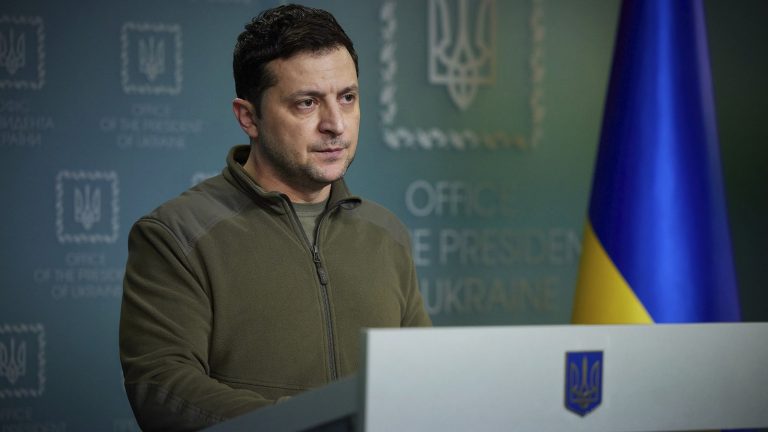
European leaders have unveiled new peacekeeping initiatives for Ukraine, seeking to reassert the continent’s influence in potential peace negotiations. The move comes as tensions between Kyiv and Washington hit a boiling point following last Friday’s contentious Oval Office meeting, where U.S. President Donald Trump and Vice President J.D. Vance sharply rebuked Ukrainian President Volodymyr Zelenskyy.
The U.S. leaders accused Zelenskyy of ingratitude for U.S. aid and of “gambling with World War III,” charges that Zelenskyy strongly denied.
The hastily arranged summit in London on Sunday showcased a united front among European leaders, who are keen to mediate in any future peace talks. The meeting was meant to position Europe as a relevant player amid the deepening rapprochement between the U.S. and Russia. However, while European leaders discussed peacekeeping strategies, they stopped short of pledging the substantial financial support Ukraine needs.
Register for Tekedia Mini-MBA edition 20 (June 8 – Sept 5, 2026).
Register for Tekedia AI in Business Masterclass.
Join Tekedia Capital Syndicate and co-invest in great global startups.
Register for Tekedia AI Lab.
Zelenskyy has previously stated that Ukraine requires at least $250 billion from Europe to sustain its war effort against Russia. Despite these calls, Europe has yet to provide firm financial commitments, leaving Ukraine heavily reliant on the U.S., which remains its largest donor by a wide margin. The lack of European funding underscores a critical gap in the continent’s strategy, as its leaders push to play a central role in peacekeeping without offering the financial resources needed to back their ambitions.
A Coalition of the Willing – But Not Funding
British Prime Minister Keir Starmer announced that a “coalition of the willing” was prepared to deploy peacekeeping troops to Ukraine if a peace deal materializes. The U.K. and France led the discussions, promoting an initial one-month truce between Ukraine and Russia to test Moscow’s commitment to peace.
“Through my discussions over recent days, we’ve agreed that the U.K., France, and others will work with Ukraine on a plan to stop the fighting. Then we’ll discuss that plan with the United States and take it forward together,” Starmer told the BBC.

However, beyond troop commitments, Europe’s reluctance to offer financial aid weakens its position. With the U.S. already providing billions of dollars in military and humanitarian assistance, the burden of sustaining Ukraine’s war economy remains disproportionately on Washington.
Returning to the U.S. As The Last Resort
With Europe hesitating on financial support, Ukraine may have no choice but to return to the U.S. for more aid. Analysts say this dependence on Washington gives the U.S. considerable leverage in shaping any peace agreement between Ukraine and Russia. Should a peace deal emerge through U.S.-led negotiations, the terms are likely to favor American interests, potentially at the expense of Ukraine’s strategic goals.
A U.S.-brokered peace deal would effectively allow Washington to dictate the settlement’s parameters, sidelining both European input and Ukraine’s autonomy in negotiations. This scenario presents a significant risk for Kyiv, as Trump’s previous statements indicate a preference for a quick ceasefire, possibly achieved through economic deals with Russia, such as mineral extraction agreements, rather than robust security guarantees for Ukraine.

Europe’s attempt to mediate between Kyiv and Washington is also complicated by recent developments. U.S. and Russian officials began discussions two weeks ago to lay the groundwork for ending the war, sidelining European influence. The lack of a financial commitment from Europe only amplifies the perception that the continent is struggling to back up its diplomatic aspirations with tangible support.
Gesine Weber, a fellow at the German Marshall Fund, highlighted this challenge saying: “We’re now basically in a wait-and-see position as to what extent Washington can be brought on board with this plan that they’re presented with.”
This implies that without financial leverage, Europe’s proposals may lack the necessary weight to influence outcomes.
The Financial Divide
The European Union has so far provided around €70 billion ($75 billion) in combined military, financial, and humanitarian aid to Ukraine, a figure that pales in comparison to the over $113 billion committed by the U.S. since the war began. European nations are grappling with their own economic challenges, from inflation to rising defense budgets, limiting their ability to contribute further to Ukraine.
Moreover, Europe has struggled to meet its broader defense spending goals. Despite repeated calls to increase military budgets, many European countries remain heavily dependent on U.S. military support through NATO. Trump’s frequent criticisms of Europe’s defense contributions have only added to the strain, pushing European leaders to assert a more independent stance without the means to support it financially.
Challenges to European Peacekeeping Proposals
Russia has consistently opposed the idea of European troops on Ukrainian soil, and the U.S. has reiterated that no American soldiers would participate in a peacekeeping mission. Without clear commitments from both Washington and Moscow, Europe’s peacekeeping plans risk falling flat.
Carsten Nickel, deputy director of research at risk consultancy Teneo, noted, “After the London summit on Ukraine, the concrete outcomes are limited. Apart from new air defense missiles and financial aid, the next task will be to substantiate, beyond the U.K. and France, the ‘coalition of the willing’ of countries ready to deploy troops to Ukraine.”
Nickel emphasized that Europe’s proposals must be backed by substantial financial and military resources to avoid being perceived as symbolic gestures without real impact.
While European leaders emphasized unity, the U.S. and Russia have not publicly reacted to the proposals. President Trump, in a post on Truth Social, questioned Europe’s strategy, saying, “We should spend less time worrying about Putin and more time concerned about crime, so that we don’t end up like Europe.”
Trump’s statement underscores a broader hesitation within the U.S. administration to deepen its involvement in the conflict. Analysts suggest that Trump’s preference for a quick ceasefire, possibly through economic incentives to Russia, contrasts sharply with Europe’s more intricate peacekeeping proposals.
The Risk of Undermining Ukraine’s Position
A peace deal dictated by Washington would likely focus on immediate stabilization rather than long-term security guarantees for Ukraine. Analysts warn that such a deal might involve concessions that Kyiv would find difficult to accept, such as territorial compromises or restrictions on its future military alliances.
“The European plea for involvement potentially complicates the equation between Russia and the U.S.,” Nickel explained. He noted that Europe’s ambition to serve as a mediator might clash with Trump’s more transactional approach, which prioritizes quick results over strategic depth.
For Ukraine, the options are increasingly stark. Without the necessary funding from Europe, Zelenskyy might be forced to accept terms set by the U.S., risking a settlement that could undermine Ukraine’s long-term sovereignty and security. Meanwhile, analysts believe that Europe’s inability to offer a robust alternative leaves the continent on the periphery of critical negotiations that could reshape the geopolitical landscape.
As the war in Ukraine grinds on, the question remains whether Europe can transition from a peripheral role to a central figure in crafting a lasting peace—or whether its ambitions will be overshadowed by the geopolitical realities dictated by Washington and Moscow.