

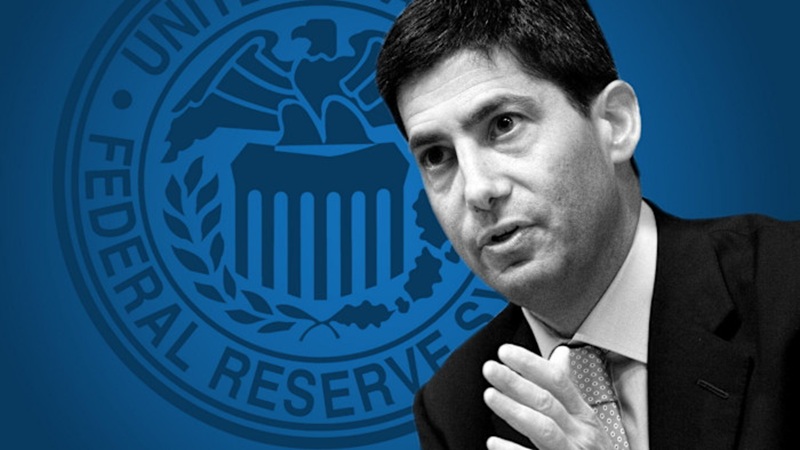
The Federal Reserve raised interest rates by 25 basis points on Wednesday and signaled that another increase could follow this year, as policymakers confront inflation that has remained stubbornly above target amid surging oil prices and continuing economic strength.
The Federal Open Market Committee voted unanimously, 12-0, to raise its benchmark federal funds rate to a target range of 3.75% to 4%. The increase was widely anticipated by financial markets, which had priced in more than a 90% probability of a hike ahead of the meeting.
“Inflation remains elevated,” the committee said in its post-meeting statement, adding that the decision would support “a timelier return” to its 2% inflation goal.
Register for the next Tekedia Mini-MBA.
Register for Tekedia AI in Business Masterclass.
Join Tekedia Capital Syndicate and co-invest in great global startups.
Fed Chair Kevin Warsh said policymakers had concluded that inflation was still too high to justify leaving interest rates unchanged.
“Inflation has been too high … for too long,” Warsh said at a news conference. “We must be confident that underlying inflation is moving to our objective clearly and at sufficient speed. Today, the FOMC decided that this standard has not been satisfied.”
The decision marks a significant shift for a central bank that had kept rates unchanged throughout the year before expectations began turning toward a hike in late August.

The Fed is now confronting an unusually complicated inflation environment. Oil prices have surged amid conflict in the Middle East, while tariffs continue to affect prices across parts of the economy. At the same time, the labor market and broader economy have remained sufficiently resilient to give policymakers room to prioritize inflation rather than move toward lower borrowing costs.
“All three of those things lend themselves to a firm unanimous decision today,” Warsh said, referring to the strength of the economy, the labor market and persistent inflation, alongside the effects of the Middle East conflict.
Another Hike Remains on the Table
The Fed’s updated economic projections indicate that Wednesday’s increase may not be a one-off move.

Sixteen of the 18 officials participating in the projections expect at least one additional rate increase, while four see the possibility of two more hikes. Two officials expect the Fed to stop after Wednesday’s move. The projections also show a more complicated outlook beyond this year. Eight officials see another increase in 2027, six expect rates to remain unchanged and four anticipate cuts.
No additional increases are projected for subsequent years, while the projections point to one cut in 2028 and at least one in 2029.
The rate path is closely tied to the Fed’s inflation forecasts, which were revised higher.
Officials now expect headline personal consumption expenditures inflation to reach 3.7% this year, while core PCE inflation is projected at 3.4%. Both forecasts are 0.1 percentage point higher than the June projections.
The central bank does not expect inflation to return to its 2% target until 2029, although it projects a substantial decline in both headline and core inflation in 2027, to 2.3% and 2.5%, respectively. That persistence is a central reason policymakers have become less willing to look through the current increase in prices as a temporary energy shock.
Normally, the Fed would distinguish between inflation generated by domestic demand and price increases caused by an external shock such as higher oil costs. But officials are increasingly concerned that a prolonged energy shock could alter inflation expectations and feed into broader price-setting behavior.
The experience of the pandemic has also made policymakers more cautious about assuming that supply-driven inflation will quickly disappear.
During the Covid-era inflation surge, officials initially expected supply and demand disruptions to fade. Instead, inflation eventually reached four-decade highs before the Fed responded with aggressive monetary tightening.
The current concern is that another period of initially temporary price increases could become more persistent if businesses and consumers begin to adjust their behavior around expectations of higher inflation. Investment linked to artificial intelligence is another factor economists are watching, with increased spending potentially adding to demand and inflationary pressure.
Bond Market Already Pricing Higher Rates
Financial markets had already adjusted significantly ahead of Wednesday’s decision.
The 10-year Treasury yield has risen about 25 basis points since Warsh’s remarks at the Fed’s Jackson Hole symposium on Aug. 28 and roughly a full percentage point from its February low. The two-year Treasury yield, which is particularly sensitive to expectations for monetary policy, has climbed even more sharply.
Mortgage rates have also increased. The average 30-year fixed mortgage rate reached 7.19%, according to Mortgage News Daily, up about 38 basis points since the Jackson Hole speech and more than one percentage point from a year earlier.
The bond market nevertheless reacted positively to the Fed’s decision, with Treasury yields falling after the announcement. Because bond prices and yields move in opposite directions, the decline suggested investors viewed the Fed’s response as potentially supportive of the inflation outlook.
Equities also initially moved higher, with the S&P 500 rising after the announcement.
The market reaction highlights the distinction between a rate hike that investors already expect and the signal accompanying it. The quarter-point increase itself had been largely priced in. The growing concern was whether the Fed would indicate that further tightening was necessary.
The projections suggest that another increase remains a meaningful possibility. That puts the central bank in a delicate position. A further increase could reinforce its effort to bring inflation back toward 2%, but maintaining higher borrowing costs for longer also increases pressure on interest-sensitive parts of the economy.
The unemployment outlook has, however, become somewhat more favorable. The committee lowered its forecast for the unemployment rate to 4.1%, 0.2 percentage points below its June projection. That combination of a resilient labor market and elevated inflation has reduced the urgency for the Fed to support economic activity through lower rates.
The current policy debate also marks a departure from July, when three FOMC members dissented from the decision to keep rates unchanged and preferred a quarter-point increase.
The shift suggests that the inflation debate has moved materially since the summer.