

Andy Palmer, former Aston Martin CEO and a key architect of the Nissan Leaf, has criticized automakers relying on hybrids instead of fully transitioning to electric vehicles (EVs), calling it a “fool’s errand” that risks leaving them behind as Chinese companies dominate the EV market.
Palmer, who led the development of the Nissan Leaf—the world’s first mass-market electric car—believes automakers sticking to hybrids will struggle to compete as the industry moves towards fully electric options.
“Hybrids are a road to hell,” Palmer told Business Insider. “They are a transition strategy, and the longer you stay on that transition, the less quickly you ramp up into the new world.”
Register for Tekedia Mini-MBA edition 20 (June 8 – Sept 5, 2026).
Register for Tekedia AI in Business Masterclass.
Join Tekedia Capital Syndicate and co-invest in great global startups.
Register for Tekedia AI Lab.
Palmer, who served as Nissan’s Chief Operating Officer, said that while hybrids might appear to offer a safer bet as EV adoption slows, the strategy would ultimately render companies uncompetitive for longer. He warned that delaying the switch to EVs would allow Chinese automakers to solidify their lead, particularly as they ramp up international expansion.
“If you just delay transitioning to EVs by diluting it with hybrids, then you are more uncompetitive for longer, and you allow the Chinese to continue to develop their market and their leadership,” Palmer added.
China’s EV Market: A Well-Oiled Machine
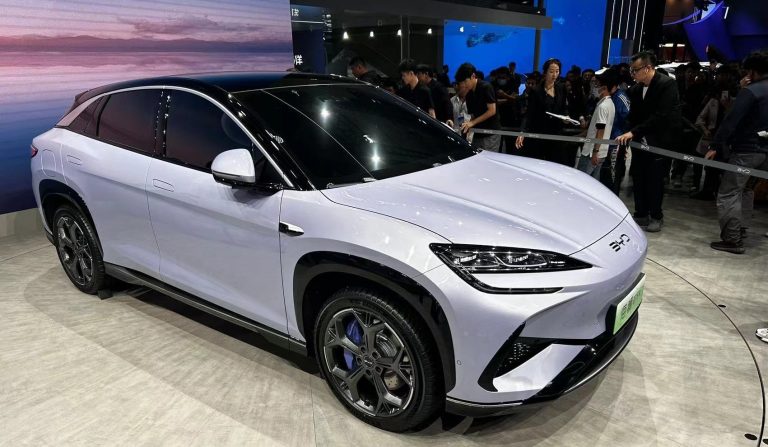
China’s dominance in the EV market is no accident. Palmer pointed to the Chinese government’s strategic focus on “new energy vehicles,” which has included an estimated $230 billion in subsidies for EV makers since 2009. Automakers like BYD have leveraged this support to become formidable players, offering a mix of affordable and high-tech EVs and hybrids that are now gaining traction abroad.

“The Chinese cars are bloody good. The Chinese vehicles offer remarkable value for money for what they deliver,” Palmer said, highlighting their advanced battery technology and focus on software.
Palmer, who sat on the board of Dongfeng Motor Company, a joint venture between Nissan and China’s state-owned Dongfeng, witnessed firsthand the aggressive industrial strategy that helped propel Chinese EV makers to the forefront of the global market.
“It starts with an industrial strategy. That’s the big thing to learn. For the best part of 14 years, we have not had an industrial strategy,” Palmer noted, comparing the West’s lack of a coordinated approach to China’s long-term planning.

Tariffs, A Counterproductive Measure
In response to China’s growing influence, both the U.S. and Europe have imposed tariffs aimed at protecting their domestic auto industries. However, Palmer argued that tariffs would only serve to weaken Western automakers’ competitiveness.
“My experience with tariffs is it just makes your indigenous industry lazy. The gap becomes even bigger,” he said, suggesting that a “survival of the fittest” mentality would better prepare Western automakers for the coming battle with Chinese brands, especially in Europe.
“I think the Chinese firms will learn from competing in Europe, because that’s the toughest market in the world. If they can do that, then they’re going to be unbeatable,” he added.
Japanese Automakers on the Back Foot
The rise of Chinese EV companies has put immense pressure on Japanese automakers, including Palmer’s former employer, Nissan, as well as Toyota and Honda.
Nissan recently announced plans to lay off 9,000 workers, while Toyota and Honda struggle with declining sales in China and reduced profits. Reports of merger talks between Nissan and Honda underscore the severity of the situation.
Palmer said that while Toyota initially reaped rewards by focusing on hybrids, this strategy left the company vulnerable as markets like China moved rapidly towards EVs.
“Toyota took the Japanese industry down a cul-de-sac, which it is going to struggle to recover from,” he said.
He also criticized Nissan’s leadership for failing to capitalize on the early success of the Leaf, which has sold over half a million units since its 2010 launch.
“Nissan finds itself now with a very poor lineup of products and without obvious leadership in EVs, and that’s the direct result of poor management,” Palmer remarked.
Breaking the EV Adoption Barrier
While EV sales are still growing, adoption has been slower than expected, prompting automakers to scale back investments. Palmer attributes this hesitation to the high cost of EVs.
“Prices have got to align to those of internal combustion engines. And to make that happen, you’ve got to be able to offer cars with smaller batteries,” Palmer said. He emphasized the need for governments to support charging infrastructure to ease consumer concerns about range.
The average EV price in the U.S. in October was $56,902, compared to $48,623 for traditional gas-powered cars, according to Kelley Blue Book. Bridging this price gap could help accelerate EV adoption.
Learning from China
Palmer urged Western automakers and governments to adopt elements of China’s industrial strategy, particularly in the battery sector. China currently dominates the EV battery supply chain, including critical mineral processing and cell manufacturing.
“If the West wants to catch up, I would advocate copying the Chinese,” he said. “The alternative is everything is Chinese at the moment—even if you were building your own battery cells, you’ve still got to get all the minerals from China. The whole supply chain is stuck.”
Palmer’s cautionary tale is not just for Japanese automakers but for any company hoping to compete in the global EV market. The hesitation to fully commit to EVs in favor of hybrids, he argues, is a strategy that will only deepen the competitive disadvantage against well-positioned Chinese manufacturers.