

Archaeology Student Discovers 1,200-Year-Old Gold Medallion in First UK Excavation For many students, their first excavation is often filled with long days of digging, careful brushing, and the quiet hope of uncovering something significant. For 21-year-o

Quote from Alex Bobby on August 27, 2025, 2:24 AM
Archaeology Student Discovers 1,200-Year-Old Gold Medallion in First UK Excavation
For many students, their first excavation is often filled with long days of digging, careful brushing, and the quiet hope of uncovering something significant. For 21-year-old archaeology student Yara Souza from Florida, however, that dream became reality far sooner than expected. Within just 90 minutes of starting her very first dig in the United Kingdom, Souza unearthed a rare 1,200-year-old gold medallion dating back to the 9th century.
The discovery, made in July during a Newcastle University excavation in the Redesdale area of Northumberland, has been described by experts as an “exceptional find” that sheds light on the movement, wealth, and religious practices of early medieval Britain.
A Golden Find in the Heart of Northumberland
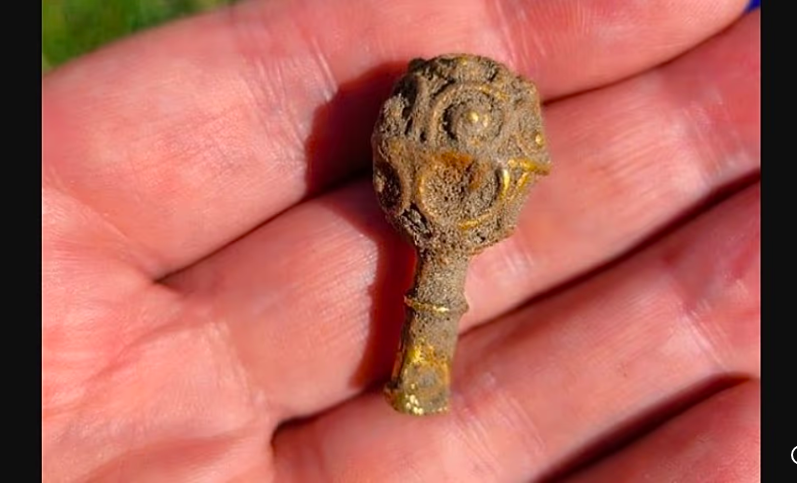
According to Newcastle University, the object is a finely crafted gold piece, about four centimetres long, with a decorative ornament on one end. Initial assessments suggest it could have served a religious or ceremonial function, given its craftsmanship and material. Gold, in the 9th century, was not only a symbol of wealth but also of status and power, often reserved for the elite or for sacred purposes.
The medallion was found near the historic route of Dere Street, a Roman road that once connected the important military centre of York to Edinburgh. Even after the fall of the Roman Empire, Dere Street remained a vital artery for movement and trade, linking major religious and political centres across the region. Today, parts of the old road align with the modern A68 motorway, underscoring its enduring significance.
Souza herself could hardly believe her luck. “I couldn’t believe I found something so fast on my first dig, it was quite an exciting and slightly overwhelming experience,” she told the Daily Mail. For a student only beginning her journey in archaeology, the experience was nothing short of surreal.
Expert Reactions
The discovery has caused a stir among academics and archaeologists alike. Professor James Gerrard, a specialist in Roman archaeology at Newcastle University and Souza’s supervisor, emphasised the rarity and significance of the medallion:
“This is an exciting discovery of exceptional quality. I am delighted for Yara that she has made such a find so early in her career.”
Professor Gerrard also pointed to the strategic location of the find. Dere Street, he explained, continued to play an important role in the centuries after Rome’s decline. The road likely facilitated not just trade but also religious pilgrimage and elite travel.
“This object shows that high-status people continued to use the road,” Gerrard added. “It may have been deliberately buried.” Such deliberate placement raises intriguing questions about its purpose—was it part of a ritual offering, a hidden treasure, or perhaps even a piece of wealth concealed during times of instability?
The Context: 9th-Century Britain
The 800s were a turbulent period in Britain’s history. The Anglo-Saxon kingdoms dominated much of England, but Viking raids and settlements were becoming increasingly frequent. Northumbria, where the medallion was found, was a centre of both political power and religious influence, home to renowned monasteries like Lindisfarne.
Gold objects from this period are rare, as much of the material would have been melted down, reused, or looted over the centuries. The survival of Souza’s find not only provides evidence of the craftsmanship of the time but also hints at the circulation of wealth and the persistence of elite culture long after Rome’s legions had departed.
A Personal Triumph
For Souza, the find was deeply personal. She revealed that she had been unable to participate in the excavations at the Roman fortress of Birdoswald the previous year due to illness. Missing out on that opportunity had been disappointing, but her patience was rewarded in spectacular fashion.
“It was incredible to find something that had not seen the light of day for over a thousand years after waiting a year. I literally passed out,” Souza said, recalling the moment.
The medallion is not just an archaeological treasure—it also represents a pivotal moment in the budding career of a young archaeologist. Her story highlights the unpredictability of fieldwork, where a single turn of the spade can change the narrative of history.
Why the Find Matters
Beyond its immediate excitement, the discovery carries broader implications for our understanding of post-Roman Britain. Finds like this help historians piece together the puzzle of how society functioned in the so-called “Dark Ages,” a term often used to describe the centuries following the collapse of Rome’s authority.
Instead of a cultural void, the 9th century reveals itself through artefacts like Souza’s medallion as a period of continuity, adaptation, and innovation. The use of Roman roads by elites centuries later, and the persistence of religious and ceremonial traditions, show that the echoes of Rome still shaped life in medieval Britain.
Looking Ahead
The medallion will undergo further analysis by specialists to determine more about its composition, function, and historical context. Newcastle University has not yet confirmed whether the object will go on public display, but there is little doubt that it will become an important part of the region’s archaeological record.
For Souza, meanwhile, the discovery has already cemented her passion for the field. While many archaeologists spend years waiting for a find of this calibre, her remarkable debut suggests a bright future.
Final Thoughts
The discovery of Yara Souza’s 1,200-year-old gold medallion is a powerful reminder that the past is never too far beneath the surface, waiting for the right moment—and the right hands—to bring it back to light. For an archaeology student on her very first excavation, the find was nothing short of extraordinary, blending personal triumph with historical significance.
It underscores how every dig, no matter how routine it might seem, carries the potential to rewrite what we know about history. From the enduring use of Dere Street to the presence of high-status individuals in post-Roman Britain, the medallion is more than just gold—it is a story frozen in time.
As experts continue to study the object, it promises to enrich our understanding of medieval Britain. For Souza, however, it has already left an indelible mark, setting the stage for a career defined by curiosity, discovery, and the thrill of uncovering the unknown.
Conclusion
The unearthing of a 1,200-year-old gold medallion in Northumberland by archaeology student Yara Souza is more than just a stroke of luck—it is a reminder of the rich layers of history still buried beneath our feet. From its craftsmanship to its location on Dere Street, the find illuminates the world of early medieval Britain and its enduring ties to the Roman past.
For Souza, it was the thrill of a lifetime; for the rest of us, it is a glimpse into a past that continues to shape our present. In archaeology, patience is often key—but sometimes, as this discovery shows, history rewards the bold and the fortunate in ways that even the most seasoned excavators could never predict.
Meta Description:
Florida archaeology student Yara Souza discovered a rare 9th-century gold medallion during her first excavation in Northumberland. The 1,200-year-old find, near the historic Roman road Dere Street, offers new insight into early medieval Britain’s elite culture and religious practices.
Archaeology Student Discovers 1,200-Year-Old Gold Medallion in First UK Excavation
For many students, their first excavation is often filled with long days of digging, careful brushing, and the quiet hope of uncovering something significant. For 21-year-old archaeology student Yara Souza from Florida, however, that dream became reality far sooner than expected. Within just 90 minutes of starting her very first dig in the United Kingdom, Souza unearthed a rare 1,200-year-old gold medallion dating back to the 9th century.
The discovery, made in July during a Newcastle University excavation in the Redesdale area of Northumberland, has been described by experts as an “exceptional find” that sheds light on the movement, wealth, and religious practices of early medieval Britain.
Register for Tekedia Mini-MBA edition 20 (June 8 – Sept 5, 2026).
Register for Tekedia AI in Business Masterclass.
Join Tekedia Capital Syndicate and co-invest in great global startups.
Register for Tekedia AI Lab.
A Golden Find in the Heart of Northumberland
According to Newcastle University, the object is a finely crafted gold piece, about four centimetres long, with a decorative ornament on one end. Initial assessments suggest it could have served a religious or ceremonial function, given its craftsmanship and material. Gold, in the 9th century, was not only a symbol of wealth but also of status and power, often reserved for the elite or for sacred purposes.
The medallion was found near the historic route of Dere Street, a Roman road that once connected the important military centre of York to Edinburgh. Even after the fall of the Roman Empire, Dere Street remained a vital artery for movement and trade, linking major religious and political centres across the region. Today, parts of the old road align with the modern A68 motorway, underscoring its enduring significance.

Souza herself could hardly believe her luck. “I couldn’t believe I found something so fast on my first dig, it was quite an exciting and slightly overwhelming experience,” she told the Daily Mail. For a student only beginning her journey in archaeology, the experience was nothing short of surreal.
Expert Reactions
The discovery has caused a stir among academics and archaeologists alike. Professor James Gerrard, a specialist in Roman archaeology at Newcastle University and Souza’s supervisor, emphasised the rarity and significance of the medallion:

“This is an exciting discovery of exceptional quality. I am delighted for Yara that she has made such a find so early in her career.”
Professor Gerrard also pointed to the strategic location of the find. Dere Street, he explained, continued to play an important role in the centuries after Rome’s decline. The road likely facilitated not just trade but also religious pilgrimage and elite travel.
“This object shows that high-status people continued to use the road,” Gerrard added. “It may have been deliberately buried.” Such deliberate placement raises intriguing questions about its purpose—was it part of a ritual offering, a hidden treasure, or perhaps even a piece of wealth concealed during times of instability?
The Context: 9th-Century Britain
The 800s were a turbulent period in Britain’s history. The Anglo-Saxon kingdoms dominated much of England, but Viking raids and settlements were becoming increasingly frequent. Northumbria, where the medallion was found, was a centre of both political power and religious influence, home to renowned monasteries like Lindisfarne.
Gold objects from this period are rare, as much of the material would have been melted down, reused, or looted over the centuries. The survival of Souza’s find not only provides evidence of the craftsmanship of the time but also hints at the circulation of wealth and the persistence of elite culture long after Rome’s legions had departed.
A Personal Triumph
For Souza, the find was deeply personal. She revealed that she had been unable to participate in the excavations at the Roman fortress of Birdoswald the previous year due to illness. Missing out on that opportunity had been disappointing, but her patience was rewarded in spectacular fashion.
“It was incredible to find something that had not seen the light of day for over a thousand years after waiting a year. I literally passed out,” Souza said, recalling the moment.
The medallion is not just an archaeological treasure—it also represents a pivotal moment in the budding career of a young archaeologist. Her story highlights the unpredictability of fieldwork, where a single turn of the spade can change the narrative of history.
Why the Find Matters
Beyond its immediate excitement, the discovery carries broader implications for our understanding of post-Roman Britain. Finds like this help historians piece together the puzzle of how society functioned in the so-called “Dark Ages,” a term often used to describe the centuries following the collapse of Rome’s authority.
Instead of a cultural void, the 9th century reveals itself through artefacts like Souza’s medallion as a period of continuity, adaptation, and innovation. The use of Roman roads by elites centuries later, and the persistence of religious and ceremonial traditions, show that the echoes of Rome still shaped life in medieval Britain.
Looking Ahead
The medallion will undergo further analysis by specialists to determine more about its composition, function, and historical context. Newcastle University has not yet confirmed whether the object will go on public display, but there is little doubt that it will become an important part of the region’s archaeological record.
For Souza, meanwhile, the discovery has already cemented her passion for the field. While many archaeologists spend years waiting for a find of this calibre, her remarkable debut suggests a bright future.
Final Thoughts
The discovery of Yara Souza’s 1,200-year-old gold medallion is a powerful reminder that the past is never too far beneath the surface, waiting for the right moment—and the right hands—to bring it back to light. For an archaeology student on her very first excavation, the find was nothing short of extraordinary, blending personal triumph with historical significance.
It underscores how every dig, no matter how routine it might seem, carries the potential to rewrite what we know about history. From the enduring use of Dere Street to the presence of high-status individuals in post-Roman Britain, the medallion is more than just gold—it is a story frozen in time.
As experts continue to study the object, it promises to enrich our understanding of medieval Britain. For Souza, however, it has already left an indelible mark, setting the stage for a career defined by curiosity, discovery, and the thrill of uncovering the unknown.
Conclusion
The unearthing of a 1,200-year-old gold medallion in Northumberland by archaeology student Yara Souza is more than just a stroke of luck—it is a reminder of the rich layers of history still buried beneath our feet. From its craftsmanship to its location on Dere Street, the find illuminates the world of early medieval Britain and its enduring ties to the Roman past.
For Souza, it was the thrill of a lifetime; for the rest of us, it is a glimpse into a past that continues to shape our present. In archaeology, patience is often key—but sometimes, as this discovery shows, history rewards the bold and the fortunate in ways that even the most seasoned excavators could never predict.
Meta Description:
Florida archaeology student Yara Souza discovered a rare 9th-century gold medallion during her first excavation in Northumberland. The 1,200-year-old find, near the historic Roman road Dere Street, offers new insight into early medieval Britain’s elite culture and religious practices.
Share this:
- Click to share on Facebook (Opens in new window) Facebook
- Click to share on X (Opens in new window) X
- Click to share on WhatsApp (Opens in new window) WhatsApp
- Click to share on LinkedIn (Opens in new window) LinkedIn
- Click to email a link to a friend (Opens in new window) Email
- Click to print (Opens in new window) Print