

Atreju 2025: European Conservatives Debate Climate, Identity and Global Stability in Rome

Quote from Alex Bobby on December 14, 2025, 2:30 AMAtreju 2025 brings European conservatives to Rome as Nicola Procaccini outlines a pragmatic climate vision and Palestinian President Mahmoud Abbas calls for a two-state solution, highlighting Italy’s growing influence in EU politics.
Fratelli d’Italia’s flagship political festival, Atreju, returned to Rome this December with renewed significance, positioning itself as both a reflection on Italy’s current political leadership and a broader forum for Europe’s conservative movement. Held from 6 to 14 December in the gardens of Castel Sant’Angelo, this year’s edition carries the theme “You’ve become strong – Italy with your head held high”, a slogan that underscores the governing party’s confidence after more than two years in power.
The festival unfolds alongside the European Conservatives and Reformists (ECR) Study Days, intertwining national and European political debates at a moment when conservative forces across the continent are redefining their priorities. Friday’s programme, in particular, stood out for its mix of ideological discussion, geopolitical reflection and international voices.
Climate Change Beyond Ideology
Among the key speakers was Nicola Procaccini, co-chair of the ECR group in the European Parliament and head of Fratelli d’Italia’s environment department. Procaccini participated in a panel titled “Climate change beyond ideologies”, which aimed to move environmental discussions away from polarised rhetoric and toward pragmatic policymaking.
Speaking to Euronews, Procaccini outlined what he described as a new orientation among European conservatives, one shaped by realism rather than dogma. According to him, the Italian government’s experience under Prime Minister Giorgia Meloni has contributed to a shift within the conservative bloc toward more balanced approaches — not only on climate policy, but across a wide range of issues.
“I believe this is a new, more pragmatic approach,” Procaccini said. “It’s more balanced not only on the Green Deal, but also on many other issues.”
He cited immigration governance as a central example, arguing for the need to clearly distinguish between legal and illegal migration while maintaining national and European cohesion. Beyond policy mechanics, Procaccini also pointed to a reassertion of cultural values within conservative discourse.
“There are values that are becoming more present again,” he said, referencing the protection of families, cultural continuity, and Europe’s Christian heritage. For Procaccini, this gradual shift represents a return to what he described as the founding idea of the European Union — cooperation rooted in shared identity rather than technocratic uniformity.
Europe and the United States: A Shared Future
Procaccini also addressed recent commentary from the United States regarding Europe’s political direction. Rather than framing American remarks as hostile or dismissive, he offered a nuanced political reading of the message behind them.
On one level, he acknowledged criticism regarding Europe’s loss of identity, which he linked to demographic decline and large-scale migration. “If we stick to the document and not to distorted narratives,” he said, “we find criticism of the European Union that we share.”
At the same time, Procaccini highlighted what he considered the most important takeaway: the continued strategic and cultural importance of Europe to the United States.
“Culturally and strategically, the European Union remains vital to the United States,” he said. “The two halves of the West have a past in common and also a future in common.”
His remarks reflected a broader theme at Atreju — the desire among European conservatives to strengthen transatlantic ties while asserting a more confident European identity.
Mahmoud Abbas Addresses Regional Instability
Adding an international dimension to the festival, Palestinian National Authority President Mahmoud Abbas took the stage to reiterate his long-standing call for a political solution to the Israeli-Palestinian conflict.
Abbas stressed that regional stability remains unattainable without a Palestinian state, arguing that the absence of Palestine is one of the primary drivers of ongoing unrest in the Middle East.
“The only way to ensure stability in the region is the two-state solution,” Abbas said, calling for a Palestinian state based on the 1967 borders, living alongside Israel in mutual recognition and respect.
His presence at Atreju underscored the festival’s ambition to serve not only as a domestic political gathering but also as a platform for global dialogue, even on issues that provoke deep divisions within Europe itself.
A Forum for Conservative Voices Across Europe
Friday’s programme featured a broad lineup of European and international conservative figures, reflecting the ECR’s growing influence. Speakers included Kemi Badenoch, Marion Maréchal, Gila Gamliel, Adam Bielan, George Simion, Sigmundur Gunnlaugsson, and Kristoffer Storm, among others.
Panels and keynote speeches touched on subjects ranging from national sovereignty and economic competitiveness to cultural identity and security, reinforcing Atreju’s role as a space where European conservatism articulates its evolving agenda.
The day’s events concluded at 9 pm local time, but the festival itself continues through the weekend.
Looking Ahead to Meloni’s Closing Address
The annual gathering is set to conclude on Sunday at noon with a speech by Prime Minister Giorgia Meloni, joined by her deputies, Foreign Minister Antonio Tajani and Infrastructure and Transport Minister Matteo Salvini. Their closing remarks are expected to take stock of Italy’s political trajectory and outline the government’s priorities moving forward.
As Atreju 2025 unfolds, it reflects a moment of consolidation for Italy’s ruling party and a broader effort by European conservatives to redefine their place within the EU and on the global stage. The debates in Rome suggest a movement increasingly focused on pragmatism, identity, and international relevance — themes likely to shape European politics in the years ahead.
Conclusion
Atreju 2025 has once again confirmed its role as more than a traditional party gathering, emerging instead as a strategic forum for political reflection and direction-setting at both the national and European levels. Against the backdrop of Rome’s Castel Sant’Angelo, the festival brought together conservative leaders, international figures and policymakers to take stock of two years of Giorgia Meloni’s government while also addressing the broader challenges facing Europe.
From Nicola Procaccini’s call for a more pragmatic, values-based conservative approach to climate policy and migration, to Mahmoud Abbas’s appeal for a two-state solution as the only path to stability in the Middle East, the discussions highlighted the interconnected nature of domestic governance, European identity and global geopolitics. The diversity of voices on stage underscored Atreju’s growing ambition to serve as a crossroads between Italian politics and wider international debates.
As the event draws to a close with Meloni’s final address, Atreju leaves behind a clear message: European conservatism is seeking to redefine itself — balancing tradition with realism, sovereignty with cooperation, and national priorities with shared Western values. Whether these ideas will reshape policy across Europe remains to be seen, but Atreju 2025 has firmly positioned itself as a platform where those future directions are being actively shaped.
Atreju 2025 brings European conservatives to Rome as Nicola Procaccini outlines a pragmatic climate vision and Palestinian President Mahmoud Abbas calls for a two-state solution, highlighting Italy’s growing influence in EU politics.
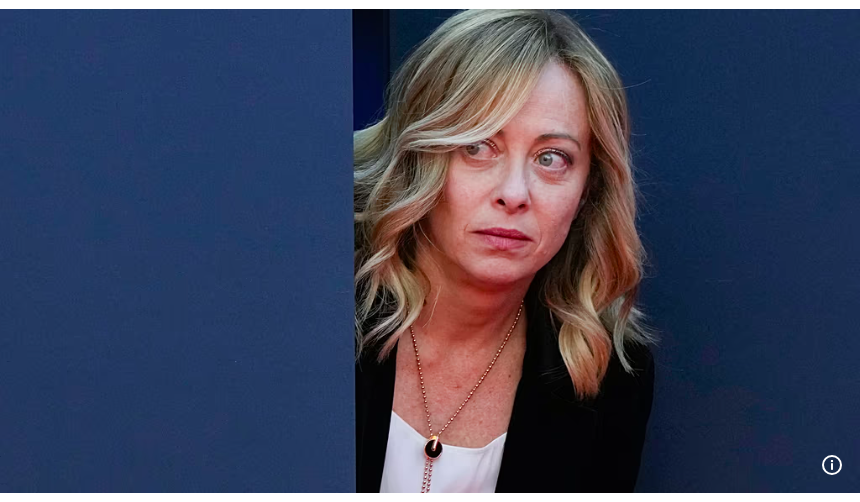
Fratelli d’Italia’s flagship political festival, Atreju, returned to Rome this December with renewed significance, positioning itself as both a reflection on Italy’s current political leadership and a broader forum for Europe’s conservative movement. Held from 6 to 14 December in the gardens of Castel Sant’Angelo, this year’s edition carries the theme “You’ve become strong – Italy with your head held high”, a slogan that underscores the governing party’s confidence after more than two years in power.
The festival unfolds alongside the European Conservatives and Reformists (ECR) Study Days, intertwining national and European political debates at a moment when conservative forces across the continent are redefining their priorities. Friday’s programme, in particular, stood out for its mix of ideological discussion, geopolitical reflection and international voices.
Climate Change Beyond Ideology
Register for Tekedia Mini-MBA edition 19 (Feb 9 – May 2, 2026).
Register for Tekedia AI in Business Masterclass.
Join Tekedia Capital Syndicate and co-invest in great global startups.
Register for Tekedia AI Lab.
Among the key speakers was Nicola Procaccini, co-chair of the ECR group in the European Parliament and head of Fratelli d’Italia’s environment department. Procaccini participated in a panel titled “Climate change beyond ideologies”, which aimed to move environmental discussions away from polarised rhetoric and toward pragmatic policymaking.
Speaking to Euronews, Procaccini outlined what he described as a new orientation among European conservatives, one shaped by realism rather than dogma. According to him, the Italian government’s experience under Prime Minister Giorgia Meloni has contributed to a shift within the conservative bloc toward more balanced approaches — not only on climate policy, but across a wide range of issues.
“I believe this is a new, more pragmatic approach,” Procaccini said. “It’s more balanced not only on the Green Deal, but also on many other issues.”

He cited immigration governance as a central example, arguing for the need to clearly distinguish between legal and illegal migration while maintaining national and European cohesion. Beyond policy mechanics, Procaccini also pointed to a reassertion of cultural values within conservative discourse.
“There are values that are becoming more present again,” he said, referencing the protection of families, cultural continuity, and Europe’s Christian heritage. For Procaccini, this gradual shift represents a return to what he described as the founding idea of the European Union — cooperation rooted in shared identity rather than technocratic uniformity.
Europe and the United States: A Shared Future

Procaccini also addressed recent commentary from the United States regarding Europe’s political direction. Rather than framing American remarks as hostile or dismissive, he offered a nuanced political reading of the message behind them.
On one level, he acknowledged criticism regarding Europe’s loss of identity, which he linked to demographic decline and large-scale migration. “If we stick to the document and not to distorted narratives,” he said, “we find criticism of the European Union that we share.”
At the same time, Procaccini highlighted what he considered the most important takeaway: the continued strategic and cultural importance of Europe to the United States.
“Culturally and strategically, the European Union remains vital to the United States,” he said. “The two halves of the West have a past in common and also a future in common.”
His remarks reflected a broader theme at Atreju — the desire among European conservatives to strengthen transatlantic ties while asserting a more confident European identity.
Mahmoud Abbas Addresses Regional Instability
Adding an international dimension to the festival, Palestinian National Authority President Mahmoud Abbas took the stage to reiterate his long-standing call for a political solution to the Israeli-Palestinian conflict.
Abbas stressed that regional stability remains unattainable without a Palestinian state, arguing that the absence of Palestine is one of the primary drivers of ongoing unrest in the Middle East.
“The only way to ensure stability in the region is the two-state solution,” Abbas said, calling for a Palestinian state based on the 1967 borders, living alongside Israel in mutual recognition and respect.
His presence at Atreju underscored the festival’s ambition to serve not only as a domestic political gathering but also as a platform for global dialogue, even on issues that provoke deep divisions within Europe itself.
A Forum for Conservative Voices Across Europe
Friday’s programme featured a broad lineup of European and international conservative figures, reflecting the ECR’s growing influence. Speakers included Kemi Badenoch, Marion Maréchal, Gila Gamliel, Adam Bielan, George Simion, Sigmundur Gunnlaugsson, and Kristoffer Storm, among others.
Panels and keynote speeches touched on subjects ranging from national sovereignty and economic competitiveness to cultural identity and security, reinforcing Atreju’s role as a space where European conservatism articulates its evolving agenda.
The day’s events concluded at 9 pm local time, but the festival itself continues through the weekend.
Looking Ahead to Meloni’s Closing Address
The annual gathering is set to conclude on Sunday at noon with a speech by Prime Minister Giorgia Meloni, joined by her deputies, Foreign Minister Antonio Tajani and Infrastructure and Transport Minister Matteo Salvini. Their closing remarks are expected to take stock of Italy’s political trajectory and outline the government’s priorities moving forward.
As Atreju 2025 unfolds, it reflects a moment of consolidation for Italy’s ruling party and a broader effort by European conservatives to redefine their place within the EU and on the global stage. The debates in Rome suggest a movement increasingly focused on pragmatism, identity, and international relevance — themes likely to shape European politics in the years ahead.
Conclusion
Atreju 2025 has once again confirmed its role as more than a traditional party gathering, emerging instead as a strategic forum for political reflection and direction-setting at both the national and European levels. Against the backdrop of Rome’s Castel Sant’Angelo, the festival brought together conservative leaders, international figures and policymakers to take stock of two years of Giorgia Meloni’s government while also addressing the broader challenges facing Europe.
From Nicola Procaccini’s call for a more pragmatic, values-based conservative approach to climate policy and migration, to Mahmoud Abbas’s appeal for a two-state solution as the only path to stability in the Middle East, the discussions highlighted the interconnected nature of domestic governance, European identity and global geopolitics. The diversity of voices on stage underscored Atreju’s growing ambition to serve as a crossroads between Italian politics and wider international debates.
As the event draws to a close with Meloni’s final address, Atreju leaves behind a clear message: European conservatism is seeking to redefine itself — balancing tradition with realism, sovereignty with cooperation, and national priorities with shared Western values. Whether these ideas will reshape policy across Europe remains to be seen, but Atreju 2025 has firmly positioned itself as a platform where those future directions are being actively shaped.
Uploaded files:Share this:
- Click to share on Facebook (Opens in new window) Facebook
- Click to share on X (Opens in new window) X
- Click to share on WhatsApp (Opens in new window) WhatsApp
- Click to share on LinkedIn (Opens in new window) LinkedIn
- Click to email a link to a friend (Opens in new window) Email
- Click to print (Opens in new window) Print