

DAX Surges as Trump Pauses Auto Tariffs: German Auto Stocks Rally on Policy Relief

Quote from Alex Bobby on May 1, 2025, 3:23 AM
Germany’s Stock Market Surges on Trump’s Auto Tariff Pause: DAX Nears Monthly High
Germany’s stock markets have staged a strong comeback in recent weeks, with the country’s benchmark DAX index rallying for six consecutive sessions, nearing its monthly peak. This rebound comes on the heels of an unexpected policy shift from U.S. President Donald Trump, who on April 9 announced a 90-day pause on reciprocal auto tariffs — a move that has sent a wave of optimism through global markets, particularly benefiting German automakers.
The policy change, which includes two executive directives aimed at easing the tariff burden on vehicle manufacturers, is widely seen as a victory for the global automotive industry, and especially for Germany — Europe’s largest car exporter to the United States.
A Policy Pivot Sparks Relief Rally
Trump’s announcement on April 9 initially prompted a cautious rally, but as more details emerged, investor confidence gained momentum. The two orders he signed on Tuesday provided tangible relief to automakers concerned about overlapping tariffs and the looming threat of increased costs.
The first executive order prevents automakers from being subjected to "stacked" duties — such as simultaneous tariffs on steel, aluminium, and vehicles — which Trump admitted exceed what’s necessary to support his administration’s trade goals. The second proclamation softened the impact of a 25% auto parts tariff due to take effect on May 3, allowing automakers with U.S.-based assembly operations to claim offsets of up to 3.75% of a vehicle’s retail price. This offset will decrease to 2.5% in the following year, running through to April 30, 2026.
These concessions followed weeks of lobbying by automakers, industry leaders, and economists, many of whom warned that the tariffs would lead to rising production costs, reduced global competitiveness, and ultimately, higher vehicle prices for consumers. The feared knock-on effects included job losses and factory shutdowns across North America.
Several global manufacturers — including Volkswagen AG, Ford Motor Co., General Motors, Toyota, and Stellantis NV — have already responded by reviewing production strategies. Some have introduced discounts to offset price shocks or paused manufacturing in Canada and Mexico, as uncertainty loomed.
Germany’s Auto Sector Rebounds
Germany, which exported $24.8 billion (€21.8 billion) worth of vehicles to the U.S. in 2024, is among the biggest winners of this tariff relief. Shares of major German automakers — including BMW, Mercedes-Benz, and Volkswagen — have soared nearly 20% since Trump’s announcement. These gains have not only reversed the sharp losses seen earlier in April but also bolstered the DAX index’s broader recovery.
The DAX, which had slumped in early April due to mounting trade tensions and global slowdown fears, has climbed 21% from its April 7 low. It now stands just 4% below its all-time high reached in March and is up 13% year-to-date, making it the best-performing major index globally in 2025. In contrast, the U.S. S&P 500 has declined 5.5% so far this year, highlighting the diverging fortunes of European and American equities.
A Shift in Global Investor Sentiment
The rally in German stocks reflects a wider shift in investor sentiment, with European assets gaining favour amid signs that U.S. economic dominance may be waning. As the U.S. navigates political and policy uncertainty in an election year, and as inflation and interest rate concerns weigh on growth, Europe’s more stable fiscal outlook and trade relief from the U.S. have created an attractive backdrop for investors.
“European assets are certainly gaining traction for several reasons,” wrote Kyle Rodda, senior market analyst at Capital.com. “There’s definitely the end of U.S. exceptionalism, but there’s also hope the tariffs will also come down on Europe, and the fiscal impulse in Europe as it remilitarises will be historically strong.”
Rodda’s comments underscore a growing consensus that Europe’s economic resilience, combined with improving trade conditions, could continue to support equity markets, particularly in export-heavy economies like Germany.
Looking Ahead
While Trump’s 90-day pause offers only temporary relief, market participants are hopeful that it signals a broader recalibration of U.S. trade policy, especially as pressure mounts from industrial stakeholders. With Germany’s auto sector so tightly linked to global trade dynamics, even modest improvements in the policy landscape can have outsized effects on sentiment and valuations.
For now, German investors are enjoying the ride. The strong rebound in auto stocks, coupled with signs of political flexibility from the U.S., has reinvigorated the DAX and pointed to a renewed optimism in Europe’s manufacturing heartland.
Still, risks remain. If the tariff reprieve proves short-lived or geopolitical tensions reignite, markets could swiftly reverse. But for now, Trump’s trade pivot has thrown a lifeline to Germany’s export-driven economy — and the markets are responding in kind.
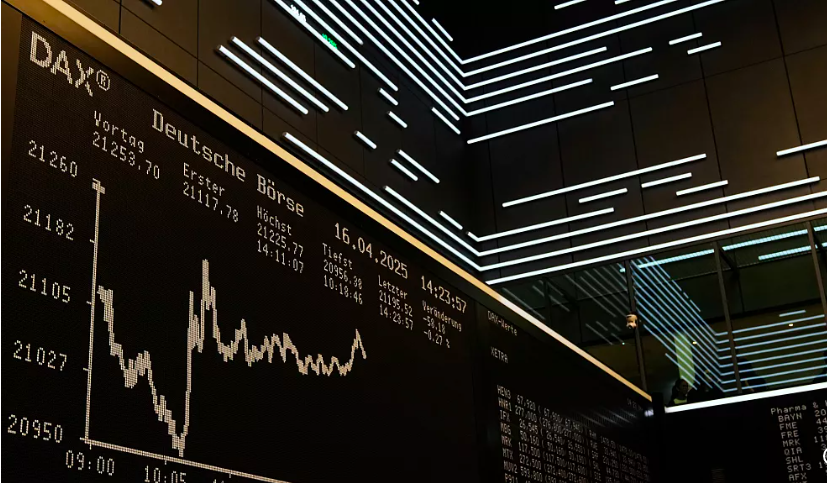
Germany’s Stock Market Surges on Trump’s Auto Tariff Pause: DAX Nears Monthly High
Germany’s stock markets have staged a strong comeback in recent weeks, with the country’s benchmark DAX index rallying for six consecutive sessions, nearing its monthly peak. This rebound comes on the heels of an unexpected policy shift from U.S. President Donald Trump, who on April 9 announced a 90-day pause on reciprocal auto tariffs — a move that has sent a wave of optimism through global markets, particularly benefiting German automakers.
The policy change, which includes two executive directives aimed at easing the tariff burden on vehicle manufacturers, is widely seen as a victory for the global automotive industry, and especially for Germany — Europe’s largest car exporter to the United States.
Register for Tekedia Mini-MBA edition 20 (June 8 – Sept 5, 2026).
Register for Tekedia AI in Business Masterclass.
Join Tekedia Capital Syndicate and co-invest in great global startups.
Register for Tekedia AI Lab.
A Policy Pivot Sparks Relief Rally
Trump’s announcement on April 9 initially prompted a cautious rally, but as more details emerged, investor confidence gained momentum. The two orders he signed on Tuesday provided tangible relief to automakers concerned about overlapping tariffs and the looming threat of increased costs.
The first executive order prevents automakers from being subjected to "stacked" duties — such as simultaneous tariffs on steel, aluminium, and vehicles — which Trump admitted exceed what’s necessary to support his administration’s trade goals. The second proclamation softened the impact of a 25% auto parts tariff due to take effect on May 3, allowing automakers with U.S.-based assembly operations to claim offsets of up to 3.75% of a vehicle’s retail price. This offset will decrease to 2.5% in the following year, running through to April 30, 2026.

These concessions followed weeks of lobbying by automakers, industry leaders, and economists, many of whom warned that the tariffs would lead to rising production costs, reduced global competitiveness, and ultimately, higher vehicle prices for consumers. The feared knock-on effects included job losses and factory shutdowns across North America.
Several global manufacturers — including Volkswagen AG, Ford Motor Co., General Motors, Toyota, and Stellantis NV — have already responded by reviewing production strategies. Some have introduced discounts to offset price shocks or paused manufacturing in Canada and Mexico, as uncertainty loomed.
Germany’s Auto Sector Rebounds

Germany, which exported $24.8 billion (€21.8 billion) worth of vehicles to the U.S. in 2024, is among the biggest winners of this tariff relief. Shares of major German automakers — including BMW, Mercedes-Benz, and Volkswagen — have soared nearly 20% since Trump’s announcement. These gains have not only reversed the sharp losses seen earlier in April but also bolstered the DAX index’s broader recovery.
The DAX, which had slumped in early April due to mounting trade tensions and global slowdown fears, has climbed 21% from its April 7 low. It now stands just 4% below its all-time high reached in March and is up 13% year-to-date, making it the best-performing major index globally in 2025. In contrast, the U.S. S&P 500 has declined 5.5% so far this year, highlighting the diverging fortunes of European and American equities.
A Shift in Global Investor Sentiment
The rally in German stocks reflects a wider shift in investor sentiment, with European assets gaining favour amid signs that U.S. economic dominance may be waning. As the U.S. navigates political and policy uncertainty in an election year, and as inflation and interest rate concerns weigh on growth, Europe’s more stable fiscal outlook and trade relief from the U.S. have created an attractive backdrop for investors.
“European assets are certainly gaining traction for several reasons,” wrote Kyle Rodda, senior market analyst at Capital.com. “There’s definitely the end of U.S. exceptionalism, but there’s also hope the tariffs will also come down on Europe, and the fiscal impulse in Europe as it remilitarises will be historically strong.”
Rodda’s comments underscore a growing consensus that Europe’s economic resilience, combined with improving trade conditions, could continue to support equity markets, particularly in export-heavy economies like Germany.
Looking Ahead
While Trump’s 90-day pause offers only temporary relief, market participants are hopeful that it signals a broader recalibration of U.S. trade policy, especially as pressure mounts from industrial stakeholders. With Germany’s auto sector so tightly linked to global trade dynamics, even modest improvements in the policy landscape can have outsized effects on sentiment and valuations.
For now, German investors are enjoying the ride. The strong rebound in auto stocks, coupled with signs of political flexibility from the U.S., has reinvigorated the DAX and pointed to a renewed optimism in Europe’s manufacturing heartland.
Still, risks remain. If the tariff reprieve proves short-lived or geopolitical tensions reignite, markets could swiftly reverse. But for now, Trump’s trade pivot has thrown a lifeline to Germany’s export-driven economy — and the markets are responding in kind.
Uploaded files:Share this:
- Click to share on Facebook (Opens in new window) Facebook
- Click to share on X (Opens in new window) X
- Click to share on WhatsApp (Opens in new window) WhatsApp
- Click to share on LinkedIn (Opens in new window) LinkedIn
- Click to email a link to a friend (Opens in new window) Email
- Click to print (Opens in new window) Print