

Hamas Accuses Israel of Ceasefire Violations as Hostage Exchange Hangs in the Balance

Quote from Alex Bobby on February 11, 2025, 4:59 AM
Tensions Rise as Hamas Accuses Israel of Ceasefire Violations
The fragile ceasefire between Israel and Hamas is facing a potential collapse as Hamas officials accused Israel of failing to uphold its commitments under the agreement. The accusations have led to threats of delaying the next planned hostage release, escalating tensions further in the already volatile region.
Hamas Alleges Israeli Violations
On Monday, a spokesperson for Hamas' armed wing, the al-Qassam Brigades, asserted that while the group remains committed to the ceasefire terms, Israel has not adhered to its obligations. Hamas accused Israel of obstructing the return of displaced Palestinians to northern Gaza, despite reports that hundreds of thousands have already returned. The militant group further alleged that Israel continued targeting Palestinian areas “with airstrikes and gunfire” and was not facilitating humanitarian aid as agreed.
Despite Hamas’ claims, a United Nations official reported that 12,600 humanitarian aid trucks have entered Gaza since the ceasefire began, significantly easing the immediate risk of famine.
Hostage Exchange in Jeopardy
The next scheduled hostage exchange, set for Saturday, involves the release of three more Israeli hostages in exchange for hundreds of Palestinian prisoners held by Israel. However, Hamas’ threat to delay the exchange has drawn strong reactions from Israeli and U.S. officials. Israeli Defense Minister Israel Katz condemned any delay as a “complete violation” of the ceasefire agreement and placed the Israeli military on high alert.
Trump’s Warning and Controversial Relocation Plan
Former U.S. President Donald Trump issued a stern warning on Monday, declaring that “all hell is going to break out” if the remaining hostages are not released by Saturday. Trump even suggested he would propose canceling the ceasefire agreement if Hamas did not comply by the deadline. However, he did not specify a clear time for the ultimatum, leaving ambiguity over whether it referred to noon or midnight and in which time zone.
Adding further controversy, Trump proposed relocating Palestinians living in Gaza to unspecified locations outside the territory. In a Fox News interview, he described his plan as a "real estate development for the future,” suggesting the construction of “beautiful communities” for displaced Palestinians. Trump, a billionaire real estate mogul before entering politics, insisted that Palestinians would have “much better housing” under his plan but did not indicate where they would be relocated or whether they would be granted the right to return to Gaza. The proposal was swiftly rejected by the Arab world, U.S. allies, and adversaries alike.
Israeli Military Withdrawal and Hamas’ Response
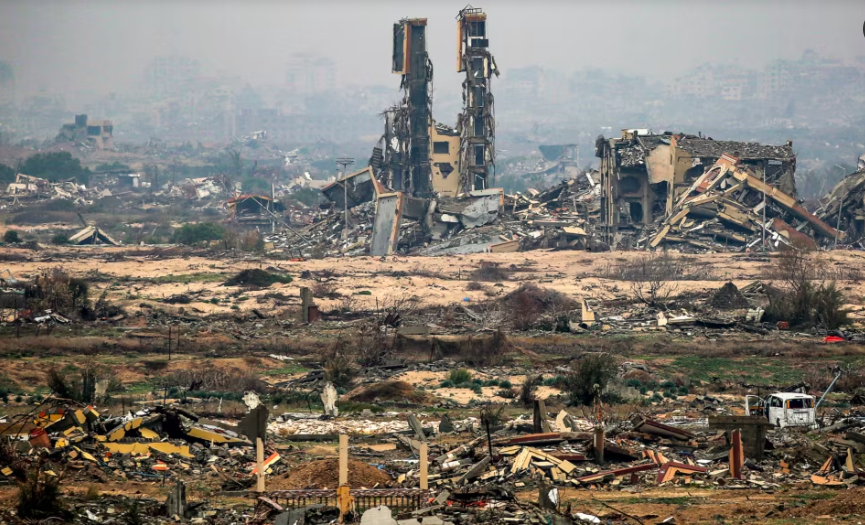
Over the weekend, Israeli troops withdrew from the Netzarim corridor, a narrow strip that bisects Gaza. The move allowed more displaced Palestinians to return to the northern region, though much of the area has been reduced to rubble by months of intense fighting.
Hamas spokesperson Abdel Latif Al-Qanoua hailed the withdrawal as a victory, claiming it proved Hamas had “forced the enemy to submit to our demands” and that it marked the failure of Israeli Prime Minister Benjamin Netanyahu’s goal of achieving “total victory.”
Israeli officials did not disclose the scale of the withdrawal but confirmed that troops remain stationed along Gaza’s borders with Israel and Egypt. A complete withdrawal is expected to be discussed in the later stages of the ceasefire agreement.
Ceasefire Terms and Uncertain Future
The ceasefire agreement, implemented last month, outlined a phased process for de-escalation. In the first phase, Hamas was to release 33 Israeli hostages in exchange for hundreds of Palestinian prisoners, alongside an influx of humanitarian aid into Gaza. Additionally, Israeli forces agreed to pull back from populated areas, including the Netzarim corridor.
The second phase of the agreement is more complex. It stipulates that all remaining living hostages should be released in exchange for a full Israeli withdrawal from Gaza and a commitment to “sustainable calm.” However, the details of this phase remain vague and are yet to be negotiated.
The Human Toll of the Conflict
The war in Gaza erupted after the Hamas-led attack on Israel on October 7, 2023, which left 1,200 people dead and resulted in the capture of approximately 250 hostages. In response, Israel launched a massive counteroffensive that has killed over 47,000 Palestinians, according to local health authorities. Israel claims that 17,000 of those killed were militants.
As tensions flare once again over the latest ceasefire disputes, the possibility of renewed hostilities looms large. The coming days will be crucial in determining whether the truce holds or if another wave of violence is imminent.
Conclusion
The ongoing ceasefire between Israel and Hamas remains on precarious ground, with both sides accusing each other of violations. The potential delay in the hostage exchange, coupled with Trump's controversial relocation proposal, has only added to the uncertainty surrounding the situation. While the ceasefire has provided temporary relief, its long-term viability remains doubtful. Unless both parties adhere to the terms and work toward a sustainable resolution, the fragile peace may soon give way to another devastating chapter of conflict in the region.
Tensions Rise as Hamas Accuses Israel of Ceasefire Violations
The fragile ceasefire between Israel and Hamas is facing a potential collapse as Hamas officials accused Israel of failing to uphold its commitments under the agreement. The accusations have led to threats of delaying the next planned hostage release, escalating tensions further in the already volatile region.
Hamas Alleges Israeli Violations
On Monday, a spokesperson for Hamas' armed wing, the al-Qassam Brigades, asserted that while the group remains committed to the ceasefire terms, Israel has not adhered to its obligations. Hamas accused Israel of obstructing the return of displaced Palestinians to northern Gaza, despite reports that hundreds of thousands have already returned. The militant group further alleged that Israel continued targeting Palestinian areas “with airstrikes and gunfire” and was not facilitating humanitarian aid as agreed.
Register for Tekedia Mini-MBA edition 20 (June 8 – Sept 5, 2026).
Register for Tekedia AI in Business Masterclass.
Join Tekedia Capital Syndicate and co-invest in great global startups.
Register for Tekedia AI Lab.
Despite Hamas’ claims, a United Nations official reported that 12,600 humanitarian aid trucks have entered Gaza since the ceasefire began, significantly easing the immediate risk of famine.
Hostage Exchange in Jeopardy
The next scheduled hostage exchange, set for Saturday, involves the release of three more Israeli hostages in exchange for hundreds of Palestinian prisoners held by Israel. However, Hamas’ threat to delay the exchange has drawn strong reactions from Israeli and U.S. officials. Israeli Defense Minister Israel Katz condemned any delay as a “complete violation” of the ceasefire agreement and placed the Israeli military on high alert.
Trump’s Warning and Controversial Relocation Plan
Former U.S. President Donald Trump issued a stern warning on Monday, declaring that “all hell is going to break out” if the remaining hostages are not released by Saturday. Trump even suggested he would propose canceling the ceasefire agreement if Hamas did not comply by the deadline. However, he did not specify a clear time for the ultimatum, leaving ambiguity over whether it referred to noon or midnight and in which time zone.

Adding further controversy, Trump proposed relocating Palestinians living in Gaza to unspecified locations outside the territory. In a Fox News interview, he described his plan as a "real estate development for the future,” suggesting the construction of “beautiful communities” for displaced Palestinians. Trump, a billionaire real estate mogul before entering politics, insisted that Palestinians would have “much better housing” under his plan but did not indicate where they would be relocated or whether they would be granted the right to return to Gaza. The proposal was swiftly rejected by the Arab world, U.S. allies, and adversaries alike.
Israeli Military Withdrawal and Hamas’ Response
Over the weekend, Israeli troops withdrew from the Netzarim corridor, a narrow strip that bisects Gaza. The move allowed more displaced Palestinians to return to the northern region, though much of the area has been reduced to rubble by months of intense fighting.
Hamas spokesperson Abdel Latif Al-Qanoua hailed the withdrawal as a victory, claiming it proved Hamas had “forced the enemy to submit to our demands” and that it marked the failure of Israeli Prime Minister Benjamin Netanyahu’s goal of achieving “total victory.”

Israeli officials did not disclose the scale of the withdrawal but confirmed that troops remain stationed along Gaza’s borders with Israel and Egypt. A complete withdrawal is expected to be discussed in the later stages of the ceasefire agreement.
Ceasefire Terms and Uncertain Future
The ceasefire agreement, implemented last month, outlined a phased process for de-escalation. In the first phase, Hamas was to release 33 Israeli hostages in exchange for hundreds of Palestinian prisoners, alongside an influx of humanitarian aid into Gaza. Additionally, Israeli forces agreed to pull back from populated areas, including the Netzarim corridor.
The second phase of the agreement is more complex. It stipulates that all remaining living hostages should be released in exchange for a full Israeli withdrawal from Gaza and a commitment to “sustainable calm.” However, the details of this phase remain vague and are yet to be negotiated.
The Human Toll of the Conflict
The war in Gaza erupted after the Hamas-led attack on Israel on October 7, 2023, which left 1,200 people dead and resulted in the capture of approximately 250 hostages. In response, Israel launched a massive counteroffensive that has killed over 47,000 Palestinians, according to local health authorities. Israel claims that 17,000 of those killed were militants.
As tensions flare once again over the latest ceasefire disputes, the possibility of renewed hostilities looms large. The coming days will be crucial in determining whether the truce holds or if another wave of violence is imminent.
Conclusion
The ongoing ceasefire between Israel and Hamas remains on precarious ground, with both sides accusing each other of violations. The potential delay in the hostage exchange, coupled with Trump's controversial relocation proposal, has only added to the uncertainty surrounding the situation. While the ceasefire has provided temporary relief, its long-term viability remains doubtful. Unless both parties adhere to the terms and work toward a sustainable resolution, the fragile peace may soon give way to another devastating chapter of conflict in the region.
Uploaded files:Share this:
- Click to share on Facebook (Opens in new window) Facebook
- Click to share on X (Opens in new window) X
- Click to share on WhatsApp (Opens in new window) WhatsApp
- Click to share on LinkedIn (Opens in new window) LinkedIn
- Click to email a link to a friend (Opens in new window) Email
- Click to print (Opens in new window) Print