

The Truth About India’s Economy: Who’s Really Driving Consumer Growth

Quote from Alex Bobby on February 26, 2025, 5:14 AM
India's Consumer Market: A Deepening Divide
India, home to 1.4 billion people, is often seen as a massive potential market. However, a new report from venture capital firm Blume Ventures highlights a stark reality: around a billion Indians lack the financial means to spend on discretionary goods and services. The country’s actual consuming class, the core market for businesses and start-ups, comprises only 130-140 million people—comparable to the size of Mexico’s consumer base.
Beyond this, another 300 million Indians are classified as "emerging" or "aspirant" consumers. While they have begun spending more due to the ease of digital transactions, their spending habits remain cautious. What is more revealing is that India’s consumer base is not "widening" significantly, meaning that the number of wealthy individuals is not growing substantially. Instead, the existing affluent class is accumulating more wealth, leading to an economic trend known as "premiumisation."
The Rise of Premiumisation
As a result of the deepening economic divide, companies in India are shifting their focus toward premium products aimed at the wealthy. The trend is evident across various sectors:
- Sales of ultra-luxury gated housing and high-end smartphones are soaring, while their budget-friendly counterparts struggle.
- Affordable homes now make up only 18% of India's real estate market, compared to 40% five years ago.
- Branded goods are capturing an increasing market share.
- The "experience economy" is booming, with high-priced tickets for concerts by global artists like Coldplay and Ed Sheeran selling out rapidly.
Companies that have successfully adapted to this shift by targeting the premium segment have thrived. In contrast, those focusing on mass-market products have lost significant market share, according to the report.
Economic Inequality: A Long-Term Structural Issue
The findings of the Blume Ventures report reinforce the view that India’s post-pandemic recovery has been K-shaped—meaning the rich have become wealthier while the poor have lost purchasing power. However, this trend predates the pandemic. Over the past few decades, India has become increasingly unequal:
- The top 10% of Indians now control 57.7% of national income, compared to 34% in 1990.
- The bottom 50% have seen their share of national income drop from 22.2% to 15%.
In recent years, this economic imbalance has been exacerbated by declining financial savings and rising household debt. The Reserve Bank of India (RBI) has also cracked down on unsecured lending, which had previously fueled consumer spending. Since many "emerging" consumers relied on borrowing to sustain their discretionary spending, this shift is expected to dampen consumption further.
Factors Affecting Future Consumption
While short-term factors like a record agricultural harvest and a $12 billion tax relief package in the latest budget may provide a temporary boost, long-term headwinds persist. One of the biggest concerns is the erosion of India’s middle class, which has historically driven consumer demand.
According to data compiled by Marcellus Investment Managers:
- The middle 50% of India's tax-paying population has seen its income stagnate in absolute terms over the past decade.
- When adjusted for inflation, this stagnation effectively means that incomes have been cut in half in real terms.
- Household savings are approaching a 50-year low, according to the RBI.
This financial pressure is expected to impact sectors that rely on middle-class spending, making it increasingly difficult for businesses to cater to this segment.
The Impact of Technology on Employment
Another major concern is the growing impact of artificial intelligence (AI) on employment, particularly in white-collar jobs. The Marcellus report highlights that:
- Clerical, secretarial, and other routine jobs are being automated, reducing opportunities for middle-class workers.
- The number of supervisors employed in manufacturing has declined significantly.
- Many low value-added service sector jobs in India’s IT industry are particularly vulnerable to disruption.
The government’s latest economic survey echoes these concerns, warning that labor displacement due to technological advancements could have macroeconomic implications. Given that India’s economy is largely consumption-driven, any significant fall in consumer spending due to job losses could derail its long-term growth trajectory.
The Road Ahead
India’s consumer market is undergoing a profound transformation, shaped by widening inequality and evolving spending patterns. While businesses catering to premium segments continue to thrive, the struggles of the lower-income and middle-class populations pose serious challenges for sustained economic growth.
As income disparities grow, the country faces a crucial question: Can policy interventions, financial inclusion, and economic reforms help revive consumer demand across all income levels, or will India’s consumer economy remain increasingly exclusive to the wealthiest?
Conclusion
India’s consumer market is undergoing a profound transformation, shaped by widening inequality and evolving spending patterns. While businesses catering to premium segments continue to thrive, the struggles of the lower-income and middle-class populations pose serious challenges for sustained economic growth.
As income disparities grow, the country faces a crucial question: Can policy interventions, financial inclusion, and economic reforms help revive consumer demand across all income levels, or will India’s consumer economy remain increasingly exclusive to the wealthiest?
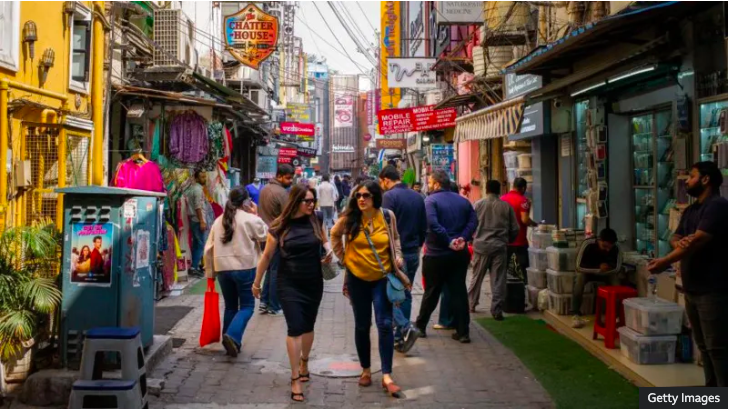
India's Consumer Market: A Deepening Divide
India, home to 1.4 billion people, is often seen as a massive potential market. However, a new report from venture capital firm Blume Ventures highlights a stark reality: around a billion Indians lack the financial means to spend on discretionary goods and services. The country’s actual consuming class, the core market for businesses and start-ups, comprises only 130-140 million people—comparable to the size of Mexico’s consumer base.
Beyond this, another 300 million Indians are classified as "emerging" or "aspirant" consumers. While they have begun spending more due to the ease of digital transactions, their spending habits remain cautious. What is more revealing is that India’s consumer base is not "widening" significantly, meaning that the number of wealthy individuals is not growing substantially. Instead, the existing affluent class is accumulating more wealth, leading to an economic trend known as "premiumisation."
Register for Tekedia Mini-MBA edition 20 (June 8 – Sept 5, 2026).
Register for Tekedia AI in Business Masterclass.
Join Tekedia Capital Syndicate and co-invest in great global startups.
Register for Tekedia AI Lab.
The Rise of Premiumisation
As a result of the deepening economic divide, companies in India are shifting their focus toward premium products aimed at the wealthy. The trend is evident across various sectors:
- Sales of ultra-luxury gated housing and high-end smartphones are soaring, while their budget-friendly counterparts struggle.
- Affordable homes now make up only 18% of India's real estate market, compared to 40% five years ago.
- Branded goods are capturing an increasing market share.
- The "experience economy" is booming, with high-priced tickets for concerts by global artists like Coldplay and Ed Sheeran selling out rapidly.
Companies that have successfully adapted to this shift by targeting the premium segment have thrived. In contrast, those focusing on mass-market products have lost significant market share, according to the report.

Economic Inequality: A Long-Term Structural Issue
The findings of the Blume Ventures report reinforce the view that India’s post-pandemic recovery has been K-shaped—meaning the rich have become wealthier while the poor have lost purchasing power. However, this trend predates the pandemic. Over the past few decades, India has become increasingly unequal:
- The top 10% of Indians now control 57.7% of national income, compared to 34% in 1990.
- The bottom 50% have seen their share of national income drop from 22.2% to 15%.
In recent years, this economic imbalance has been exacerbated by declining financial savings and rising household debt. The Reserve Bank of India (RBI) has also cracked down on unsecured lending, which had previously fueled consumer spending. Since many "emerging" consumers relied on borrowing to sustain their discretionary spending, this shift is expected to dampen consumption further.

Factors Affecting Future Consumption
While short-term factors like a record agricultural harvest and a $12 billion tax relief package in the latest budget may provide a temporary boost, long-term headwinds persist. One of the biggest concerns is the erosion of India’s middle class, which has historically driven consumer demand.
According to data compiled by Marcellus Investment Managers:
- The middle 50% of India's tax-paying population has seen its income stagnate in absolute terms over the past decade.
- When adjusted for inflation, this stagnation effectively means that incomes have been cut in half in real terms.
- Household savings are approaching a 50-year low, according to the RBI.
This financial pressure is expected to impact sectors that rely on middle-class spending, making it increasingly difficult for businesses to cater to this segment.
The Impact of Technology on Employment
Another major concern is the growing impact of artificial intelligence (AI) on employment, particularly in white-collar jobs. The Marcellus report highlights that:
- Clerical, secretarial, and other routine jobs are being automated, reducing opportunities for middle-class workers.
- The number of supervisors employed in manufacturing has declined significantly.
- Many low value-added service sector jobs in India’s IT industry are particularly vulnerable to disruption.
The government’s latest economic survey echoes these concerns, warning that labor displacement due to technological advancements could have macroeconomic implications. Given that India’s economy is largely consumption-driven, any significant fall in consumer spending due to job losses could derail its long-term growth trajectory.
The Road Ahead
India’s consumer market is undergoing a profound transformation, shaped by widening inequality and evolving spending patterns. While businesses catering to premium segments continue to thrive, the struggles of the lower-income and middle-class populations pose serious challenges for sustained economic growth.
As income disparities grow, the country faces a crucial question: Can policy interventions, financial inclusion, and economic reforms help revive consumer demand across all income levels, or will India’s consumer economy remain increasingly exclusive to the wealthiest?
Conclusion
India’s consumer market is undergoing a profound transformation, shaped by widening inequality and evolving spending patterns. While businesses catering to premium segments continue to thrive, the struggles of the lower-income and middle-class populations pose serious challenges for sustained economic growth.
As income disparities grow, the country faces a crucial question: Can policy interventions, financial inclusion, and economic reforms help revive consumer demand across all income levels, or will India’s consumer economy remain increasingly exclusive to the wealthiest?
Uploaded files:Share this:
- Click to share on Facebook (Opens in new window) Facebook
- Click to share on X (Opens in new window) X
- Click to share on WhatsApp (Opens in new window) WhatsApp
- Click to share on LinkedIn (Opens in new window) LinkedIn
- Click to email a link to a friend (Opens in new window) Email
- Click to print (Opens in new window) Print