

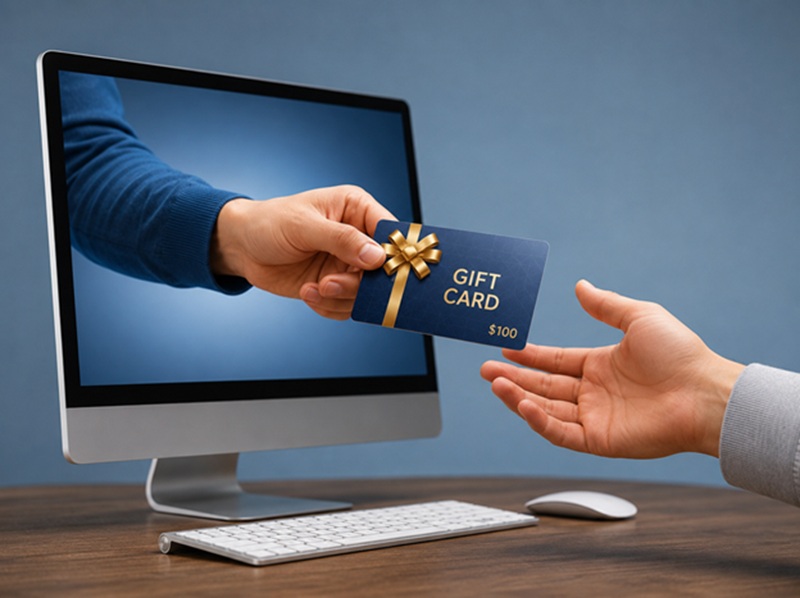
If you are a business owner and one day decide to offer bonuses or extra discounts to your customers, they are almost certainly going to take them for granted. Not because people are unappreciative. It’s just psychological. To them, you are the source of the offer. You operate a gaming site, an e-commerce platform, or whatever the business may be, so they may assume it costs you almost nothing to open the door a crack, so to speak.
And maybe they are right. But even if it takes very little to be generous, does it actually pay off?
Why the first offer can change the whole customer equation
A first-time incentive works best when it is treated as pricing architecture, not generosity. In practical terms, a platform uses it to lower the customer’s entry barrier while preserving the chance of future margin. That is why welcome bonus offers by casino sites should be understood as a structured acquisition tool. It helps move a user from passive interest to active trial by improving the perceived value of the first transaction.
The mechanics are straightforward. A bonus raises the customer’s starting balance of experience. Instead of making one small test purchase or one cautious first deposit, the user feels able to explore more of the product, compare formats, and stay engaged for longer. In online casino marketing, free spins are especially useful here because they create product sampling without forcing the customer to choose only one narrow path.
Our observations show that on modern casino sites, welcome bonuses do not come alone, but are usually combined with extra offers, such as free spins.
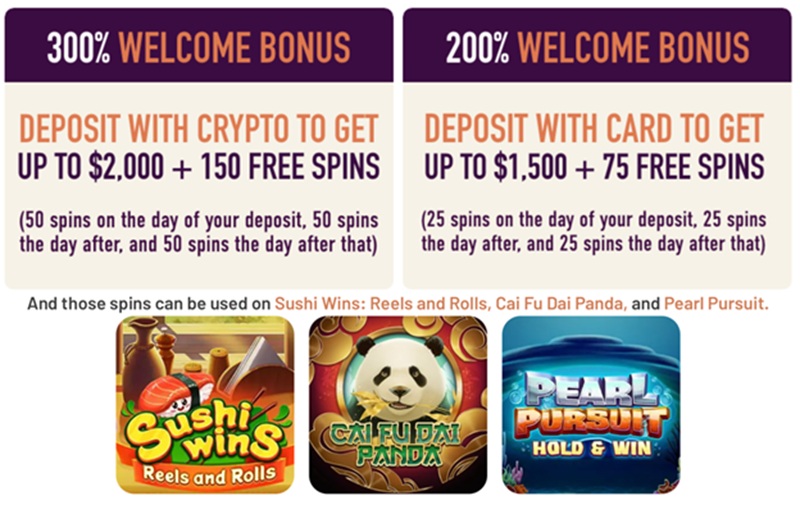
Screenshot from: Here
They let the platform showcase game variety, pacing, and interface quality while collecting early behavioral data. That matters because early-session data often tells marketers which users respond to entertainment depth, which respond to reward cadence, and which may convert better through later retention campaigns.
The upfront cost can still make financial sense
There is also a financial logic behind this. An upfront incentive can improve conversion efficiency if it shifts enough users into a second and third transaction. Once that happens, the initial cost stops looking like a pure discount and starts looking like a funded path toward lifetime value. A platform is basically buying a higher probability of habit formation. In that sense, welcome bonuses casinos offer often function like a bridge between advertising spend and recurring revenue, and most importantly, they frame these bonuses as opportunities to have initial wins and engagement, telling their customers that even small steps can be fun:
@cafecasinolv Start small, win big ? #relax #journaling #cleantok #wholesome #selfcare
What current market signals say about incentive-led acquisition
Recent market data suggests that incentive-led customer acquisition remains commercially relevant because it fits where digital demand is already moving.
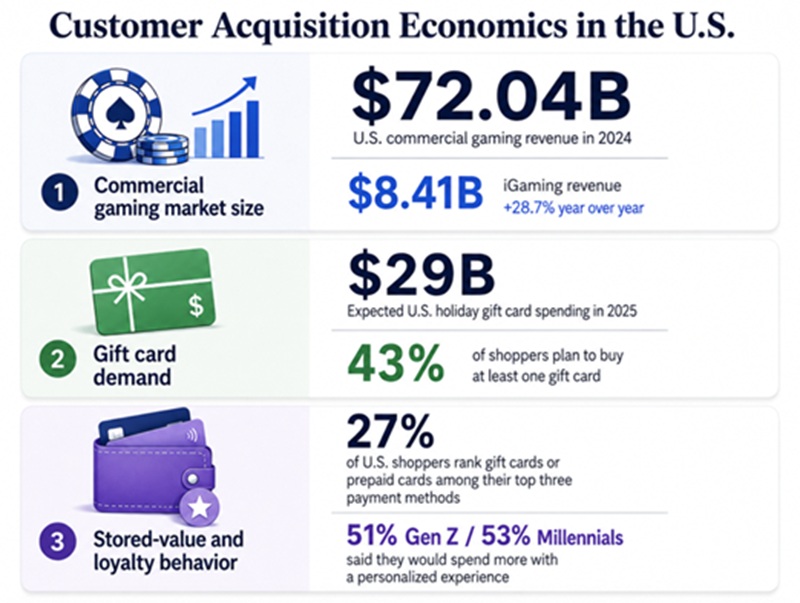
Original visual material, specifically created for this article.
The National Retail Federation says gift cards are the second-most popular holiday gift and expects people to spend about $29 billion on them in 2025. PwC also says 27% of shoppers now list gift cards or prepaid cards among their top three payment methods. The year before, it was only 14%.
Together, these numbers show a simple finance point: customers already understand gift cards and prepaid cards. So platforms do not need to spend a lot of time or money explaining how they work before using them as incentives.
When do these incentives actually pay off?
They pay off when the first reward is connected to a retention system, not left as a one-off giveaway. The best evidence here is not that consumers love rewards in the abstract, but that they respond to programs that are easy to use, personalized, and digitally smooth.
The best reward programs do more than bring in a first purchase. Compared with weak programs, they make customers come back more often, feel more loyal to the brand, and spend more of their money there.
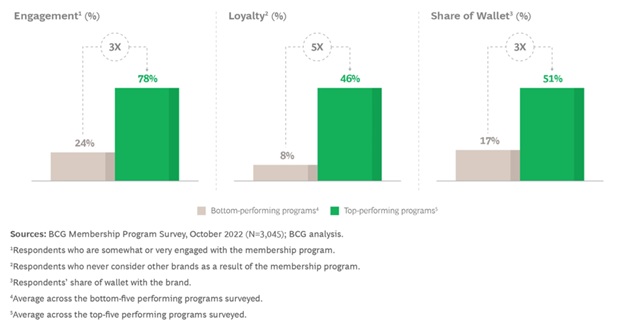
Data: Here
An 2025 survey of 5,564 U.S. adults shows why bonus design matters. It found that 40% of people sometimes forget to use their rewards.
It also found that younger shoppers care a lot about personal experiences:
- 51% of Gen Z said they would spend more with a brand that gives a personalized experience
- 53% of millennials said the same
- more than 90% of Gen Z and millennials found at least one tech-based loyalty feature useful
This is an important reminder: a bonus works only if people actually use it. The value is not just in the size of the offer. It also depends on how easy it is to redeem, how well the brand reminds people, and what kind of experience comes after the reward.
Payback depends on the full customer journey
A useful way to read this is through payback logic. An incentive justifies its cost when it improves the quality of the customer cohort enough to lift repeat spend, reduce churn, or increase margin per active user over time.
Original visual material, specifically created for this article.
That is why message timing, reward visibility, and next-best-offer design matter so much. The platform must guide the user from the first promotional touch to a second meaningful transaction.
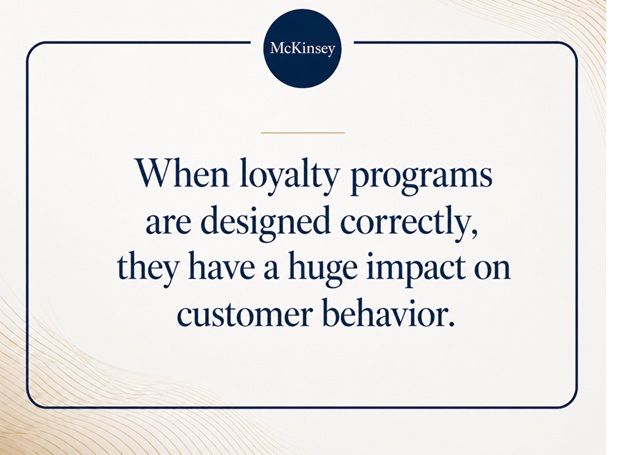
McKinsey formulates the principle this way: “When loyalty programs are designed correctly, they have a huge impact on customer behavior.” The rest of the same observation is equally important for finance teams: those programs can increase spending frequency and size, reduce switching, and make customers less price-sensitive.
So, selective incentives work better than generic ones
The practical conclusion is not that every free offer works, but rather that free offers work when they are selective, measurable, and tied to the right customer journey. In that form, welcome bonuses, free spins, and gift cards are not just marketing decorations. They are instruments for buying better demand.