

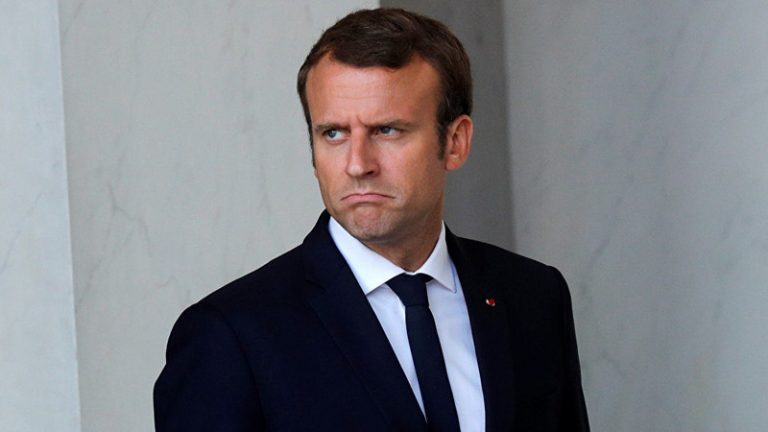
French President Emmanuel Macron has called on the European Commission to introduce an EU-wide ban on social media access for children under 15, seeking to revive a policy that failed to take effect in France and turn it into a bloc-wide rule.
In a letter dated Aug. 29 to European Commission President Ursula von der Leyen, Macron said the European Union needed new legislation to establish a common age threshold for social media access across its 27 member states.
“I believe it has now become essential to go further and, through a new European legislative text, harmonize a ban on access to social media platforms for children under the age of 15, in order to protect all children across the Union,” Macron wrote.
Register for the next Tekedia Mini-MBA.
Register for Tekedia AI in Business Masterclass.
Join Tekedia Capital Syndicate and co-invest in great global startups.
The intervention follows the French Constitutional Council’s decision this summer to strike down a national bill that would have restricted social media access for children before the legislation was scheduled to take effect in September.
Macron’s office said France would seek to rewrite the rejected legislation, but the president faces significant political obstacles at home. A fragmented parliament and difficult negotiations over the government’s budget could make it harder to secure support for another national law.
The situation has increased the importance of Macron’s push for action at the European level.

The debate has gained momentum since Australia adopted a landmark social media restriction for children last year. Several European governments are now considering tighter rules as concerns grow over the effects of social media on children’s mental health, exposure to harmful content, online exploitation and other safety risks.
European governments, however, remain divided over how far regulation should go.
Some countries, particularly in Scandinavia, have argued that decisions over children’s social media use should remain primarily with parents rather than being imposed through blanket government restrictions. A common EU rule would therefore require governments to reconcile significantly different approaches to parental responsibility, digital rights and child protection.

The European Commission has already signaled that it is considering restrictions on young children’s access to social media.
Von der Leyen said in July that the EU would move toward limiting access for younger children, citing recommendations from two experts that proposed a graduated system rather than an outright ban at a single age.
Under that approach, children below 13 could receive only limited and supervised access, with restrictions gradually eased as they grow older.
Macron is seeking a considerably tougher framework.
His proposed threshold would prohibit children under 15 from accessing social media platforms, creating a uniform minimum age across the EU rather than relying on graduated restrictions or individual national rules.
The approach could become an important part of the debate over the EU’s eventual legislation. A blanket age limit would require effective methods for verifying users’ ages while limiting the collection and processing of children’s personal data. It would also raise questions about which platforms would fall within the definition of “social media,” how age restrictions would be enforced across borders, and what obligations would be imposed on technology companies.
For social media companies, an EU-wide rule could be more consequential than a patchwork of national restrictions. A single framework would apply across one of the world’s largest digital markets, potentially forcing platforms to redesign age-verification systems and parental controls across their European operations.
Macron has made protecting children from social media a political priority as he enters the final year of his presidency ahead of France’s 2027 presidential election. His latest appeal to Brussels also allows France to pursue a common European solution after encountering constitutional and political barriers to its own legislation.
The timing gives the proposal additional political significance. Von der Leyen is due to deliver her flagship State of the Union address to the European Parliament later this month, when the Commission is expected to set out priorities for the bloc.
Macron’s proposed age-15 threshold could therefore become an early test of how far the European Commission is prepared to go in regulating children’s access to digital platforms. The broader issue is no longer simply whether children should face stronger safeguards online, but who should set those rules: national governments, parents or the European Union.
Macron is pushing for Brussels to settle that question with a common standard across the bloc, while the Commission appears to be weighing a more graduated approach. The outcome could shape Europe’s digital policy toward children and establish a regulatory model that other governments may consider as they confront growing concerns over social media’s impact on young users.