

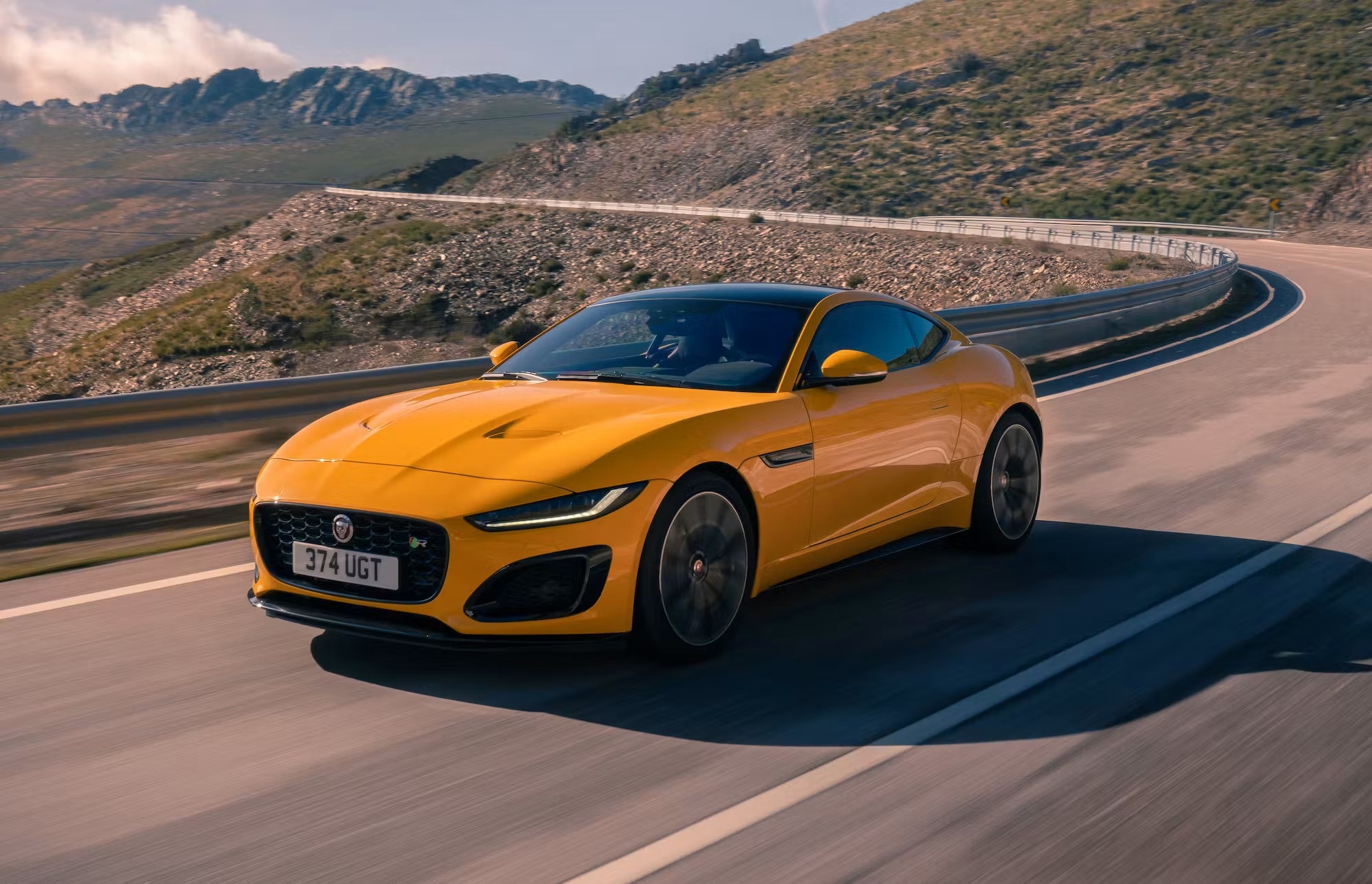
Jaguar Land Rover is cutting around 4,000 jobs over the next two years, or nearly 10% of its global workforce, as Britain’s largest carmaker launches a major cost-reduction drive to counter intensifying Chinese competition, U.S. tariffs, the fallout from a damaging cyberattack and the high cost of transforming its vehicle lineup.
The luxury automaker, owned by India’s Tata Motors, is targeting about £1.7 billion ($2.3 billion) in savings and aims to reduce the volume of vehicles it needs to sell to break even to around 300,000 units a year. The reductions are expected to focus largely on salaried and management positions, with JLR seeking to use voluntary redundancies where possible.
Chief Executive PB Balaji said JLR would also launch five new products over the next 12 months as it seeks to restore growth while lowering its cost base.
Register for the next Tekedia Mini-MBA.
Register for Tekedia AI in Business Masterclass.
Join Tekedia Capital Syndicate and co-invest in great global startups.
“The automotive industry faces significant challenges, with technological change amidst intense competition and ongoing geo-political uncertainty,” Balaji said.
“As part of this transformation, we will reduce our global workforce by around 4,000 roles over the next two years. We recognize this will be difficult news for colleagues affected, and are committed to supporting everyone with care, fairness and respect,” he added.
The restructuring marks one of the most significant tests yet for JLR as it attempts to balance the enormous capital requirements of electrification with weaker demand, geopolitical uncertainty and a rapidly changing competitive landscape.

JLR employs about 43,000 people globally, with roughly 34,000 based in the United Kingdom. The company plans to continue investing heavily in electrification, digital technology and advanced manufacturing even as it cuts costs, with planned investment of £15 billion to £18 billion over the next five years.
One of JLR’s biggest strategic problems is the changing competitive environment in China, once a crucial growth market for global luxury manufacturers.
Chinese Companies Disrupting Markets
Chinese automakers have rapidly improved the quality and technology of their electric vehicles while maintaining aggressive pricing. Companies such as BYD and other domestic manufacturers have gained ground with products that compete with established European and Japanese brands on battery technology, software and connectivity.

That puts pressure on JLR’s traditional premium positioning at precisely the time the company is investing heavily to transition its own brands toward electric vehicles.
The challenge is particularly acute because luxury automakers cannot compete solely on price. They must spend heavily on technology, design and brand development while preserving margins, making cost efficiency increasingly important as competition intensifies.
Trump Tariffs Add Pressure
JLR is also exposed to U.S. trade policy. The United States is one of the company’s most important markets, but its vehicles are largely manufactured outside the country, leaving the company vulnerable to tariffs imposed by President Donald Trump on imported automobiles.
The tariffs increase the cost of vehicles entering the U.S. market and threaten to squeeze margins unless the additional expense can be absorbed by JLR, passed on to customers, or offset through cost reductions elsewhere.
The U.S. exposure makes the issue particularly important for JLR because North America represents a significant portion of its global business.
The company therefore faces a difficult combination of higher trade costs and weaker demand in some markets at a time when it needs to finance a major product transition.
Cyberattack Compounds Financial Pressure
JLR’s restructuring also follows a major cyberattack that disrupted the company’s operations and production.
The attack caused significant disruption to manufacturing and supply chains, compounding an already difficult trading environment. The episode highlighted the growing operational risks facing automakers as factories become increasingly dependent on connected software systems, digital supply chains and automated production.
For JLR, the financial consequences came on top of declining sales, tariff costs and heavy investment requirements. The combination has increased pressure on management to reduce the company’s break-even point. Lowering that threshold to approximately 300,000 vehicles means JLR would need fewer annual sales to cover its fixed costs, theoretically making the business more resilient to fluctuations in demand.
The job cuts are also creating political pressure for Prime Minister Andy Burnham’s government, which has made industrial growth and manufacturing competitiveness important elements of its economic agenda.
Business and Trade Minister Jonathan Reynolds has ruled out a government bailout and is expected to meet JLR executives to discuss the redundancy programme and ways of mitigating the impact on workers.
“We understand that this will be an uncertain and concerning time for affected workers, their families and wider communities,” a government spokesperson said.
The government pointed to measures including lower electricity costs for manufacturers, £4 billion of capital and research-and-development funding for zero-emission vehicle manufacturing, and a £2 billion Electric Car Grant intended to stimulate consumer demand for electric vehicles.
The government faces a difficult balancing act: supporting strategic manufacturing without permanently subsidizing companies that are struggling to compete in an increasingly globalized automotive market.
JLR’s workforce reduction could also affect communities beyond the company itself because the automaker supports a large network of suppliers and related businesses across the UK.
JLR Cuts Costs While Continuing EV Investment
The restructuring does not represent a retreat from electrification. Instead, JLR is attempting to make its existing business financially leaner so it can continue funding the technology and products needed for the next phase of the automotive industry.
The company plans to launch five new products over the next year and continue substantial spending on electric vehicles, digital technologies and manufacturing. That creates a paradox facing much of the traditional automotive industry: companies must simultaneously spend billions to transform their businesses while cutting costs because the transition is occurring in a weaker and more competitive market.
JLR is not alone.
Germany’s Volkswagen has also announced further major job reductions as it restructures amid fierce competition from Chinese manufacturers, tariff pressures and the costly transition toward electric vehicles.
The broader industry shift suggests that the global automotive market is entering a period in which scale and brand strength alone are no longer sufficient. Established manufacturers must lower production costs, accelerate software and EV development, and respond to Chinese competitors that have moved rapidly up the technology curve.
JLR’s immediate goal is to make the company less dependent on high sales volumes while giving its luxury brands enough financial capacity to compete in the next generation of vehicles.