

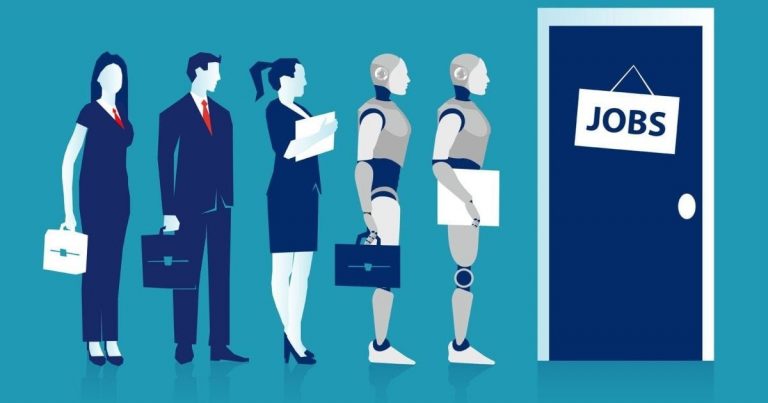
According to a new analysis by Goldman Sachs economist Joseph Briggs, the rise of generative AI is beginning to show tangible effects on the labor market, particularly within the technology sector.
While widespread AI deployment is still in early stages, early employment data reveal a clear trend that young tech workers face increased job displacement and reduced opportunities.
Speaking on the “Goldman Sachs Exchanges” podcast, Briggs explained that tech employment which had been growing steadily for two decades has recently diverged from its long-term trend.
Register for Tekedia Mini-MBA edition 20 (June 8 – Sept 5, 2026).
Register for Tekedia AI in Business Masterclass.
Join Tekedia Capital Syndicate and co-invest in great global startups.
Register for Tekedia AI Lab.
“Over the last three years, we’ve seen a pullback in tech hiring that has led it to undershoot its trend,” he noted, highlighting a shift that coincides with the explosive growth of generative AI tools like OpenAI’s ChatGPT since late 2022.
The launch of ChatGPT marked a pivotal moment in AI, sparking widespread adoption and interest in conversational models. Built on OpenAI’s GPT architecture, it showcased the power of large language models to generate human-like text, answer questions, and assist with tasks, making AI accessible to millions.
The massive adoption and success of the AI platform, drove competition leading to advancements like Claude, Gemini, and Grok, amongst others, while raising debates on ethics, bias, and job displacement. The ripple effect continues, with AI now integral to industries, research, and daily life.

The surging automation in job roles is hitting younger tech workers the hardest. Reports reveal that unemployment among tech professionals aged 20 to 30 has jumped by 3 percentage points in 2025, a sharper increase than in the broader tech industry or among young workers in other fields. Entry-level tasks like form-filling and basic coding, once considered stepping stones into the industry, are now easily automated, reducing opportunities for new graduates.
Despite most companies not yet integrating AI at scale, the technology is already replacing tasks previously assigned to junior-level employees. This is particularly visible in coding, content generation, and data processing areas where AI has proven capable of matching or exceeding human performance.
Major tech firms such as Alphabet, Microsoft, and Salesforce have openly acknowledged that AI now contributes to 30–50% of work in some projects.

IBM: IBM has openly discussed using AI chatbots to replace 200 HR employees, with CEO Arvind Krishna noting that the company’s overall headcount increased as they reinvested in other areas. AI is used for tasks like fraud detection and process automation in industries like healthcare and banking.
Klarna: The fintech company has been transparent about AI reducing its workforce from 5,000 to around 3,000 employees, with CEO Sebastian Siemiatkowski highlighting AI’s role in automating tasks like customer service and operations.
FedEx: FedEx employs conversational AI to streamline hiring processes, reducing the time from application to offer to under 10 minutes for some roles, enhancing recruitment efficiency.
The broader impact of AI on jobs is increasingly being documented. A Challenger, Gray & Christmas report reveals that AI adoption contributed to over 10,000 job cuts in the first seven months of 2025 alone. Since 2023, more than 27,000 layoffs have been directly linked to AI. Tech companies led the way, announcing over 89,000 job cuts so far this year a 36% increase from 2024.
At the same time, job postings for entry-level corporate roles have declined 15% over the past year, according to Handshake, a career platform popular among Gen Z. They also reported a 400% rise in employers including “AI” in job descriptions, reflecting shifting expectations and required skills in the workplace.
With employers adding only 73,000 jobs in July, falling short of forecasts, analysts warn that AI-related disruptions may continue to reshape hiring trends — especially for younger, less-experienced workers seeking to enter an evolving job market.