

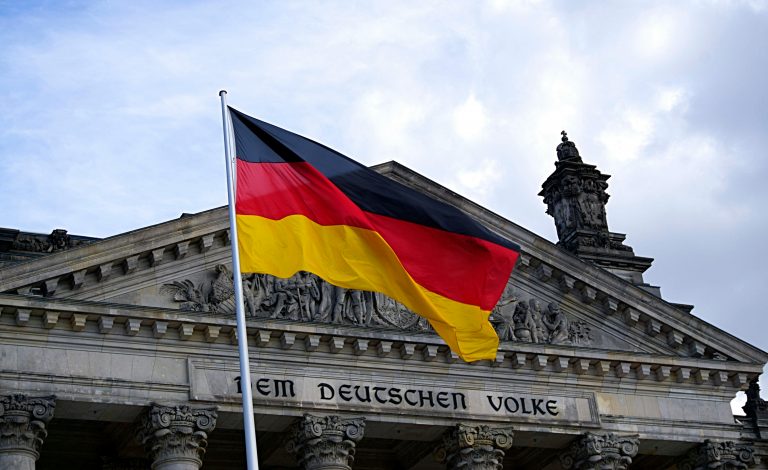
A German court has ruled that three-dimensional aerial footage of residential properties may not be published on Google Earth and Google Maps if the property owner objects.
The decision highlights the growing tension between digital innovation, personal privacy and the public’s demand for increasingly detailed online mapping services. It raises important questions about how technology companies collect, process and display information about private homes in an increasingly connected world.
Google Earth and Google Maps have transformed how people explore locations, plan journeys and discover unfamiliar neighbourhoods. Through satellite imagery, street-level photographs and three-dimensional visualisations, users can examine buildings and landscapes without physically visiting them.
Register for the next Tekedia Mini-MBA.
Register for Tekedia AI in Business Masterclass.
Join Tekedia Capital Syndicate and co-invest in great global startups.
These services provide practical benefits for travellers, businesses, property buyers and researchers. The same capabilities that make digital maps useful can also expose details of private residences that owners would prefer to keep away from public view.
The German court’s ruling reinforces the principle that technological convenience does not automatically outweigh an individual’s right to privacy. Residential properties are not simply geographical coordinates or architectural structures.
They are private spaces associated with personal security, family life and the expectation that people should retain some control over how their homes are represented online. When digital imagery provides a detailed, three-dimensional view of a property, concerns about unwanted exposure become particularly significant.

The decision reflects Germany’s broader commitment to data protection and individual rights. European privacy rules, including the General Data Protection Regulation, have established strict requirements for processing personal data.
Although buildings themselves are not necessarily personal data, detailed imagery connected to identifiable individuals or their private lives can raise legal questions. The court’s ruling therefore demonstrates how existing privacy principles may influence the development and operation of modern digital services.
The decision could create additional compliance responsibilities. The company operates mapping platforms across numerous countries, each with its own legal traditions and regulatory expectations.

If property owners can successfully object to the publication of certain three-dimensional aerial images, Google may need effective procedures for receiving complaints, verifying ownership and removing or restricting disputed material.
Such processes could increase operational costs while requiring greater coordination between technology teams and legal departments. The ruling does not necessarily mean that all aerial imagery of German homes must disappear from online maps. Its reported scope concerns three-dimensional aerial footage and objections from property owners.
The precise consequences will depend on the judgment’s legal reasoning, the properties covered and how the decision is implemented. Two-dimensional satellite images, public street photographs and other mapping features should not automatically be assumed to face identical restrictions.
The case presents a challenge for the wider digital economy. Detailed mapping supports urban planning, infrastructure development, logistics, tourism and property research. Restricting some visual information could reduce the completeness of digital maps, potentially affecting users who depend on accurate representations of their surroundings.
Allowing unrestricted publication could undermine public confidence if residents believe their privacy is being sacrificed for commercial convenience. Germany’s decision illustrates the need to establish clearer boundaries between public information and private life.
Technology companies must balance innovation with meaningful safeguards, while governments and courts must determine how privacy rights apply to rapidly evolving digital tools. As mapping technology becomes more sophisticated, similar disputes may emerge elsewhere.
The central question is no longer simply what companies can capture, but what they should be permitted to publish. Germany’s ruling sends a clear message: digital progress must respect individual rights, and property owners should have a meaningful voice when detailed representations of their homes become publicly accessible.
France Economic Inequality and Household Finances Drive Protests
France’s recurring protests reflect a growing struggle over the cost of living, public spending and economic inequality. Behind the demonstrations lies a fundamental question: how can households maintain their living standards when essential expenses consume an increasing share of their incomes?
Four economic indicators help explain why affordability has become a major source of public frustration and political tension. The first figure is inflation. Although France experienced a significant slowdown in inflation after the price shocks of previous years, lower inflation does not mean that prices have returned to their previous levels.
Food, electricity, transportation and other household essentials remain considerably more expensive than before the inflationary surge. For families whose wages have not kept pace with cumulative price increases, everyday purchases continue to put pressure on budgets.
Even when inflation moderates, consumers may feel little relief because their purchasing power has already been weakened. The second figure is housing expenditure.
Rent and property costs have become particularly challenging for households in major French cities, where employment opportunities often attract more residents than affordable accommodation can comfortably support.
Younger workers, students and lower-income families face difficult choices between living close to work and accepting longer commutes from cheaper areas. Housing costs also affect spending on food, healthcare and leisure, leaving many households financially vulnerable to unexpected expenses.
The problem is especially severe when wages rise more slowly than rents and housing-related charges. The third figure is purchasing power. Household income provides an important measure of whether people can maintain their standard of living.
But nominal wage increases do not necessarily translate into greater financial security. When salaries rise more slowly than essential expenses, workers effectively lose purchasing power. Pensioners and people receiving fixed benefits can face similar pressures, particularly when energy bills and grocery prices remain elevated.
This explains why economic growth figures may appear relatively encouraging while many citizens still feel worse off. For protesters, the central issue is not simply whether the economy is expanding, but whether its benefits are reaching ordinary households.
The fourth figure is the pressure on public finances and government spending. France faces difficult decisions over its budget deficit, public debt and the future financing of social protections.
Efforts to reduce spending or increase contributions can generate resistance when households already feel financially stretched. Public services, pensions, unemployment support and other social programmes form an important part of France’s economic model.
Proposed reforms can be perceived not merely as technical budget adjustments but as threats to living standards and social security. Workers may question why they should accept additional sacrifices when they believe the costs of economic adjustment are distributed unequally.
These four indicators help explain why affordability has become a powerful political issue in France. Inflation determines what people pay, housing absorbs a substantial portion of income, purchasing power measures what remains, and fiscal policy influences the protections citizens receive.
Their combined effects can deepen dissatisfaction even when headline economic indicators improve. France’s protests cannot be understood solely as opposition to individual government decisions.
They reflect anxiety about economic fairness, social mobility and the future of the welfare state. Restoring confidence will require policies that address the cost of essential goods, expand access to affordable housing, protect real incomes and distribute fiscal adjustments transparently.
Without meaningful progress, economic frustration is likely to remain a powerful force shaping France’s political debate.