

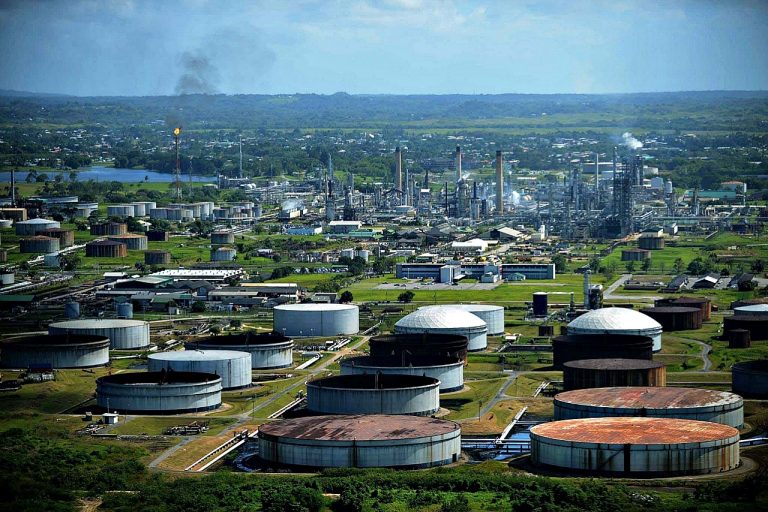
Germany’s decision to extend employment guarantees at the former Russian-owned refinery highlights the complex intersection of energy security, geopolitics, industrial policy, and labor protection in Europe’s largest economy.
The refinery, once controlled by Russian interests through energy giant Rosneft, has become a symbol of Germany’s broader struggle to reduce dependence on Russian energy while maintaining economic stability and protecting thousands of jobs tied to critical infrastructure.
The refinery at the center of this issue is one of Germany’s most strategically important energy facilities. It plays a major role in supplying fuel to eastern Germany, including the Berlin region, and has historically relied heavily on Russian crude oil delivered through the Druzhba pipeline. Before Russia’s invasion of Ukraine in 2022, Germany, like much of Europe, depended significantly on Russian energy imports.
However, the war fundamentally altered Europe’s energy landscape and forced governments to reconsider their relationships with Russian state-linked companies. In response to the geopolitical crisis, the German government took extraordinary measures to place the refinery under trusteeship and reduce Moscow’s influence over national energy infrastructure.
Register for the next Tekedia Mini-MBA.
Register for Tekedia AI in Business Masterclass.
Join Tekedia Capital Syndicate and co-invest in great global startups.
The refinery’s transition away from Russian ownership and supply chains created uncertainty for workers, local communities, and businesses dependent on refinery operations. Employment guarantees therefore became a crucial political and economic tool aimed at stabilizing the workforce during a period of restructuring and uncertainty.
By extending these employment protections, Germany is signaling that the energy transition and geopolitical realignment should not come at the expense of ordinary workers. Industrial jobs in refining and energy production are often highly specialized, well-paid, and central to regional economies. Sudden layoffs could have triggered social unrest, economic decline, and political backlash, particularly in eastern Germany where economic disparities remain sensitive decades after reunification.
The move also reflects Germany’s broader economic philosophy of balancing market transformation with social stability. Unlike abrupt privatization or rapid restructuring models seen elsewhere, Germany has historically favored negotiated transitions involving government support, labor unions, and corporate stakeholders.
Employment guarantees help maintain public support for difficult strategic decisions, including sanctions on Russia and the costly diversification of energy supplies. At the same time, the situation reveals the broader challenges Europe faces as it attempts to secure energy independence.

Replacing Russian oil and gas has proven expensive and logistically difficult. Germany has invested heavily in alternative energy imports, liquefied natural gas infrastructure, and renewable energy projects, but these transitions take time. Refineries designed for Russian crude often require technical adjustments to process oil from different suppliers, adding further operational complexity.
Critics argue that prolonged state involvement in former Russian-owned assets could expose taxpayers to financial risks and create uncertainty about the refinery’s long-term ownership structure. Others question whether continued guarantees can remain sustainable if global energy markets weaken or if refining margins decline.
Nonetheless, supporters believe the policy is necessary to preserve strategic capacity and avoid destabilizing a critical sector during a period of geopolitical tension. Germany’s extension of employment guarantees demonstrates how modern energy policy is no longer solely about fuel supply or market efficiency.

It is increasingly tied to national security, industrial resilience, and social cohesion. The former Russian-owned refinery has become more than an energy asset; it now represents Europe’s effort to navigate a historic transformation while protecting workers and maintaining economic stability in an uncertain world.