

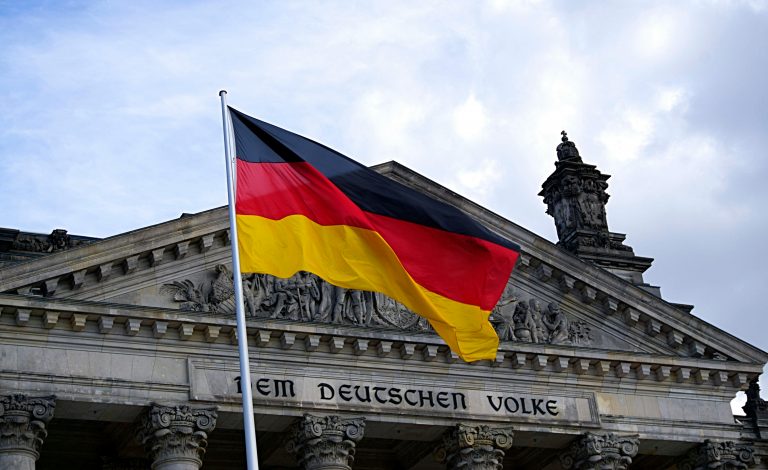
Before the recent headlines, Germany was widely regarded as Europe’s industrial powerhouse, known for engineering excellence, manufacturing strength, and technological innovation. A series of developments now highlights the country’s struggle to balance economic competitiveness, digital sovereignty, labor relations, and environmental commitments.
From a regional government’s decision to reduce dependence on Microsoft software to mass worker protests at Mercedes-Benz and continued reliance on fossil fuels in road transportation, Germany finds itself navigating several complex transitions simultaneously.
One of the most significant developments is a German federal state’s decision to move away from Microsoft’s software ecosystem. The initiative reflects growing concerns across Europe about digital sovereignty, data privacy, and dependence on foreign technology providers.
Public institutions increasingly seek greater control over their digital infrastructure by exploring open-source alternatives and locally managed software solutions. Supporters argue that reducing reliance on a single global technology company can improve cybersecurity, increase transparency, lower long-term licensing costs, and ensure sensitive government data remains under domestic or European oversight.
Register for the next Tekedia Mini-MBA.
Register for Tekedia AI in Business Masterclass.
Join Tekedia Capital Syndicate and co-invest in great global startups.
This shift also aligns with broader European ambitions to strengthen technological independence. As governments become increasingly reliant on cloud computing, artificial intelligence, and digital public services, policymakers are paying closer attention to where data is stored and who controls the underlying infrastructure.
While migrating away from established software platforms presents technical and financial challenges, advocates believe the long-term benefits outweigh the short-term disruption. Germany’s industrial sector is experiencing growing labor tensions. Tens of thousands of Mercedes-Benz employees recently joined demonstrations against proposed cost-cutting measures.
Workers fear that restructuring efforts, workforce reductions, and efficiency programs could threaten job security during an already uncertain economic period. The protests illustrate the difficult balancing act facing traditional automakers.

Companies like Mercedes-Benz are investing billions of euros to accelerate the transition toward electric vehicles while simultaneously managing rising production costs, intense global competition, and slowing demand in some markets.
To remain competitive, management often seeks operational efficiencies, but employees worry these measures may come at the expense of stable employment and long-established labor protections. Germany has a long history of cooperation between employers and labor unions, making large-scale protests particularly significant.
The demonstrations suggest that workers want greater involvement in shaping the industry’s future rather than simply absorbing the costs of corporate transformation. Adding another layer to Germany’s challenges is the country’s continued dependence on fossil fuels in road transportation.

Despite substantial investments in electric vehicles, renewable energy, and climate initiatives, gasoline and diesel-powered vehicles still dominate German roads. Several factors contribute to this reality. Electric vehicle adoption continues to grow but remains constrained by charging infrastructure, vehicle affordability, and consumer preferences.
Commercial transportation, freight logistics, and heavy-duty vehicles remain especially difficult to electrify at scale. In addition, Germany’s extensive automotive industry has historically centered on internal combustion engine technology, making the transition both economically and socially complex.
This continued reliance on fossil fuels presents a challenge to Germany’s ambitious climate goals. Meeting emissions reduction targets will require faster deployment of charging infrastructure, greater adoption of zero-emission vehicles, expanded renewable electricity generation, and supportive government policies that encourage consumers and businesses to embrace cleaner transportation alternatives.
These three developments paint a picture of a nation undergoing profound transformation. Germany is simultaneously redefining its digital independence, managing industrial restructuring, and pursuing environmental sustainability. Each issue carries significant economic, political, and social implications, and success will depend on carefully balancing innovation with stability.
As Europe’s largest economy continues adapting to rapid technological and environmental change, the choices made today will shape Germany’s competitiveness, workforce resilience, and climate leadership for decades to come.
Future of Germany’s Economy Through Tax and Rail Reforms
Germany is entering a new phase of economic and infrastructure reform as policymakers seek to address long-term fiscal challenges while modernizing the nation’s transportation network.
Two recent developments illustrate this shift: growing public support for raising the top income tax rate and the federal government’s commitment to significantly increasing investment in rail infrastructure. Together, these initiatives reflect an effort to balance economic fairness with sustainable growth.
Even as Germany faces budgetary pressures, demographic change, and the need to remain competitive in an evolving global economy. Public opinion has increasingly favored higher taxation for the country’s wealthiest individuals.
Many Germans believe that those with the highest incomes should contribute a greater share toward funding essential public services and national investments.
Rising living costs, pressure on healthcare and pension systems, and the substantial financial demands of climate adaptation have fueled calls for a more progressive tax system. Supporters argue that a higher top tax rate would generate additional government revenue while helping reduce income inequality and strengthening the social contract.
However, the proposal remains politically sensitive. Critics warn that increasing taxes on high earners could discourage investment, entrepreneurship, and skilled professionals from remaining in Germany.
Business organizations have also expressed concerns that higher tax burdens could reduce the country’s competitiveness at a time when many European economies are competing to attract talent and capital. Policymakers must carefully balance the need for additional revenue with maintaining an attractive environment for businesses and innovation.
The German government has announced plans to expand funding for new rail infrastructure. The investment is part of a broader strategy to modernize the country’s transportation system, reduce carbon emissions, and improve mobility for both passengers and freight.
Germany’s rail network has experienced years of underinvestment, leading to congestion, delays, and aging infrastructure that has increasingly frustrated commuters and businesses alike.
Expanded rail funding aims to address these shortcomings through the construction of new lines, modernization of existing tracks, upgrades to signaling systems, and expansion of station facilities.
Improved rail connectivity is expected to reduce travel times, enhance reliability, and encourage more people to choose trains over private vehicles or short-haul flights. This shift aligns with Germany’s climate objectives by lowering greenhouse gas emissions and reducing dependence on fossil fuels.
The economic benefits of improved rail infrastructure extend beyond environmental considerations. Large-scale infrastructure projects create employment opportunities during construction while supporting industries such as engineering, manufacturing, and technology.
Over the long term, a more efficient transportation network strengthens supply chains, facilitates regional economic development, and increases productivity by allowing goods and people to move more efficiently across the country. These two policy directions are closely connected.
Expanding public infrastructure requires substantial financial resources, and increased tax revenue from higher-income earners could help finance long-term investments without excessively increasing public debt.
Supporters view this combination as a practical approach to ensuring that economic prosperity is shared while building infrastructure capable of supporting future generations.
Germany’s willingness to consider higher taxes for top earners alongside major investments in rail infrastructure reflects a broader vision of sustainable development. If implemented effectively, these policies could improve public services, modernize transportation, strengthen economic resilience, and advance environmental goals.
Their success, however, will depend on careful implementation, fiscal discipline, and maintaining public confidence that additional tax revenues are being invested efficiently for the benefit of society as a whole.