

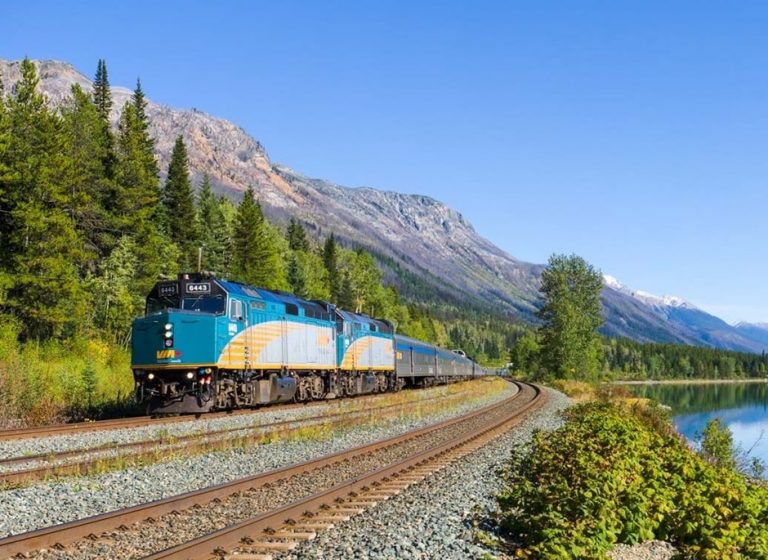
Germany is moving ahead with one of the country’s most significant railway infrastructure projects in decades: a new rail line connecting Hamburg and Hanover. After years of debate over how to modernize the heavily used north-south railway corridor, a decision has finally been reached.
A new route will be constructed, with the project expected to cost around €9 billion and be completed by 2050. The Hamburg-Hanover corridor is strategically important for Germany’s transportation network. It connects two major cities while also carrying large volumes of passenger and freight traffic.
The existing railway infrastructure has faced increasing pressure as demand for rail transportation has grown. Delays, congestion and limited capacity have made modernization increasingly urgent. The decision to construct an entirely new line represents a major shift from earlier proposals to upgrade existing tracks.
Register for the next Tekedia Mini-MBA.
Register for Tekedia AI in Business Masterclass.
Join Tekedia Capital Syndicate and co-invest in great global startups.
Supporters argue that building a separate route will create additional capacity while allowing the existing railway to continue serving regional and freight traffic. The new line could therefore improve the reliability of long-distance passenger services without completely disrupting current operations.
The project is closely connected to Germany’s broader efforts to strengthen rail transportation. Railways are increasingly viewed as an essential part of the country’s strategy to reduce road congestion, improve mobility and lower transportation-related emissions.
A faster and more reliable connection between Hamburg and Hanover could encourage more passengers to choose trains instead of cars or short-haul flights. For freight transportation, the benefits could be equally significant. Northern Germany is home to major ports, particularly Hamburg, one of Europe’s most important logistics hubs.

Efficient railway connections are essential for moving goods between ports, industrial regions and markets across Germany and Europe. Additional rail capacity could make it easier to handle growing freight volumes and reduce pressure on Germany’s road network.
The project is unlikely to be straightforward. Large railway projects in Germany have historically faced lengthy planning procedures, environmental concerns, local opposition and rising construction costs. The Hamburg-Hanover project has already been at the center of a years-long dispute over the best way to modernize the corridor.
Reaching a final decision is therefore an important milestone, but construction itself will remain a complex undertaking. The €9 billion price tag also highlights the enormous financial commitment required to modernize Germany’s aging transportation infrastructure.

Costs could change over the decades as construction prices, technology and planning requirements evolve. Maintaining political and financial support will be essential if the project is to meet its target of completion by 2050.
The new Hamburg-Hanover railway represents more than a single infrastructure project. It reflects Germany’s attempt to prepare its transportation system for the demands of the future.
With population centers, ports and industries becoming increasingly dependent on reliable connections, expanding rail capacity could deliver benefits well beyond the two cities. By 2050, the new line could become a crucial part of Germany’s north-south railway network.
The long timeline may seem ambitious, but the decision finally provides direction after years of uncertainty. If planning, funding and construction remain on track, Hamburg and Hanover could eventually be connected by a modern railway designed to support faster passenger travel, more efficient freight movement and a more resilient German transportation system.
Rhine River Shipping Delays Raise Concerns for German Supply Chains
Meanwhile, the Rhine River is once again highlighting the vulnerability of Europe’s inland transport network as persistent low water levels in Germany caused a cargo ship to become stranded on a sandbank.
After days of disruption, the vessel has now been refloated and is continuing its journey toward the Netherlands, although it is running five days behind schedule, according to a company spokesman who spoke to dpa.
The incident is a reminder of how heavily Germany and neighboring European economies depend on the Rhine for the movement of goods. The river is one of Europe’s most important commercial waterways.
Connecting industrial centers in Germany with major ports in the Netherlands and providing a vital route for transporting raw materials, fuel, chemicals, agricultural products and other goods. When water levels fall significantly, ships cannot operate at their normal capacity.
Cargo vessels may have to reduce their loads to avoid touching the riverbed, while some routes can become difficult or impossible to navigate. In more serious cases, ships can become stuck on sandbanks, creating delays that ripple through supply chains.
For the stranded vessel, the immediate problem has now been resolved. Being able to refloat the ship and resume its journey is positive news for the operator, but the five-day delay demonstrates the economic consequences of increasingly difficult navigation conditions.
A delay of several days may affect delivery schedules, port operations, freight contracts and the availability of goods further along the supply chain. The Rhine’s importance makes such disruptions particularly significant.
Germany is one of Europe’s largest industrial economies, and many factories rely on inland waterways to receive materials and ship products. The river links Germany to Rotterdam and other major trading hubs in the Netherlands, giving it an important role in international commerce. Low water levels are not an entirely new challenge for the Rhine.
The river has experienced periods of severe drought and reduced navigability in recent years. These episodes have raised concerns about the resilience of Europe’s transportation infrastructure as weather patterns become more unpredictable and prolonged periods of dry conditions become more disruptive.
The problem is not simply that ships may move more slowly. Lower water levels can increase transportation costs because vessels may need to carry smaller loads, forcing operators to make more trips or shift some cargo to roads and railways. Alternative transport can itself become more expensive or face capacity limitations.
The latest incident therefore carries a message that extends beyond a single cargo ship. It demonstrates how environmental conditions can quickly become economic problems. A river that appears to be a natural and reliable transportation corridor can become a bottleneck when water levels fall too far.
Germany’s experience with the Rhine may encourage companies and policymakers to consider longer-term solutions. These could include improving waterway management, investing in better monitoring systems, strengthening rail and road alternatives, and adapting infrastructure to changing climate conditions.
The stranded ship is back on the move and heading toward the Netherlands. Yet its five-day delay serves as a warning. As Europe depends on the Rhine for commerce, persistent low water levels could become an increasingly important challenge for businesses, transport operators and policymakers seeking to keep the continent’s supply chains moving efficiently.