

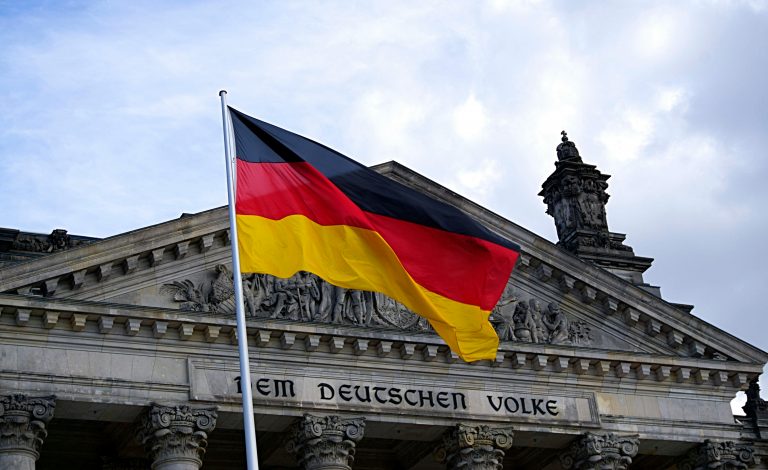
German Foreign Minister Johann Wadephul rejected proposals for broad or far-reaching EU sanctions against Israel, including suspension of the EU-Israel Association Agreement, during an EU foreign ministers’ meeting in Luxembourg.
Several EU countries—particularly Spain, Ireland, and Slovenia—pushed for a debate on suspending or partially limiting the EU’s association agreement with Israel. This pact provides preferential trade access and broader cooperation. Critics cited concerns over Israel’s military operations in Gaza, actions in Lebanon, and settlement policies in the West Bank, describing some conduct as unacceptable.
Germany and Italy blocked the move. Wadephul called broad measures like withdrawing free trade benefits inappropriate and instead advocated for critical, constructive dialogue with Israel on key issues. He emphasized talking directly rather than punitive steps. The proposal lacked the needed support; full suspension requires unanimity; partial measures need a qualified majority, which Germany and Italy helped prevent.
The meeting highlighted deep EU divisions on the Middle East. Other ideas, such as targeted sanctions on extremist Israeli settlers or individuals, were discussed separately but not the focus of this rejection. Signed in the 1990s and upgraded over time, it covers trade, political dialogue, and cooperation.
Register for the next Tekedia Mini-MBA.
Register for Tekedia AI in Business Masterclass.
Join Tekedia Capital Syndicate and co-invest in great global startups.
Suspending it would be a significant escalation, affecting economic ties, Israel is an important EU partner in tech, security, and research. Past EU actions have included sanctions on violent settlers and criticism of policies, but broad trade penalties have faced resistance from countries like Germany, Italy, Hungary, and the Czech Republic, who favor engagement over isolation.
Germany has long viewed Israel’s security as a core interest, shaped by historical responsibility post-Holocaust. Successive governments including under the current foreign minister have supported Israel’s right to self-defense while criticizing specific policies, such as settlement expansion or humanitarian access issues in Gaza.
Wadephul’s comments align with preferring diplomacy and dialogue over sanctions that could undermine a two-state solution or regional stability. Earlier foreign minister Annalena Baerbock had expressed similar caution on broad measures while occasionally supporting targeted sanctions on extremists.

This outcome reflects ongoing EU splits: some member states push for stronger pressure on Israel amid the humanitarian situation and conflicts, while others prioritize strategic partnership, countering Iran/Hezbollah threats, and avoiding measures they see as one-sided or ineffective.
Successive governments, including under former Chancellor Olaf Scholz and current Chancellor Friedrich Merz have repeatedly stated that Germany stands by Israel, especially after the October 7, 2023, Hamas attacks. Official statements emphasize that no state can tolerate terrorist attacks involving murder, kidnapping, and torture, and that Germany’s historical legacy makes solidarity with Israel non-negotiable.
Germany advocates for a negotiated peace leading to an independent, democratic, and viable Palestinian state living alongside Israel in peace and security. Recognition of Palestinian statehood is viewed as a final step after direct negotiations, not a unilateral move. Berlin criticizes Israeli settlement expansion in the West Bank as a violation of international law and an obstacle to peace.

Germany has rejected accusations that Israel’s actions in Gaza constitute genocide, describing them instead as self-defense. It has opposed efforts to characterize the conflict in those terms. No major new sanctions were adopted; the focus remains on dialogue and possible narrower measures.