

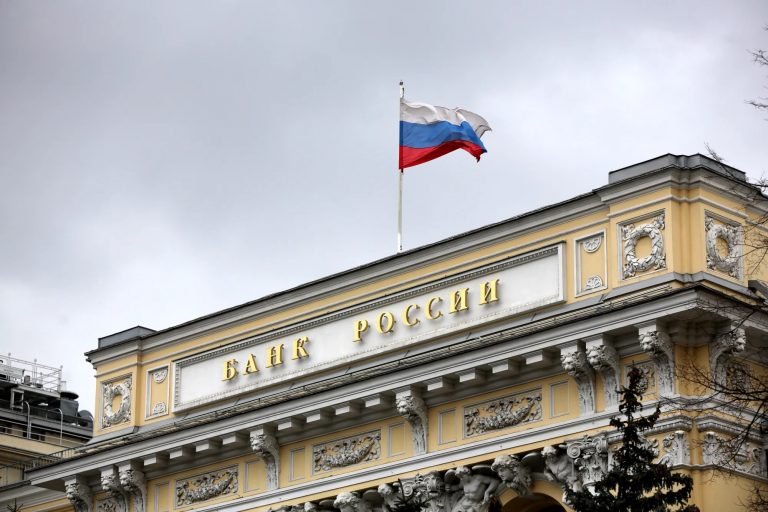
Russia’s State Duma, lower house of parliament just approved the On Digital Currency and Digital Rights bill in its first reading on April 21, 2026. This is not final passage into law yet—Russia’s legislative process requires second and third readings in the Duma, then approval by the Federation Council and the President’s signature.
The bill is on track for full adoption by July 1, 2026, with enforcement elements possibly rolling out later. Digital assets are legally recognized as property. Owners can defend them in court, include them in bankruptcy, inheritance, or divorce proceedings. Domestic use still strictly banned. The ruble and eventually the digital ruble remains the only legal tender for payments inside Russia.
Cross-border and foreign trade settlements: This is the big shift. Businesses and companies can use approved cryptocurrencies for international trade payments, including for goods, services, securities, intellectual property, etc. It’s explicitly designed to help bypass Western sanctions by providing an alternative to restricted banking channels.
The Bank of Russia (CBR) gets strong oversight. It will license intermediaries, exchanges, brokers, custodians, approve or ban specific assets and transactions, and set strict rules. Transactions without licensed Russian intermediaries are generally prohibited. Non-qualified investors face caps around 300,000 rubles/~$3,800 annually after risk tests. Qualified and professional players have fewer restrictions.
Register for the next Tekedia Mini-MBA.
Register for Tekedia AI in Business Masterclass.
Join Tekedia Capital Syndicate and co-invest in great global startups.
Residents must notify tax authorities about foreign crypto wallets and transactions. Reports indicate the CBR will maintain a whitelist of approved cryptocurrencies based on strict criteria: high average market cap, high daily trading volume >1 trillion rubles, and a long trading history.
Bitcoin and Ethereum are widely expected to qualify first, along with possibly a few others like SOL, BNB, or TRON. No broad free-for-all—only top-tier liquid assets initially. This formalizes what Russian exporters and importers especially in oil, grain, metals, have already been doing informally or experimentally to keep trade flowing with partners in Asia, Middle East, Africa, and elsewhere despite sanctions.
Bullish for adoption, It gives crypto real utility in global trade and sanctions circumvention. Russia has been pushing this direction for years; experimental regimes started earlier, mining legalized in 2024, etc. Other sanctioned or BRICS-adjacent countries may watch closely. Domestic ban stays firm, and heavy regulation and centralized control remains. It’s pragmatic crypto as a tool under state oversight, not libertarian decentralization.
Markets are reacting positively today to the news, with talk of structural demand for BTC/ETH from Russian trade flows. But remember, this is still early-stage legislation—full effects depend on implementation details, whitelisting, and how counterparties abroad engage. Russia is turning sanctions pressure into a feature for crypto integration in foreign trade.

It’s a meaningful step toward mainstreaming digital assets in international settlements, even if tightly controlled. If you’re trading or holding $BTC/$ETH, this adds another layer of nation-state utility narrative on top of existing institutional momentum. Keep an eye on the next readings for confirmation.
For Russia, it provides a practical workaround for sanctioned trade. Crypto offers pseudonymous, borderless settlement without relying on traditional dollar-based rails. It adds another large economy with real trade volume legitimizing and potentially increasing demand for BTC, ETH, and other assets in real-world international commerce. This fits a pattern of countries exploring crypto for de-dollarization or sanctions evasion.
It’s not full crypto legalization as money inside Russia. Capital controls, tax reporting including foreign wallets, and penalties for unlicensed activity are tightening alongside this. Implementation details especially national security aspects of cross-border flows remain somewhat opaque.

This is still in the legislative process — first reading is progress, but amendments and second and third readings could tweak it. Markets often react positively to such headlines as signals of growing institutional adoption, though actual on-the-ground impact will depend on how quickly the Central Bank operationalizes licensing and approvals.