

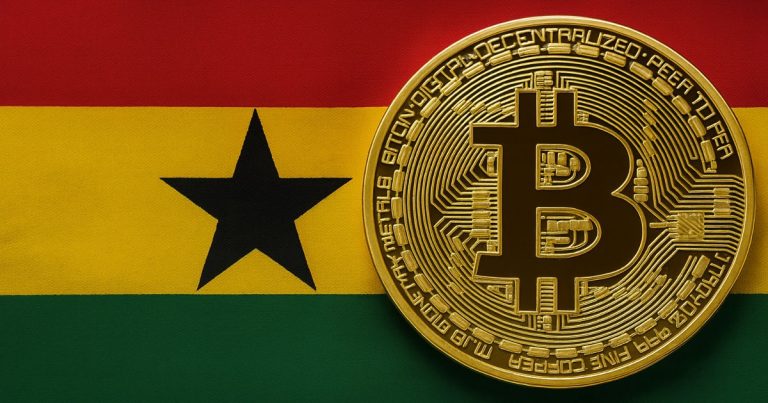
The Bank of Ghana (BoG) has published a draft policy paper outlining how the country intends to regulate virtual assets and virtual asset service providers (VASPs), marking a significant step toward formal oversight of digital currencies and blockchain-based finance.
The document, titled “Ghana’s Policy Position on Virtual Assets and Service Providers,” proposes a principle-driven and risk-based framework that seeks to encourage innovation while safeguarding monetary stability, consumer interests, and national security.
According to the Bank of Ghana, the Securities and Exchange Commission (SEC), and the Financial Intelligence Centre (FIC), virtual assets can no longer exist outside regulatory oversight. Over the past 15 years, Ghana’s virtual asset ecosystem has expanded substantially, with more than three million users recorded nationwide.
Register for Tekedia Mini-MBA edition 20 (June 8 – Sept 5, 2026).
Register for Tekedia AI in Business Masterclass.
Join Tekedia Capital Syndicate and co-invest in great global startups.
Register for Tekedia AI Lab.
The 2024 National Anti-Money Laundering, Countering the Financing of Terrorism and Proliferation Financing (AML/CFT/CPF) Risk Assessment noted that VAs are increasingly integrated into banking and securities sectors. The assessment also found that VASPs currently offer services such as exchange, wallet management, custody, and transfer with minimal regulatory control. Due to the nature of the technology, these services present heightened risks of money laundering and terrorist financing.
A mandatory registration exercise held in July 2025 recorded over 100 VASPs operating in and from Ghana. These firms provide payments, exchange services, brokerage, wallet solutions, and investment advisory services. This exercise established a baseline understanding of the market and served as groundwork for future regulatory enforcement.
The expanding role of virtual assets has raised concerns about market integrity, consumer protection, anti-money laundering safeguards, and broader financial stability. In response, the Bank of Ghana previously issued public advisories in 2018 and 2022 clarifying that virtual assets are not legal tender and remain outside the Payment Systems Act, 2019.

The SEC also warned the public in 2019 against trading or investing in virtual assets. At one point, regulated financial institutions were prohibited from enabling virtual asset transactions. However, with the publication of Draft Guidelines on Virtual Assets in August 2024, the Bank signaled a more flexible policy shift toward establishing a comprehensive regulatory framework.
Although a dedicated legal framework is not yet in place, Ghana has already taken steps to assess risks and register active VASPs, positioning the country for phased regulation. The policy paper outlines six guiding principles:
-
Regulation of VASPs: Virtual asset service providers will fall under formal regulatory authority.
-
Activity-Based Oversight: Regulation will focus on specific activities rather than technology itself, maintaining a neutral stance that fosters responsible innovation.
-
Risk-Based Regulation: Regulatory responses will be proportional to the level of systemic and financial risk associated with each virtual asset use case.
-
Inter-Agency Collaboration: The Bank, SEC, FIC, CSA, and Data Protection Commission will work together to align policy, compliance, and enforcement.
-
Continual Monitoring: Ghana will track international best practices and adapt regulation in response to global and domestic developments.
-
Improved Public Literacy: Consumer education will be prioritized to reduce vulnerability to fraud, misinformation, and high-risk financial behavior.
The draft policy underscores that the regulation of virtual assets must evolve alongside the fast-changing digital finance landscape. Continuous consultation with industry players, regulators, and the public will be essential to ensure the framework remains relevant, effective, and supportive of innovation.

Ghana’s move signals a shift from caution to structured oversight, balancing economic opportunity with necessary safeguards to protect the financial system and its participants. Notably, this development places the West african country among a growing group of African nations, including South Africa, Kenya, Nigeria and Mauritius, which have taken steps to regulate digital asset markets into regulated financial systems.