

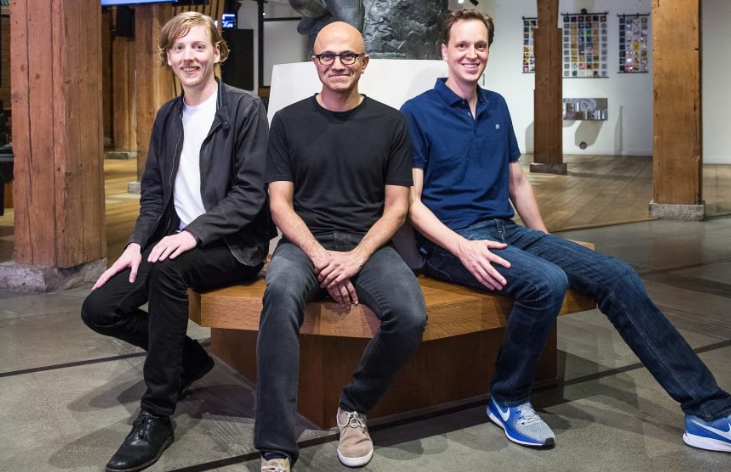
GitHub, Microsoft’s popular code-hosting platform and one of the pioneers of AI-assisted software development, is set for a major leadership change as CEO Thomas Dohmke announced his resignation on Monday.
The surprise move comes at a time when the global AI industry is in the middle of an aggressive talent hunt, with tech giants — particularly Meta — offering lucrative packages to lure top AI leaders, fueling speculation that Dohmke may have been poached.
Dohmke, who joined Microsoft in 2015 through its acquisition of his startup HockeyApp, took over as GitHub’s product chief in mid-2021 before replacing Nat Friedman as CEO later that year. Microsoft had bought GitHub in 2018 for $7.5 billion, betting on its role as the go-to platform for developers worldwide. In his farewell memo, later posted on GitHub’s blog, Dohmke said he is leaving to “become a founder again” but will stay on through the end of the year to “help guide the transition.”
Register for Tekedia Mini-MBA edition 20 (June 8 – Sept 5, 2026).
Register for Tekedia AI in Business Masterclass.
Join Tekedia Capital Syndicate and co-invest in great global startups.
Register for Tekedia AI Lab.
“I am more convinced than ever that the world will soon see one billion developers enabled by billions of AI agents, each imprinting human ingenuity into a new gold rush of software,” he wrote, adding that when that day comes, “we’ll know where the path began: with GitHub.”
The leadership change comes just months after Microsoft restructured GitHub into its newly created CoreAI platform and tools group, headed by former Meta executive Jay Parikh. CEO Satya Nadella announced the group in January as part of Microsoft’s plan to invest tens of billions of dollars annually in AI infrastructure and development. Dohmke noted that “GitHub and its leadership team will continue its mission as part of Microsoft’s CoreAI organization,” with further details to come.
A GitHub spokesperson declined to elaborate on succession plans or operational changes.

Copilot’s Growth and AI Competition
Under Dohmke’s leadership, GitHub has leaned heavily into AI, most notably with Copilot, its AI-powered code suggestion tool launched in 2021 in collaboration with Microsoft and OpenAI. Copilot quickly became one of the most widely used AI tools in the developer community, allowing engineers to generate, refine, and complete code in real time. Nadella said last month that Copilot now has 20 million users, with Copilot Enterprise customer adoption rising 75% quarter over quarter.
GitHub’s scale has also surged, with registered developers jumping from 73 million in October 2021 to over 150 million today. But that dominance is being challenged by a new wave of AI-first coding platforms such as Anysphere’s Cursor, Replit, and Windsurf — the latter making headlines when its CEO was hired by Google as part of a $2.4 billion AI talent deal.
AI Talent Hunt Intensifies — and Meta’s Role
The AI sector has entered what analysts are calling an “arms race for minds,” with companies offering unprecedented salaries, research freedom, and equity packages to attract key technical leaders. Meta, in particular, has been at the forefront of this push, aggressively recruiting talent from rival firms to accelerate its own AI roadmap. Given that Jay Parikh — now Microsoft’s CoreAI chief — previously served as a senior executive at Meta, industry watchers are drawing a line between the intensifying AI talent war and Dohmke’s sudden departure.

The belief that Dohmke might have been poached has been amplified by recent moves in the industry, where high-profile executives have quietly exited established positions to take roles at companies offering them leadership over cutting-edge AI projects. While Dohmke has not confirmed any such move, the timing of his resignation amid Meta’s aggressive recruitment efforts has raised eyebrows.
The leadership gap Dohmke’s departure creates comes at a delicate moment for GitHub. While Microsoft still holds a commanding position with Visual Studio Code — used by 76% of developers according to a Stack Overflow survey earlier this year — rival tools are rapidly gaining ground. Cursor is already used by 18% of developers, Anthropic’s Claude Code by nearly 10%, and Windsurf by 5%, despite none of them appearing in last year’s rankings.
If Microsoft cannot move quickly to name a visionary successor, analysts warn that GitHub could risk losing its momentum in an industry where the cycle of innovation is speeding up. Still, the platform’s scale and integration into Microsoft’s AI strategy give it substantial leverage.
For now, Dohmke’s next role remains a matter of speculation. But whether he is joining a new AI venture, aligning with a major player like Meta, or indeed founding his own company again, his exit underscores a simple reality: in today’s AI boom, leadership talent is as hot a commodity as the technology itself.