

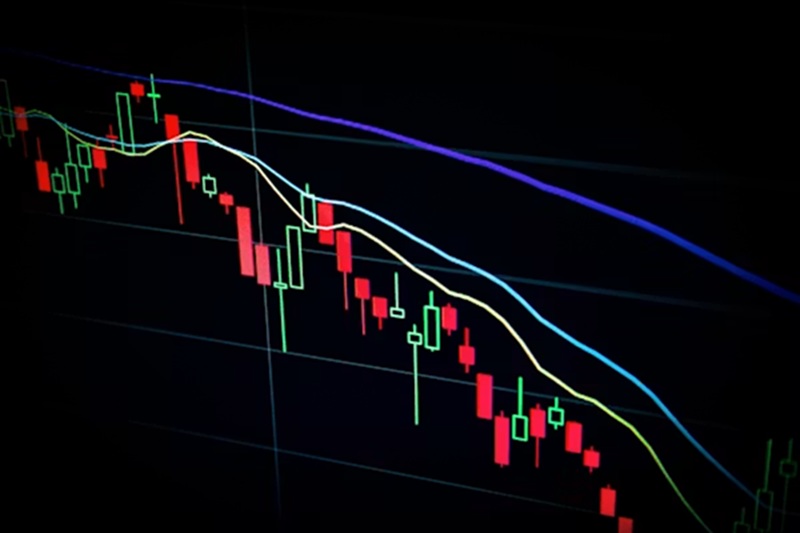
Technology shares tumbled on Friday as investors moved into government bonds and other traditional safe-haven assets, increasingly questioning whether the enormous capital expenditure committed to artificial intelligence infrastructure will generate sufficient returns to justify its cost.
US stock futures pointed to further losses on Wall Street, with Nasdaq 100 futures indicating a decline of more than 2%. The selling followed sharp falls in Intel and Amazon shares after their latest earnings reports raised concerns about cash consumption and the financial burden of expanding computing capacity.
Intel plunged 23% in after-hours trading, while Amazon lost 7%. Alphabet, Google’s parent company, had already fallen 12.6% on Thursday and extended its losses after the market closed, wiping out about $500 billion in market value as its accelerating AI expenditure pushed cash flow into negative territory.
Register for the next Tekedia Mini-MBA.
Register for Tekedia AI in Business Masterclass.
Join Tekedia Capital Syndicate and co-invest in great global startups.
The sell-off suggests that investors are becoming less willing to reward technology companies simply for committing more money to AI infrastructure. Instead, attention is shifting towards the relationship between capital expenditure, operating cash flow and the pace at which new AI products can generate revenue.
European stocks opened 0.2% lower on Friday, with the region’s smaller concentration of major technology companies helping limit the immediate impact. Asian markets had also declined earlier, led by semiconductor stocks exposed to the AI investment cycle.
The growing concern is that hyperscalers and chipmakers may be spending ahead of the commercial returns available from AI services. Building data centers, securing advanced processors and expanding electricity capacity require substantial upfront investment. If revenue growth takes longer than expected, the resulting pressure on cash flow could undermine valuations, increase financing requirements and force companies to reconsider investment schedules.

The implications have gone beyond technology shares. Higher device prices are expected to also affect consumers if manufacturers pass rising component and infrastructure costs on to buyers, potentially weakening demand for smartphones, personal computers and other electronics.
Investors are now looking for evidence that the AI industry can convert its infrastructure spending into sustainable earnings. Anthropic’s anticipated initial public offering could provide another test of market appetite for companies whose valuations are closely tied to expectations of future AI growth.
Jason Da Silva, co-chief investment officer at Arbuthnot Latham, said the listing would be an important indicator of investor sentiment.

“The next key milestone will be the Anthropic IPO, to see how that lands. If it’s a poor listing, I think that could signal a bit of weakness going forward,” he said.
The significance of the offering goes beyond Anthropic itself. A weak reception could suggest that public-market investors are becoming more cautious about the valuations assigned to private AI companies, especially where substantial infrastructure requirements and uncertain profitability remain central to their business models.
A strong listing, however, would not necessarily resolve concerns about the wider sector. Investors will still need to assess whether AI companies can generate enough recurring revenue to support the cost of computing resources, data centers and model development.
The latest results from major technology companies have sharpened that debate. Alphabet’s negative cash flow, alongside the declines in Intel and Amazon, has raised questions about the industry’s investment cycle becoming financially demanding before the full commercial benefits have emerged.
Analysts expect the consequences to be significant for infrastructure suppliers. Companies dependent on hyperscaler spending may face pressure if customers delay projects, renegotiate capacity agreements or become more selective about new commitments. The risk is closer to specialist cloud providers that rely on external financing to fund expensive hardware and data-center expansion.
Treasury Rally Reflects Flight from Risk
The retreat from technology shares helped drive demand for US government bonds, adding to a rally that has pushed benchmark Treasury yields towards their largest monthly decline since December 2023.
The yield on the 10-year US Treasury fell about seven basis points on Friday to 4.92%. Bond prices move inversely to yields, meaning the decline indicates stronger demand for government debt as investors reduced exposure to riskier assets.
The rally has also been supported by the Federal Reserve’s decision on Wednesday to leave interest rates unchanged, without providing a firm indication of when another increase might occur. The absence of a clear timetable for further tightening has allowed bond investors to focus more heavily on economic and market risks.
The shift towards safer assets was also visible in foreign exchange markets. The Japanese yen strengthened slightly to 157.30 against the dollar, while the Swiss franc traded at 0.821 per dollar, close to a one-month high.
The euro edged up 0.1% to $1.1194 but remained on course for a decline of more than 1% in October, which would mark its second consecutive monthly loss.
The Bank of Japan’s latest policy decision had a more limited immediate effect on currency and bond markets. The central bank maintained its interest rate, as widely expected, but announced plans to accelerate sales of its exchange-traded fund holdings next year.
The decision to reduce those holdings more quickly could initially unsettle investors because of the BOJ’s substantial presence in Japanese equity markets. However, David Chao, global market strategist for Asia-Pacific at Invesco, viewed the move as a sign of confidence in economic and financial conditions.
“While this may initially spook markets, I actually think this is a positive development since the BOJ feels confident enough with the economy and market,” Chao said.
The central bank also declared that underlying inflation was generally consistent with its 2% target, signaling a shift towards managing the risk of inflation rising too far above that level. Its latest assessment has strengthened expectations that another interest rate increase could come as soon as December.
Crypto Losses and Oil Supply Risks Add to Volatility
Market anxiety was not confined to equities and bonds. Cryptocurrency prices weakened after a potentially record-breaking hack involving Binance, the world’s largest cryptocurrency exchange, added another source of uncertainty.
Bitcoin fell to a six-week low before recovering some ground, trading 1.1% lower at $77,876. Other digital assets also declined as investors assessed the potential scale of the breach and the implications for market liquidity.
Geoffrey Kendrick, head of digital assets research at Standard Chartered, warned that further losses could follow before the market establishes a new support level.
“I suspect the negative price action still has some way to go,” he said. “Only after assets are unfrozen and more detail of the hack emerges will we find a new base.”
The uncertainty surrounding the incident adds to pressure on an asset class already sensitive to changes in global risk appetite. Investors are likely to remain cautious until more information emerges about the affected assets and the recovery process.
Oil markets moved in the opposite direction, with prices rising about 2% on Friday and heading for a fourth consecutive monthly gain. An attack on a tanker in the Strait of Hormuz reinforced concerns about potential supply disruptions linked to the US-Israeli war on Iran.
The waterway is a critical route for global energy shipments, making any security incident a potential source of volatility in oil prices. Higher crude prices could also complicate the inflation outlook at a time when central banks are still assessing whether price pressures have been brought under control.
The combination of falling technology shares, stronger demand for government bonds, cryptocurrency losses, and rising oil prices points to a market increasingly sensitive to financial and geopolitical risks.