

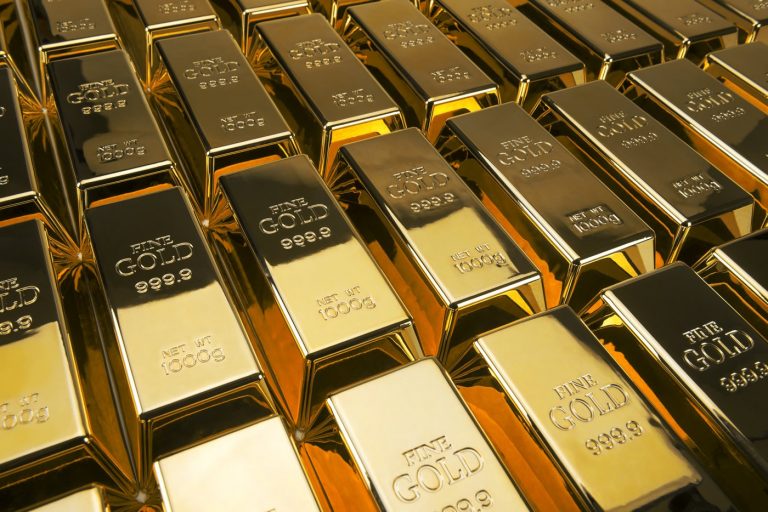
Gold and silver extended their record-breaking rally on Monday, underlining how deeply investors are repositioning portfolios in response to escalating geopolitical tensions, intensifying trade disputes, and growing unease over monetary policy independence in the United States.
U.S. gold futures for February delivery rose 1.71% to $4,674.20 per ounce, while spot gold climbed 1.6% to $4,668.14. Silver surged even more aggressively. U.S. silver futures for March advanced more than 5% to a record $93.02 per ounce, with spot silver trading at $93.16, up 3.55%. Both metals had already broken prior records last week, signaling strong follow-through buying rather than a one-off spike.
At the center of the latest move is a sharp rise in geopolitical risk premia. President Donald Trump’s announcement of tariffs on goods from eight European countries, tied to U.S. demands over Greenland, has revived fears of a broader trade war between Washington and its traditional allies. Investors are also weighing the prospect of tit-for-tat retaliation from Europe, a scenario that could further disrupt global supply chains and weaken already fragile growth expectations.
Register for Tekedia Mini-MBA edition 20 (June 8 – Sept 5, 2026).
Register for Tekedia AI in Business Masterclass.
Join Tekedia Capital Syndicate and co-invest in great global startups.
Register for Tekedia AI Lab.
Market participants say gold’s appeal goes beyond headlines. Real interest rates, a key driver of bullion prices, are expected to come under renewed pressure if political developments undermine confidence in the U.S. Federal Reserve’s independence. The Justice Department’s criminal investigation into Federal Reserve Chair Jerome Powell has unsettled markets, with investors questioning whether monetary policy decisions could increasingly be influenced by political considerations rather than inflation and employment data.
Historically, periods of perceived central bank vulnerability have favored gold, which carries no yield but also no policy risk.
George Cheveley, natural resources portfolio manager at Ninety One, said gold’s rally remains rooted in fundamentals that are still firmly in place. In the firm’s 2026 sectoral outlook, he pointed to expectations of falling real rates and sustained central bank diversification away from the U.S. dollar. Central banks, particularly in emerging markets, have been steady buyers of gold in recent years as they seek to reduce exposure to dollar-denominated assets amid rising geopolitical fragmentation.

That trend, analysts say, has provided a powerful floor under prices and reduced the likelihood of sharp sell-offs.
At current levels, Ninety One estimates gold producers’ margins could be four to five times higher than in 2024, a dynamic that may attract additional investment flows into the sector and reinforce longer-term supply discipline. With new mine supply slow to respond to price signals, higher demand is feeding directly into higher prices rather than increased output.
Silver’s rally reflects a slightly different, though complementary, set of forces. Alongside its traditional role as a safe haven, silver is benefiting from strong industrial demand linked to renewable energy, electric vehicles, and electronics. Analysts note that silver’s dual identity — as both a monetary and industrial metal — can amplify price moves during periods when economic uncertainty coincides with structural demand growth.

The metal’s ability to hold near-record levels suggests the market believes industrial consumption can absorb higher prices, at least in the near term.
Broader financial markets have shown signs of strain. European and Asia-Pacific equities mostly declined on Monday, with carmakers and luxury goods companies among the worst performers as investors assessed the potential impact of new U.S. tariffs. Trump said duties would start at 10% from February 1 and rise to 25% from June 1 if no agreement is reached. The Stoxx Europe 600 Automobiles & Parts Index fell 2.2% in early trading, while the Stoxx Europe Luxury 10 index dropped 2.9%, highlighting investor sensitivity to trade exposure.
Geopolitical risks extend well beyond Europe. The U.S. capture of Venezuela’s president earlier this month and Washington’s subsequent move to take control of the country’s oil industry have raised concerns about energy market stability. Trump’s recent comments on Iran, including suggestions of an imminent military strike before appearing to step back, have added to volatility. Meanwhile, the war in Ukraine continues with no clear resolution, and expectations are growing that reconstruction and stabilization efforts in Gaza will take years rather than months.
In contrast to gold and silver, gains in other metals have been driven more by long-term structural trends than immediate geopolitics. Copper prices edged higher, with U.S. copper futures for March last up 0.54% at $5.8625 per ounce. Cheveley described copper’s risk-reward profile as attractive, supported by rising demand from power grids, renewable energy projects, and data center infrastructure tied to artificial intelligence expansion.
Overall, the surge in precious metals suggests investors are bracing for a prolonged period of uncertainty rather than a short-lived bout of volatility. With trade tensions escalating, political risk intruding into monetary policy debates, and global conflicts unresolved, gold and silver are increasingly being treated not just as hedges but as core strategic assets.