

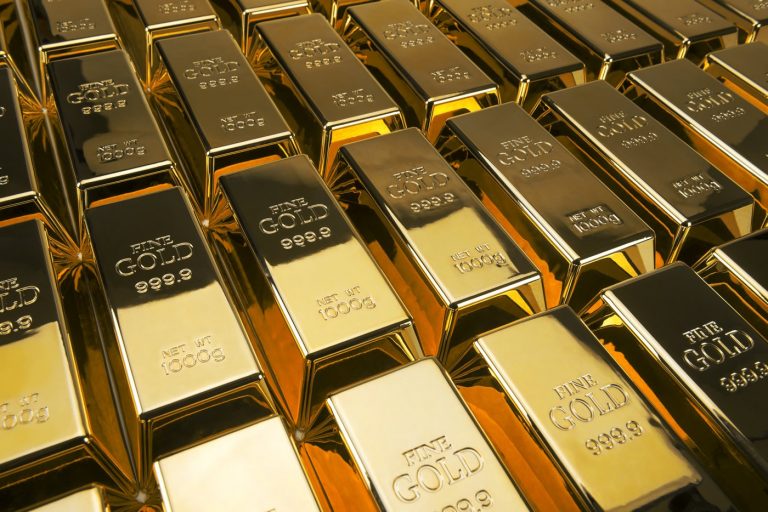
Gold prices slipped on Thursday after touching their highest level in three weeks, caught in a sweeping market downturn that followed the end of the record-long U.S. government shutdown.
The reopening removed a major source of uncertainty for investors, triggering a broad sell-off that hit everything from metals to equities to digital assets.
Spot gold was down 1.1% at $4,151.86 per ounce by 02:16 p.m. EST (1916 GMT). U.S. gold futures for December delivery settled 0.5% lower at $4,194.50. The downturn came only hours after bullion climbed to $4,244.94, a level last seen on October 21.
Register for Tekedia Mini-MBA edition 20 (June 8 – Sept 5, 2026).
Register for Tekedia AI in Business Masterclass.
Join Tekedia Capital Syndicate and co-invest in great global startups.
Register for Tekedia AI Lab.
Silver followed a similar arc. After rising to its strongest price since October 17, spot silver reversed course and dropped 2.3% to $52.18.
The sharp swing in sentiment emerged as Washington finally restarted federal operations following a 43-day shutdown. The agreement funds government agencies through January 30, ending the longest closure in U.S. history and unlocking economic data that had been frozen for more than a month.
That sudden shift in the political landscape sparked a wide retreat across markets.

“Precious metals are caught in a widespread selloff, where stocks, bonds, the dollar, and crypto are all under pressure and in the red,” said independent metals trader Tai Wong. “It’s a classic buy-the-rumor, sell-it-all after the U.S. government re-opens.”
Before the sell-off began, traders had pushed gold higher on expectations that the release of delayed economic statistics would show a weakening labor market. Analysts believed such weakness could push the Federal Reserve toward at least one more interest-rate cut in December.
“Gold and silver markets rallied on the expectation that economic data released after the end of the shutdown will reveal U.S. labor market weakness and push the Fed toward at least one December rate cut,” said Jim Wyckoff, senior analyst at Kitco Metals.

However, the mood shifted as investors reassessed the Fed outlook. Several policymakers have signaled they want to see firmer evidence of cooling before supporting additional easing. Inflation concerns remain unresolved, and private sector surveys have pointed to labor softening without painting a clear picture.
The central bank has already trimmed rates twice this year, and the most recent cut came in the previous month. Still, Fed Chair Jerome Powell said further reductions this year are not assured, stressing that the shutdown created major gaps in key datasets the bank normally relies on.
Lower borrowing costs tend to help gold because the metal yields no income and becomes more attractive when interest rates fall. That dynamic helped fuel the multi-month rally in bullion earlier this year, but the current landscape has grown more complicated as investors juggle inflation risks, patchy economic information, and uncertainty about the timing of future Fed decisions.
The volatility spread across the precious metals complex. Platinum slipped 2.8% to $1,569.65, while palladium sank 3.7% to $1,419.75.
Analysts say gold could remain choppy in the short term as markets digest the coming wave of economic releases and weigh their implications for U.S. monetary policy. The return of federal data over the next several weeks could provide clearer signals on inflation trends, consumer spending, and the labor market — all of which will shape the Fed’s next move and determine whether bullion stabilizes or faces renewed turbulence.