

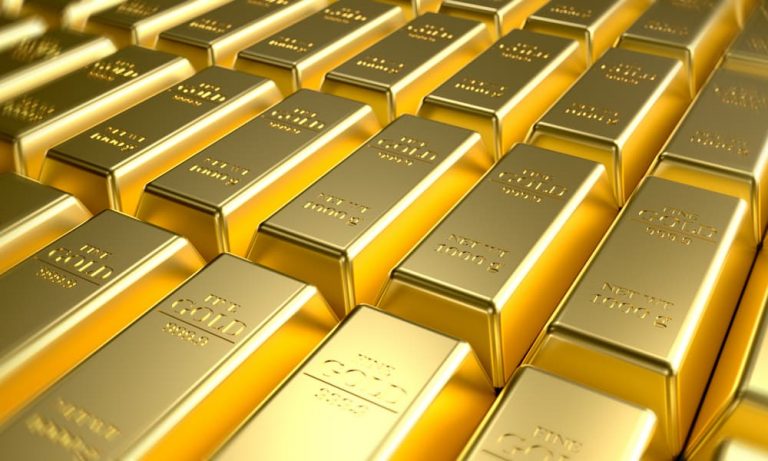
Gold prices climbed sharply on Monday, extending a three-session rally as investors reacted to a breakthrough agreement between the United States and Iran that could bring an end to months of conflict, reopen the Strait of Hormuz, and reshape the outlook for inflation, interest rates, and global financial markets.
Spot gold rose 2.3% to $4,316.03 an ounce, its highest level since June 9, while U.S. gold futures for August delivery gained 2.3% to $4,337.20. The rally came as oil prices tumbled more than 4% and the U.S. dollar weakened to a 10-day low following news that Washington and Tehran had reached a framework agreement to end hostilities.
The market reaction highlights how closely investors have linked the Iran conflict to the global inflation outlook. Since February, the war has disrupted one of the world’s most important energy corridors, driving oil prices sharply higher and fueling concerns that central banks would be forced to keep interest rates elevated for longer than previously expected.
Register for the next Tekedia Mini-MBA.
Register for Tekedia AI in Business Masterclass.
Join Tekedia Capital Syndicate and co-invest in great global startups.
The agreement announced over the weekend changes that narrative.
U.S. and Iranian officials said they had reached a preliminary accord that would halt the conflict, end the U.S. blockade of Iran, and reopen the Strait of Hormuz, the narrow waterway through which roughly one-fifth of global oil supplies pass. Pakistani Prime Minister Shehbaz Sharif, whose government played a mediation role, said the pact would be formally signed in Switzerland on Friday.
The prospect of renewed oil flows immediately sent crude prices lower, easing fears of a prolonged energy shock that had weighed on economies worldwide.

Tim Waterer, chief market analyst at KCM Trade, said: “Lower oil prices and a softer dollar, stemming from reduced geopolitical risk and the anticipated reopening of the Strait of Hormuz, are helping to calm inflation expectations.”
“This combination is providing the precious metal with its best tailwind in recent weeks, though sustainability will depend on how durable the peace agreement proves to be.”
The move marks a dramatic reversal from the market dynamics that have dominated much of 2026. Since the outbreak of the U.S.-Israeli conflict with Iran, investors had piled into oil while reducing exposure to gold as soaring energy prices raised the likelihood of tighter monetary policy. Gold has fallen roughly 20% since the conflict began in late February, underperforming many expectations that geopolitical tensions would drive a sustained safe-haven rally.

Instead, inflation fears became the dominant theme. The closure of the Strait of Hormuz pushed up transportation and energy costs globally, prompting concerns that central banks would need to keep borrowing costs higher for longer.
That outlook is now beginning to change.
Market pricing shows investors sharply scaling back expectations of future U.S. interest-rate increases. According to CME FedWatch data, the probability of a Federal Reserve rate hike in December has fallen to 51%, down from 69% just a week ago.
A softer interest-rate outlook tends to support gold because the metal does not generate income. When rates rise, investors often favor interest-bearing assets such as bonds. When rate expectations fall, the opportunity cost of holding gold declines, making bullion more attractive.
The weakening dollar has provided an additional boost. Because gold is priced in dollars, a weaker greenback makes the metal cheaper for buyers using other currencies, often stimulating international demand.
Investors are now turning their attention to the Federal Reserve’s policy decision on Wednesday, the first under Fed Chair Kevin Warsh. While rates are widely expected to remain unchanged, markets will closely scrutinize policymakers’ assessment of how the Iran agreement could affect inflation and growth prospects.
Analysts at OCBC said the longer-term investment case for gold remains intact despite the easing of immediate geopolitical risks.
“Currency debasement concerns, fiscal risks and ongoing geopolitical fragmentation continue to underpin long-term demand,” the bank said. “A moderation in energy-led inflation could help these themes regain traction.”
The rally extended beyond gold. Spot silver jumped 3.3% to $70.22 an ounce, platinum rose 2.7% to $1,763.38, and palladium gained 2.7% to $1,317.22, reflecting broader optimism across precious metals.
For investors, the significance of the U.S.-Iran agreement extends beyond commodity markets. The reopening of the Strait of Hormuz could remove one of the biggest sources of inflationary pressure facing the global economy, potentially reducing fuel costs, easing supply-chain disruptions, and providing central banks with greater flexibility.
However, economists note that much depends on whether the framework agreement evolves into a durable peace settlement. Key issues, including Iran’s nuclear program, sanctions relief, and regional security arrangements, remain unresolved and will be the subject of further negotiations during a proposed 60-day ceasefire period.