

A sweeping sell-off across metals markets is exposing a deeper shift in investor thinking, as the fallout from the U.S.-Iran war begins to ripple through inflation expectations, monetary policy outlooks, and growth forecasts.
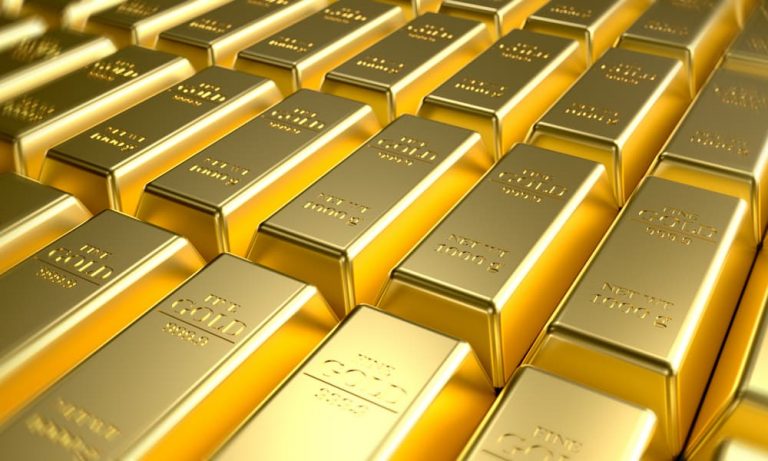
What initially appeared to be a standard geopolitical shock—one that would typically lift safe-haven assets—has instead triggered an unusual unwind. Gold fell nearly 6%, and silver dropped 8%, extending declines that began shortly after the conflict escalated. Industrial metals followed suit, with copper down 2% and palladium losing 5.5%.
This is not a liquidity-driven sell-off or a technical correction. It is a macro repricing event.
Register for Tekedia Mini-MBA edition 20 (June 8 – Sept 5, 2026).
Register for Tekedia AI in Business Masterclass.
Join Tekedia Capital Syndicate and co-invest in great global startups.
Register for Tekedia AI Lab.
At the center of the shift is oil. Rising crude prices are forcing investors to reconsider a narrative that had dominated markets for months—that inflation was cooling enough to allow central banks to pivot toward rate cuts. That assumption is now under strain.
Higher energy costs feed directly into headline inflation and, more importantly, into inflation expectations. Once those expectations begin to drift upward, central banks face a credibility constraint. The Federal Reserve, in particular, is unlikely to ease policy into an environment where energy-driven price pressures risk becoming embedded.
The result is a rapid repricing in fixed-income markets. The U.S. 10-year Treasury yield pushing above 4.3% reflects not just higher nominal rates, but rising real yields—the most critical variable for gold.

Gold’s decline, therefore, is less a contradiction and more a reordering of priorities. In the current cycle, real yields and currency strength are exerting greater influence than geopolitical hedging demand. A firmer U.S. dollar has compounded the pressure, tightening financial conditions globally and reducing the appeal of dollar-priced commodities.
There is also a positioning element at play. Gold entered the conflict with significant speculative and institutional length, built on expectations of rate cuts and fiscal fragility. As those assumptions unwind, the metal is experiencing a sharper correction than fundamentals alone might suggest.
Peter Boockvar of One Point BFG Wealth Partners pointed to this dynamic, arguing that the erosion of rate-cut expectations and the rise in real yields have become the dominant headwinds. Yet the more consequential signal may be coming from industrial metals. Copper’s decline is often treated as a real-time proxy for global economic momentum. Its weakness suggests that markets are beginning to price in a slowdown, not merely a temporary shock.

The mechanism is straightforward but powerful. Elevated oil prices act as a tax on both consumers and businesses. Over time, they compress disposable income, reduce margins, and delay capital expenditure. This is the “demand destruction” phase—when sustained energy costs begin to curtail economic activity rather than simply raise prices.
What makes the current moment more complex is the simultaneous presence of inflation risk and growth deterioration. That combination has revived discussions around stagflation, though not without pushback.
Ed Yardeni has argued that structural changes in the global economy—lower energy intensity, more flexible supply chains, and more responsive monetary policy—make a repeat of the 1973 OPEC oil embargo less likely. He points to the limited long-term damage from the 2022 oil shock following Russia’s invasion of Ukraine as evidence.
That caution is echoed by Jerome Powell, who has resisted applying the stagflation label, signaling that current conditions have not yet reached the threshold associated with the 1970s.
Even so, markets are beginning to trade the risk, if not the certainty, of such an outcome.
The implications have been immediate for industrial metals. Unlike gold, which can benefit from financial stress and currency debasement, copper and palladium depend on real economic activity. Infrastructure spending, manufacturing output, and construction cycles drive demand. If growth expectations weaken, these metals face direct and sustained pressure.
For gold, the outlook is more nuanced. The same forces dragging prices lower in the short term—higher real yields and a stronger dollar—could reverse if growth slows enough to force central banks back toward easing. Moreover, rising fiscal deficits, particularly if governments ramp up military spending linked to the conflict, could reinforce gold’s role as a hedge against currency debasement.
Analysts at Goldman Sachs argue that in a prolonged stagflationary environment—especially one where real yields eventually decline—gold could reassert itself as a preferred store of value, driven by demand for real assets and diversification away from fiat currencies.
There is also a temporal dimension to the current dislocation. Markets are forward-looking, but policy responses lag. If oil prices remain elevated long enough to materially weaken demand, the narrative could shift again—from inflation risk to growth support—bringing rate cuts back into focus and potentially reversing some of the pressure on metals.
For now, the breakdown in traditional correlations is likely to persist. Safe-haven assets are not behaving as expected because the dominant risk is no longer immediate crisis, but its second-order effects on inflation and policy.
The metals sell-off, in that sense, is less about panic and more about recalibration.
Investors are no longer asking how the conflict will unfold—they are asking how long its economic consequences will last, and whether those consequences will force a fundamental shift in the global macro regime.