

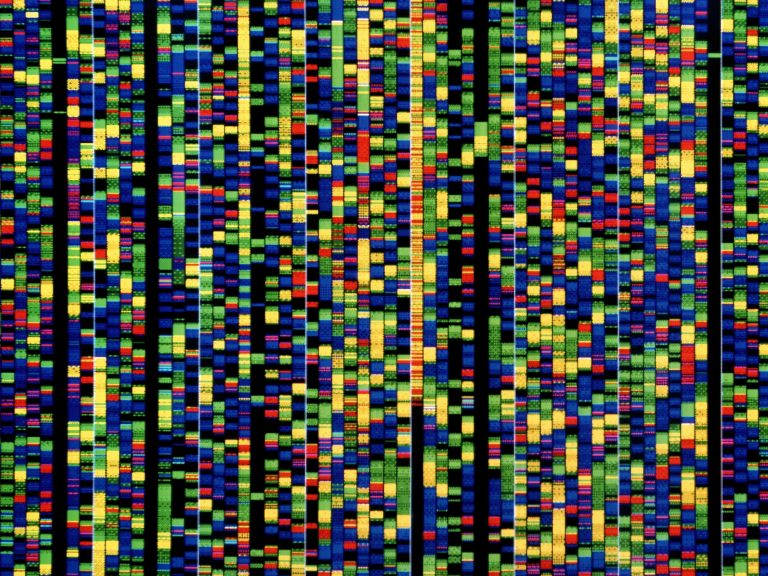
Google DeepMind’s launch of the AlphaGenome Atlas marks a significant development in the use of artificial intelligence to understand the human genome.
The system is designed to map the predicted effects of roughly 9 billion possible single-letter changes in DNA, creating an enormous computational resource for researchers studying how genetic variation influences biology, disease and human traits.
The scale of the project is important because the human genome contains billions of DNA letters, and even a single-letter alteration can potentially change how genes function.
Many genetic variants occur outside the protein-coding portions of genes, in regions that regulate when, where and how strongly genes are expressed. Understanding these non-coding regions has historically been one of the most difficult problems in genomics.
Register for the next Tekedia Mini-MBA.
Register for Tekedia AI in Business Masterclass.
Join Tekedia Capital Syndicate and co-invest in great global startups.
AlphaGenome approaches this challenge by using AI to predict how genetic changes could affect biological processes. Rather than simply identifying where a mutation occurs, the system attempts to estimate what consequences that alteration could have across different genomic functions.
This could include changes in gene expression, RNA processing and other regulatory activities that determine how cells operate. The resulting Atlas could therefore become a reference layer for genetic research.
Scientists may be able to use it to prioritize variants that deserve laboratory investigation, particularly when studying diseases in which the underlying genetic mechanisms remain unclear.
Instead of experimentally testing an enormous number of possibilities individually, researchers could use computational predictions to narrow the field before conducting biological experiments.

The significance extends beyond medical genetics. Drug discovery, cancer research, rare-disease diagnosis and studies of human development all depend on understanding the relationship between DNA sequence and biological function.
If AI can improve predictions about the consequences of genetic variation, it could accelerate research across each of these areas. However, an important distinction remains between prediction and proof.
An AI model can identify a genetic variant as potentially important, but that prediction does not automatically establish that the variant causes a disease or produces a particular biological outcome.

Experimental validation and clinical evidence remain essential. Genetic systems are extraordinarily complex, and biological effects can depend on cell type, environment, interactions between genes and other factors that computational models may not completely capture.
AlphaGenome also illustrates how the future of genomics is increasingly becoming a problem of computational scale.
The challenge is no longer simply sequencing DNA; modern biology is generating vast amounts of genomic information that must be interpreted. AI provides a way to process that information and identify patterns that would be difficult for humans to evaluate manually.
The Atlas could help shift genomics toward a more predictive discipline. Instead of asking only what a person’s DNA sequence is, researchers can increasingly ask what particular changes are likely to do. That transition could make genetic data more actionable for research and, eventually, medicine.
Still, the technology should be viewed as an advanced research instrument rather than an oracle. Its predictions will need continual testing against real biological evidence, and questions surrounding accuracy, bias, interpretation and clinical responsibility will remain important.
Even with those limitations, mapping billions of potential DNA changes represents an ambitious step in genomic science. AlphaGenome Atlas demonstrates how artificial intelligence is beginning to transform the genome from a massive sequence of letters into a computationally interpretable system.
If its predictions prove reliable, the technology could help researchers find important genetic signals faster and deepen our understanding of how tiny changes in DNA can produce profound effects in biology.