

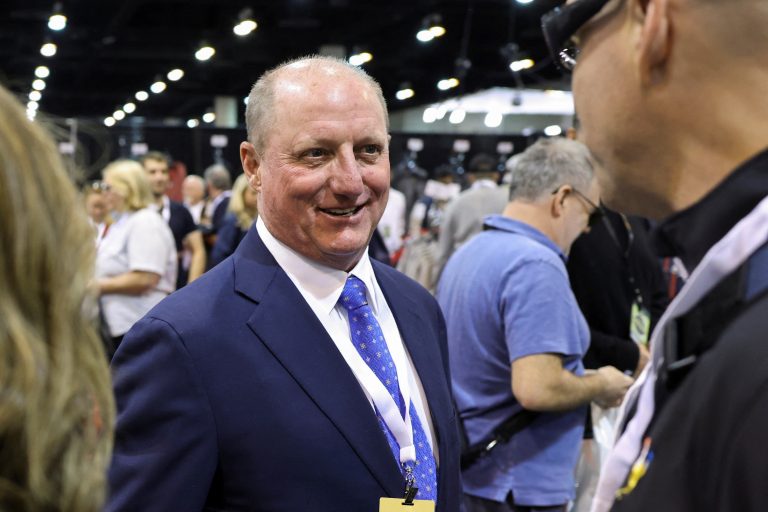
Berkshire Hathaway has taken a decisive procedural step that could pave the way for a full or partial exit from one of the most uncomfortable chapters in Warren Buffett’s investing legacy, as the conglomerate registered its entire 27.5% stake in Kraft Heinz for potential sale.
The decision is seen as a carefully calibrated signal that the conglomerate, now under the stewardship of CEO Greg Abel, is reassessing one of the most uncomfortable investments in its modern history and, by extension, redefining how it deals with legacy bets that no longer fit its long-term compounding model.
The registration clears the path for Berkshire to sell some or all of its shares in the packaged food maker, even though it stops short of committing the company to an immediate exit. Markets, however, moved swiftly. Kraft Heinz shares dropped as much as 7.5% in intraday trading, underscoring investor sensitivity to any hint that Berkshire’s patient capital may finally be preparing to leave.
Register for Tekedia Mini-MBA edition 20 (June 8 – Sept 5, 2026).
Register for Tekedia AI in Business Masterclass.
Join Tekedia Capital Syndicate and co-invest in great global startups.
Register for Tekedia AI Lab.
Kraft Heinz has long occupied an awkward place in the Berkshire portfolio. Unlike Coca-Cola, American Express, or Apple, it never evolved into a durable growth story. Since the 2015 merger of Kraft Foods and H.J. Heinz, the company’s shares have fallen about 70%, reflecting years of strategic drift, pricing pressure, and an inability to keep pace with rapidly changing consumer preferences. Demand has steadily shifted toward fresher, less processed foods, while many of Kraft Heinz’s core brands remain rooted in categories facing structural decline.
Cost inflation and supply chain disruptions added to those pressures, squeezing margins and limiting the company’s ability to reinvest aggressively in product development and marketing. While management has pushed through cost-saving initiatives and leaned on price increases to protect profitability, volume growth has remained elusive in key markets.
The financial toll has been real for Berkshire. Although dividends from Kraft Heinz have totaled billions of dollars over the years, they have not offset the collapse in the stock price. In 2024, Berkshire was forced to record a $3.8 billion write-down on its holding, a reminder that the investment continues to weigh on reported earnings and book value.

The timing of the registration is particularly telling. Greg Abel has only recently assumed the chief executive role, yet the move suggests a willingness to confront inherited decisions early rather than defer difficult calls. Morningstar analyst Greggory Warren described the filing as evidence of Abel’s desire to clean up the portfolio at the start of his tenure, signaling that sentimentality will not override capital discipline.
This approach marks a subtle shift from the Buffett era, where patience often extended for decades, even when results disappointed. Buffett himself has acknowledged the Kraft Heinz deal as a miscalculation, a rare admission from an investor whose reputation rests on long-term conviction.
“It certainly didn’t turn out to be a brilliant idea to put them together,” he told CNBC last year, adding that he was unconvinced a breakup would solve the company’s deeper issues.

That skepticism hangs over Kraft Heinz’s own restructuring plans. The company is preparing to split into two separate businesses, one focused on sauces, spreads, and shelf-stable meals, and another housing North American staples such as Oscar Mayer, Kraft Singles, and Lunchables. Management argues the separation will allow sharper strategic focus and unlock shareholder value, but investors remain cautious after a decade of underperformance.
Berkshire’s filing also revives questions about the original logic behind the merger. In 2015, Buffett partnered with 3G Capital, a private equity firm known for aggressive cost-cutting, to combine Kraft and Heinz. The bet was that scale and efficiency would revive iconic brands. Instead, relentless cost discipline arguably starved the brands of innovation, leaving them ill-prepared for shifts in consumer behavior.
3G Capital quietly exited its position in 2023 after years of trimming its stake, leaving Berkshire as the dominant long-term holder.
Analysts are careful to note that the registration does not guarantee a sale. Stifel said the filing simply gives Berkshire flexibility, allowing it to reduce its ownership without additional disclosures beyond standard quarterly filings. Any concrete change is unlikely to be visible until Berkshire reports its first-quarter portfolio activity in mid-May.
Still, the strategic implications are hard to ignore. Kraft Heinz now faces softer consumption trends in the United States and slower growth in emerging markets, dynamics that Stifel said could delay any meaningful revenue recovery even as the company continues to generate solid cash flow. The firm reiterated a hold rating and a $26 price target, reflecting skepticism about near-term upside.
For Berkshire shareholders, the episode is being watched as an early test of Abel’s capital allocation philosophy. Whether he ultimately exits Kraft Heinz entirely or trims the position gradually, the move suggests a more pragmatic stance toward legacy investments that fail to meet return thresholds. It also reinforces the idea that Berkshire, while still shaped by Buffett’s principles, is entering a phase where past mistakes are more openly acknowledged and addressed.
In that sense, the Kraft Heinz filing is not just about a food company struggling to regain relevance. It is a quiet marker of transition at one of the world’s most closely watched conglomerates.