

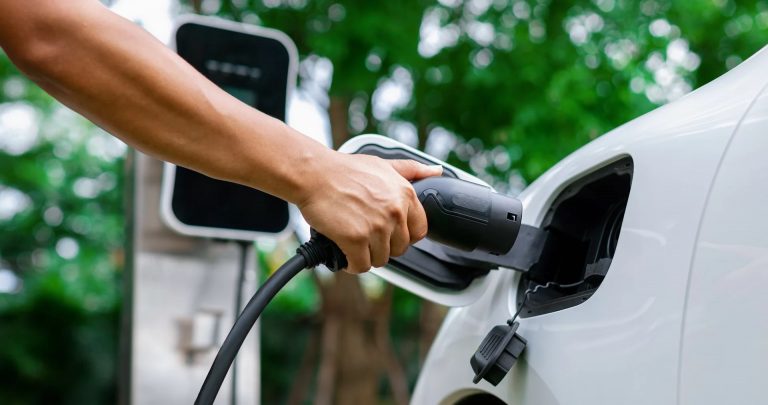
The General Services Administration (GSA), the federal agency responsible for managing government-owned buildings and vehicle contracts, is set to shut down all its electric vehicle (EV) chargers nationwide, calling them “not mission critical.”
According to The Verge, the agency is also moving to offload thousands of newly purchased EVs, effectively dismantling the Biden administration’s efforts to transition the federal fleet away from fossil fuels.
The move, which aligns with President Donald Trump’s anti-EV policies, is expected to significantly impact the adoption of EVs in the United States. Moreover, the decision is poised to deal a severe blow to Tesla’s growth, with CEO Elon Musk—one of Trump’s high-profile cheerleaders—ironically standing to lose billions as a result.
Register for Tekedia Mini-MBA edition 20 (June 8 – Sept 5, 2026).
Register for Tekedia AI in Business Masterclass.
Join Tekedia Capital Syndicate and co-invest in great global startups.
Register for Tekedia AI Lab.
According to an internal email viewed by The Verge, GSA regional offices have already begun deactivating EV chargers, with full shutdown orders expected next week.
“As GSA has worked to align with the current administration, we have received direction that all GSA-owned charging stations are not mission critical,” the email states.
The agency is also canceling network contracts that keep the 8,000 EV chargers across government buildings operational. Once these contracts are terminated, the stations will be shut down at the breaker, rendering them inoperable.

“Neither Government Owned Vehicles nor Privately Owned Vehicles will be able to charge at these charging stations once they’re out of service,” the email concludes.
The shutdown has already started in Denver, where federal employees were notified that chargers at four government-owned buildings would be turned off next week. Colorado Public Radio was the first to report this development.
In addition to shutting down chargers, the GSA will offload thousands of EVs purchased under the Biden administration. However, it remains unclear whether these vehicles will be sold at auction, transferred to state or local governments, or left in storage. If the government opts for the auction route, the sudden influx of EVs into the used car market could hurt resale values and further dampen demand.

Under former President Joe Biden’s clean energy agenda, the federal government had planned to transition more than half of its 650,000-vehicle fleet to EVs. As part of this push, the GSA ordered over 58,000 electric vehicles and began installing more than 25,000 new charging ports. Now, with the GSA dismantling its EV infrastructure, the entire initiative faces collapse—raising questions about what will happen to agencies that had already begun transitioning to electric fleets.
A Massive Setback for EV Adoption in the U.S.
The decision to phase out federal EV infrastructure is expected to significantly slow down EV adoption across the country. The federal government is one of the largest vehicle buyers in the U.S., and its support for EVs was meant to accelerate the transition away from fossil fuels. Without government backing, the EV industry will likely face declining demand, reduced incentives for states and private entities to invest in charging networks, and a broader setback for the U.S. transition to cleaner transportation.
The Irony of Musk’s Close Ties to Trump in The Face of All These
One of the biggest unexpected casualties of this policy shift is Tesla and its CEO, Elon Musk.
Musk has been an outspoken supporter of Trump’s administration, frequently defending the president’s policies and publicly criticizing the Biden administration for its support of unionized automakers over Tesla. However, with Trump now actively dismantling federal EV policies, Musk’s business empire is set to take a hit.
Musk’s net worth, which is largely tied to Tesla’s stock price, could take a significant downturn. Government EV demand was an important source of institutional purchases for Tesla, and without it, revenue streams would shrink. Slower EV adoption, fueled by the lack of government support, may weaken Tesla’s growth trajectory. If investors perceive Trump’s rollback of EV policies as a long-term shift, they may reduce exposure to EV stocks, leading to a decline in Tesla’s valuation.
Tesla’s stock has already faced volatility in recent months, largely due to concerns over slowing EV demand, rising competition from legacy automakers, and production issues at its factories. With Trump now actively rolling back EV initiatives, Tesla’s long-term growth projections may be further strained. Analysts predict that if Tesla’s growth slows down, Musk’s net worth could take a multi-billion-dollar hit—a bitter irony for the world’s richest man who has aligned himself with Trump’s policies.
Trump’s Broader Anti-EV Agenda
The GSA’s EV charger shutdown is just one of many anti-EV moves by Trump’s administration. Since taking office, Trump has halted a $5 billion program to build public EV charging stations nationwide, rescinded Biden’s executive order requiring federal agencies to switch to EVs, signaled plans to eliminate EV tax credits, and dismantled EPA regulations that were designed to push automakers toward EV production.
With the federal government turning away from EVs, state and private sector efforts will now have to fill the gap—an uphill battle that could slow down the entire transition to electric vehicles.
A Step Backward for Climate Policy
The environmental impact of this decision is significant. The transportation sector accounts for 28% of U.S. greenhouse gas emissions, and federal support for EVs was seen as a crucial step toward reducing the nation’s carbon footprint. With the GSA dismantling its EV program, many believe that Trump is prioritizing fossil fuels over long-term sustainability, potentially setting back U.S. climate goals by decades.
With the federal government pulling out of the EV space, the fate of America’s EV transition now lies with state governments and private companies. States like California and New York may continue investing in public EV infrastructure, but without federal support, scaling these initiatives will be more difficult.
Meanwhile, Musk and Tesla may now face increased pressure from investors as the long-term growth outlook for EVs becomes less certain.