


In Nigeria today, the internet has become one of the first places people turn to when they have health concerns. Search engines are no longer just tools for quick answers. They have become windows into what people worry about, what they are curious about, and where they feel gaps in knowledge. Looking at how Nigerians searched for health information between 2020 and 2024 reveals a story that is both striking and insightful.
Between 2020 and 2021, there was an explosion of interest in health-related searches. This was the time of the pandemic, when fear and uncertainty were at their peak. Searches about diseases, treatments, and diagnoses rose sharply as people sought clarity about what was happening around them. By 2022 and 2023, this interest reached its highest point. In 2024, the numbers dipped slightly but still remained far higher than before the pandemic. This shows that Nigerians have developed a lasting habit of using the internet to explore health questions.
When we look at the specific searches that people made, a few clear themes stand out.
Register for Tekedia Mini-MBA edition 20 (June 8 – Sept 5, 2026).
Register for Tekedia AI in Business Masterclass.
Join Tekedia Capital Syndicate and co-invest in great global startups.
Register for Tekedia AI Lab.
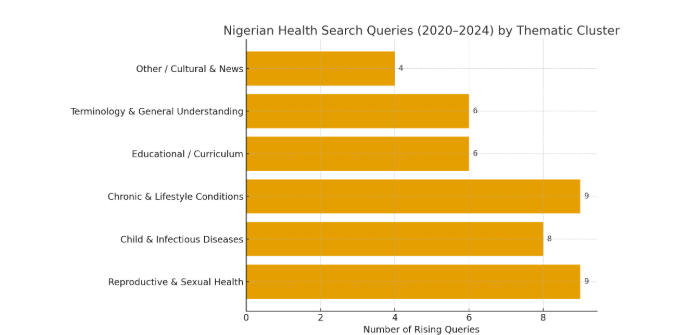
The first and most prominent theme is reproductive and sexual health. Nigerians searched extensively about pelvic inflammatory disease, asking about antibiotics, treatment options, and whether infertility could result from it. People also searched for terms such as sperm leakage treatment, toilet infections, and white discharge. These searches suggest that many people prefer to look for private answers online rather than consult a doctor, especially when it comes to sensitive health issues.
The second theme is child and infectious diseases. Malaria, typhoid, and measles remain top of mind for many Nigerians. Searches about typhoid injections and the Widal test show how widespread these concerns are. Even local terms like “Apollo eye disease,” which refers to conjunctivitis, appear in the data. At the same time, global outbreaks such as Marburg virus also found their way into Nigerian search history, showing how international news can shape local health curiosity.
Another growing area is chronic and lifestyle conditions. Nigerians are increasingly searching for information about illnesses such as dementia, Alzheimer’s disease, Parkinson’s disease, kidney conditions, and thyroid problems. On a lighter side, people are also concerned about skin and hair issues, with searches for eczema, hyperpigmentation, and dandruff treatment. This shift signals that more Nigerians are paying attention to conditions linked to aging and lifestyle, not just infectious diseases.

Education also plays a surprisingly strong role in shaping health searches. Many queries come directly from schoolwork. Students typed in questions like “pyorrhoea is a disease of,” “seed treatment is done to control,” and “chlorine is used in water treatment.” At the university level, nursing students searched heavily for information about nursing diagnoses, community health terms, and lists of conditions. Clearly, search engines are now doubling as textbooks for students across the country.
Another interesting cluster of searches revolves around basic medical understanding. Many people looked up the meaning of common words such as diagnosis, prognosis, and symptoms. They searched for the difference between diagnosis and diagnoses, and for other ways of expressing the same terms. This shows that while people are curious about health, there are still gaps in how easily they understand medical conversations.
Our analysis also reveals cultural and news-driven searches as another cluster. Local nicknames for illnesses appear often. “Sweetie disease” is commonly used to describe diabetes, while “Goloria disease” seems to be a misspelling of gonorrhea. On the global stage, searches like “King Charles diagnosis” gained attention, showing that international headlines can drive local curiosity. Even phrases like “the royal treatment,” unrelated to healthcare, surfaced because of their popularity in everyday conversations.

Together, these patterns indicate that Nigerians are using the internet to fill gaps in access to health information. They are trying to understand both everyday issues and complex diseases. Students rely on online searches for their academic work, while adults use them to find private answers to sensitive questions. Chronic illnesses are gaining more attention, but infectious diseases remain a constant worry.
For health leaders in Nigeria, this digital trail is not just data. It is a guide. Policymakers can see where education campaigns are needed. Doctors and nurses can prepare for patients who arrive already influenced by what they have read online. Educators can integrate digital resources more deliberately into classrooms. Above all, it shows that clear, simple, and accessible communication about health is more important than ever.
The internet does not just record curiosity. It records need. In Nigeria, the searches people make between 2020 and 2024 reveal a population eager to learn and take charge of their health. To truly improve health outcomes, leaders must pay attention to this digital pulse. The future of Nigerian healthcare will not be shaped only in clinics and hospitals. It will also be shaped in search bars.