

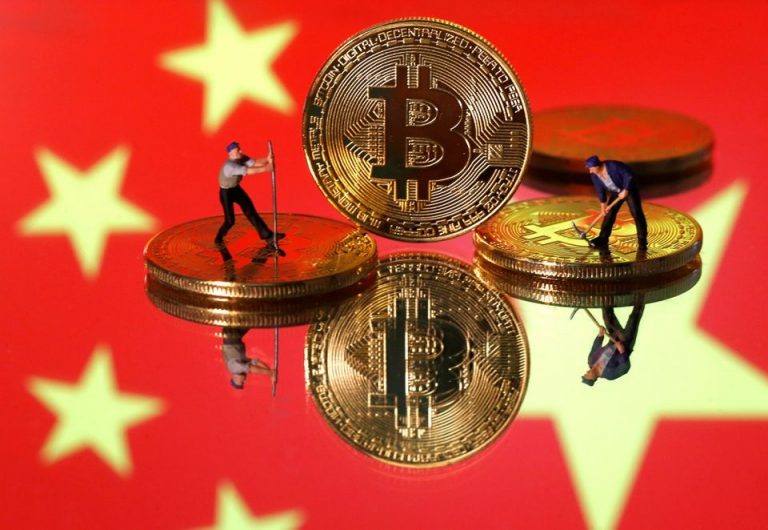
Hong Kong-listed stocks tied to cryptocurrency businesses sank sharply on Monday after China’s central bank signaled a renewed hard line on virtual assets and raised fresh concerns about stablecoins, unsettling a market that had been warming to digital finance through Hong Kong’s more permissive regime.
The sell-off began after the People’s Bank of China (PBOC) issued a weekend statement warning of a resurgence in crypto speculation and vowing to intensify crackdowns on illegal activities involving stablecoins. The announcement added new pressure on firms operating in Hong Kong’s tokenization and digital-asset ecosystem.
Liu Honglin, founder of Man Kun Law Firm, said the central bank’s language “has erased any ambiguity, speculation and illusions” around China’s stablecoin policies.
Register for Tekedia Mini-MBA edition 20 (June 8 – Sept 5, 2026).
Register for Tekedia AI in Business Masterclass.
Join Tekedia Capital Syndicate and co-invest in great global startups.
Register for Tekedia AI Lab.
“Regulators have drawn a concrete red line on what used to be a vague borderline,” he said.
Yunfeng Financial Group, which has been expanding into cryptocurrency and tokenization, slumped more than 10% in early trading, positioning the stock for its worst day in two months. Bright Smart Securities and Commodities Group dropped roughly 7%, while digital-asset platform OSL Group lost more than 5%.
The renewed pressure came just as enthusiasm for virtual currencies had been swelling again across the border. Hong Kong’s passage of a stablecoin bill in May, which created a legal framework for fiat-backed cryptocurrencies, drew interest from mainland investors even though cryptocurrency trading has been banned in China since 2021. The excitement fed into a belief that Hong Kong’s regulated environment might function as a workaround or at least a testing ground for digital-asset experimentation.

That optimism collided head-on with the PBOC’s message. The statement, released after a meeting attended by 13 government agencies, singled out stablecoins for failing to meet strict requirements on customer identification and anti-money laundering controls. It was a signal that Beijing remains unwilling to tolerate any perceived loopholes that might reintroduce the speculative activity it has spent years suppressing.
Market unease deepened after the reminder that Chinese regulators have been quietly tightening around Hong Kong’s tokenization activities as well. In September, sources told Reuters that China’s securities watchdog had advised certain mainland brokerages to pause real-world-asset tokenization businesses in Hong Kong. Major firms had already begun retreating. Alibaba-backed Ant Group and e-commerce giant JD.com suspended plans to issue stablecoins in the city after the PBOC raised concerns about the rapid rise of privately controlled digital currencies, according to an October Financial Times report.
China’s latest move fits into a long and winding crackdown that began in 2013, when financial institutions were first barred from handling bitcoin-related transactions. By 2017, China shut down domestic crypto exchanges and banned initial coin offerings. The campaign intensified in 2021 when authorities declared all crypto transactions illegal and forced the country’s vast mining industry to shut down or relocate overseas. Each wave tightened the perimeter around digital assets, and the new statement suggests Beijing is now focused on closing whatever gaps have emerged through border-adjacent channels like Hong Kong.

Underlying this stance is the Chinese government’s push to cement the digital yuan as the only officially sanctioned digital currency. Stablecoins, which peg their value to fiat currencies and often operate within private-sector ecosystems, present an ideological and structural contrast.
The digital yuan offers state visibility over flows of money, programmable controls, and integration with China’s financial surveillance systems. Privately issued stablecoins do not. Chinese policymakers have repeatedly signaled that any digital currency competing with or complicating the deployment of the digital yuan is unwelcome.
This creates persistent regulatory tension between Hong Kong’s aim to establish itself as a global digital-asset hub and Beijing’s zero-tolerance approach to non-state cryptocurrencies. Hong Kong, under the “one country, two systems” model, has the autonomy to regulate its own financial markets. But the mainland’s sweeping ban on crypto leaves little room for ambiguity. Each time Hong Kong opens its regulatory door, Beijing effectively reasserts the limits.
With the PBOC’s latest warning, those limits have been underlined once again. The market reaction in Hong Kong on Monday reflected not just fears of immediate enforcement but a broader recognition that China’s crypto winter has not thawed—and that Hong Kong’s attempt to build a digital-asset industry may continue to face political and regulatory headwinds every step of the way.