

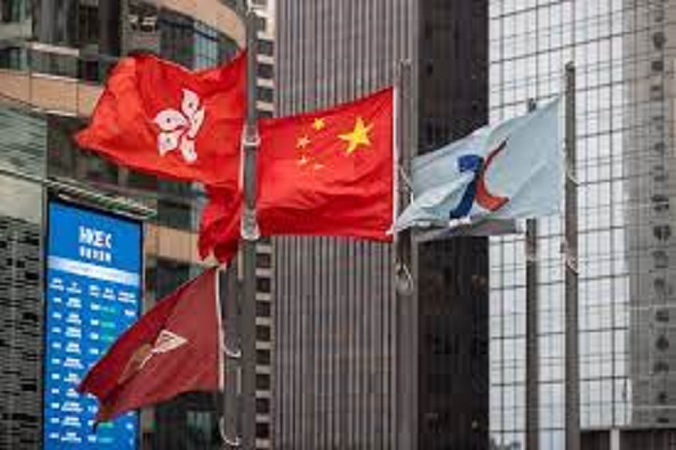
The Stablecoins Ordinance, effective August 1, 2025, establishes a licensing regime for fiat-referenced stablecoin (FRS) issuers in Hong Kong, overseen by the Hong Kong Monetary Authority (HKMA). The ordinance regulates “specified stablecoins,” primarily fiat-referenced stablecoins (FRS) pegged to one or more official currencies, such as the Hong Kong dollar (HKD), or other assets designated by the HKMA. It excludes financial instruments already regulated under existing laws (e.g., bank deposits, securities, stored value facilities, or central bank digital currencies).
Entities issuing FRS in Hong Kong or issuing HKD-referenced FRS anywhere must obtain a license from the HKMA. Only licensed issuers, authorized institutions, SFC-licensed virtual asset trading platforms, or SFC-licensed corporations can offer FRS to the Hong Kong public. Only FRS from HKMA-licensed issuers can be offered to retail investors. These include issuing FRS in Hong Kong, issuing HKD-referenced FRS outside Hong Kong.
The HKMA will issue guidelines on what constitutes “issuing in Hong Kong” (e.g., considering the issuer’s management location, operations, and reserve management). Stablecoins must be fully backed by high-quality, liquid reserve assets at least equal to their par value, with proper segregation of client assets and regular reconciliation.
Register for Tekedia Mini-MBA edition 20 (June 8 – Sept 5, 2026).
Register for Tekedia AI in Business Masterclass.
Join Tekedia Capital Syndicate and co-invest in great global startups.
Register for Tekedia AI Lab.
Issuers must process redemption requests at par value under reasonable conditions. Licensees are treated as financial institutions, requiring customer due diligence (CDD) for transactions at or above HK$8,000, enhanced monitoring for unhosted wallets, and robust risk-based governance. Licensees must implement policies for data security, fraud mitigation, and operational contingencies.
Issuers must publish key information (e.g., redemption terms, reserve details) via white papers and websites and report audit outcomes or breaches to the HKMA. Pre-existing stablecoin issuers with a significant presence in Hong Kong before August 1, 2025, have a six-month non-contravention period to continue operations, provided they submit a license application within three months (by October 31, 2025) and receive HKMA acknowledgment.
Unlicensed activities or false claims of licensing status are offenses, punishable by fines up to HK$5,000,000 and up to seven years’ imprisonment. Daily fines of HK$100,000 may apply for ongoing violations. An appeal mechanism allows review of HKMA decisions, with the tribunal able to suspend enforcement pending review. Issuers must maintain a minimum paid-up share capital of HK$25 million or 1% of the par value of stablecoins in circulation, whichever is lower, with flexibility for the HKMA to impose additional requirements.

The HKMA encourages interested parties to contact them by August 31, 2025, for preliminary feedback, with formal applications due by September 30, 2025, for early consideration. Licensing is ongoing, but initial approvals are expected in 2026 due to a cautious, phased approach. On May 26, 2025, the HKMA released two consultation documents (closed June 30, 2025).
The ordinance aims to mitigate financial stability risks, enhance consumer protection, and maintain Hong Kong’s status as a global financial hub by fostering responsible innovation in digital assets. It aligns with international standards (e.g., Financial Stability Board’s framework) and follows the “same activity, same risks, same regulation” principle. Hong Kong’s regime is among the most comprehensive in the Asia-Pacific, contrasting with softer regulatory approaches in Singapore and Australia.
It aligns with global trends, such as the EU’s MiCA regulation (2024) and the U.S. GENIUS Act (2025), though Hong Kong’s selective licensing contrasts with the U.S.’s faster rollout. The global stablecoin market was valued at USD223 billion in May 2025, representing 6.5% of the crypto market. Hong Kong’s regime targets fiat-backed stablecoins to facilitate cross-border payments and decentralized finance while addressing risks like those exposed by the 2022 TerraUSD collapse.

The HKMA’s “high bar” and invitation-based initial phase may limit licenses to a few highly compliant applicants, potentially creating a bottleneck for smaller players. The regime’s application to HKD-referenced stablecoins issued globally ensures oversight but may deter offshore issuers due to compliance costs. While the ordinance strengthens investor safeguards, its stringent requirements (e.g., capital, AML/CFT) could stifle smaller innovators, though it attracts credible issuers to enhance Hong Kong’s financial ecosystem.
The HKMA’s forthcoming guidelines on “issuing in Hong Kong” and “active marketing” will be critical for clarity. The phased approach and lack of licenses in 2025 suggest a cautious rollout, potentially lagging behind jurisdictions like the U.S. Companies must prepare for rigorous compliance, including reserve management, AML/CFT controls, and capital requirements.
Only stablecoins from licensed issuers can be offered to retail investors, reducing fraud risks but limiting options until licenses are issued. The public should verify issuers via the HKMA’s register, as no licenses exist as of August 1, 2025. Around 50 businesses, including Ant Group and JD.com subsidiaries, are expected to apply, with a focus on HKD-pegged stablecoins for cross-border payments