

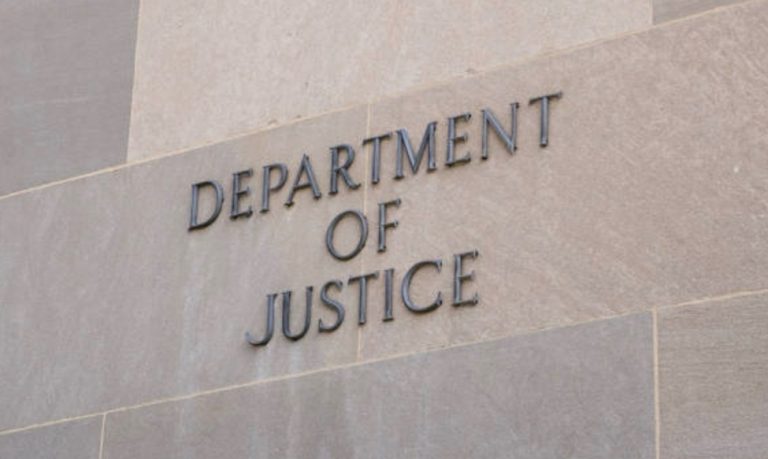
In Washington, the Justice Department has sent a strong signal that under the Trump administration, corporations, unlike individual executives, should not be the prime target of federal prosecutions. Officials have said so in speeches and written it into policy documents.
Yet despite the rhetoric, only a select few companies have received the prize every white-collar defense lawyer covets: a declination letter, according to a report by Business Insider.
These letters — formal notices that prosecutors will not bring charges — are as rare as they are valuable. They represent the cleanest outcome for a corporation caught in the crosshairs of federal investigators. And in recent years, just two companies have secured them.
Register for Tekedia Mini-MBA edition 20 (June 8 – Sept 5, 2026).
Register for Tekedia AI in Business Masterclass.
Join Tekedia Capital Syndicate and co-invest in great global startups.
Register for Tekedia AI Lab.
One of them is the Universities Space Research Association (USRA), a NASA contractor that manages aviation and space research for a consortium of U.S. universities. The Justice Department, in April, declined to prosecute the nonprofit after one of its employees secretly sold sensitive U.S. Army aviation software to a Chinese university.
The letter — addressed to USRA’s attorney, Clark Kent Ervin of Squire Patton Boggs — lauded the organization for “exceptional and proactive cooperation.” It highlighted steps the nonprofit took: disclosing the misconduct, firing the employee responsible, tightening compliance systems, and fully sharing information with investigators.
For USRA, it was the difference between corporate ruin and a clean slate. For the Justice Department, it was a test case of how the new self-disclosure policy works.

The Secret Sale That Sparked the Case
The saga began in 2017, when Jonathan Soong, a USRA software sales manager, received an email that would alter his life.
Soong’s job was to handle sales of advanced flight software under a U.S. Army contract. The software, used by universities and defense contractors for aeronautical research, was tightly controlled. One institution on the government’s blacklist was Beihang University in Beijing, cited by U.S. officials for its rocket and drone development linked to Chinese military programs.
Soong initially flagged the risks, telling the Beihang representative he could not sell to them. But prosecutors said the Chinese university found a workaround: a proxy company, Beijing Rainbow Technical Development Ltd., that acted as a buyer on its behalf.

Soong approved the deal, and Beihang gained access to the sensitive software. For years, the transaction went unnoticed — until USRA administrators stumbled on it during a compliance review tied to a NASA contract.
An internal investigation followed. When pressed, Soong admitted to the scheme, confessed to pocketing proceeds from other improper sales, and was swiftly dismissed.
“We determined that he was a lone wolf, a rogue employee,” Ervin told BI. “The company itself was not involved in this.”
USRA refunded the government, improved its compliance systems, and disclosed everything to prosecutors. Soong, meanwhile, pleaded guilty to criminal charges, repaid $161,000, and in April 2023 was sentenced by a San Francisco judge to 20 months in prison.
Why USRA Was Spared
Ervin argued that transparency made the difference. “The USRA had nothing to hide,” he said. “The company took swift and proactive measures … and deserved the distinction.”
The Justice Department agreed, issuing the declination letter in tandem with a press release. It credited USRA for firing Soong, disclosing the misconduct voluntarily, and providing exhaustive cooperation during the 18-month internal review.
For white-collar lawyers, it was proof that the new DOJ playbook could work in practice. Companies that voluntarily self-report misconduct, investigate thoroughly, and implement reforms may walk away without prosecution.
Declination Letters: Rare and Precious
In the broader corporate legal world, declination letters are exceedingly rare. In 2024, the Justice Department issued just five, according to its own records — a tiny number considering the volume of corporate investigations.
The USRA was one of only two to receive such treatment under the current Trump administration. The other was Liberty Mutual, which last August disclosed that employees in India bribed public officials. The insurer agreed to disgorge $4.7 million in illicit profits, cooperated fully, and received its own declination.
“We welcome this conclusion,” the company said, calling the outcome a validation of its compliance culture.
The policy shift has been codified. In June, Matthew Galeotti, head of the DOJ’s criminal division, gave a speech unveiling a new chapter in the agency’s manual. The section includes a flowchart outlining exactly how corporations can qualify for declination. The formula: voluntary disclosure, internal remediation, and sustained cooperation.
“This policy also encourages companies to invest in compliance programs, which helps deter misconduct from happening in the first place,” Galeotti said, framing the approach as a public good.
Saving Your Company Prosecution
For corporations, the stakes of DOJ investigations remain high, as a prosecution can destroy a business. Even non-prosecution agreements carry reputational damage. Declination letters, by contrast, offer certainty that the government believes the company itself is clean.
The USRA case demonstrates both the risks of rogue employees and the potential rewards of transparency.
“What the company did next after we discovered this made all the difference in the government’s decision not to prosecute it,” Ervin said.
The lesson from Washington is thus that under Trump-era policy, when misconduct emerges, running to the Justice Department — not away from it — may be the only way out.