

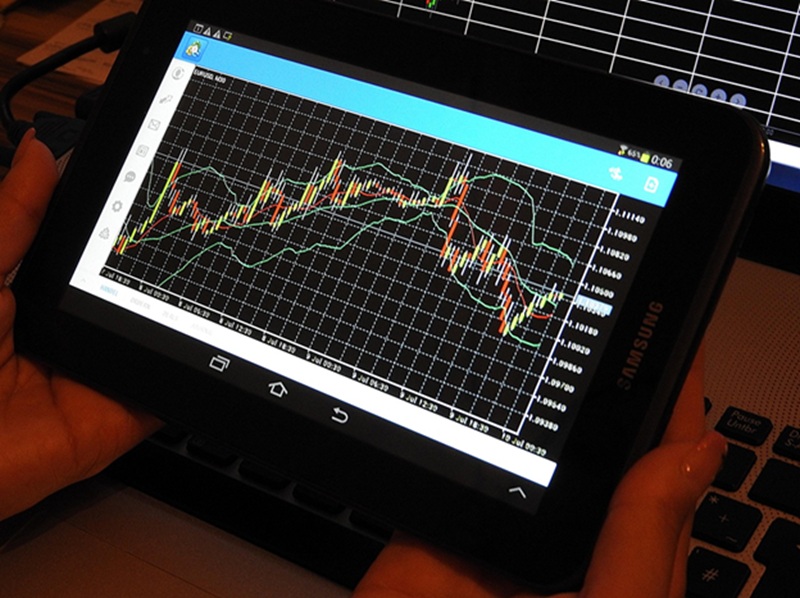
Early on, cryptocurrency trading strategies were more akin to gambling than investing. Traders chased spikes and dumps, guided by hype and social media tips. Overnight, fortunes were made and lost. Today, that era is fading. The modern-day trader is turning from a risk-taking, thrill-seeking adrenaline junkie into a disciplined strategist.
They use analytics and structured rules, along with backtested trading performance systems, to achieve consistency over time. The data-driven, logic-based, controlled new world of crypto trading doesn’t want to leave anything up to chance. IQCent and many other exchange platforms target this change, providing instruments that are designed to be used in conjunction with user-friendly yet quantified risk management and trading.
Why Risky Trading Fails and How Traders Regain Control
In times of volatility, which is often the norm in digital assets, a 10% drop can wipe out weeks of gains in just a few hours. This gambler’s reasoning is intoxicated by the mirage of quick profits but fails when emotions run high. The result is a harmful cycle of chasing losses and overleveraging, based on fear and euphoria rather than data.
Disciplined traders take control back through process, not prediction. Each trade is written up, from market conditions, entry and exit points, to the emotional state of mind in a structured trading journal. This log transforms conjecture into quantifiable truth and provides an opportunity to identify trends over time of both success and failure.
A trading journal helps traders set their risk tolerance according to their own trading rules, such as a 1-2% risk per trade, so that no one trade can retroactively destroy a portfolio. Stop-loss parameters and position sizing add continuity even when the markets are erratic.
Traders continue to develop their systems rationally as the performance data fills out rather than emotionally, in response to whims. The transition from emotional reaction to strategic analysis heralds a shift from mindless betting to calculated trading, where order and reason, not chaos and chance, take the wheel in the face of market volatility.
How Data and Rules Turn Chaos Into Structure
Market data and consistency are the modern trader’s north star. Unlike the rumor-driven and social media-influenced world of NFTs, crypto trading uses technical indicators such as the Relative Strength Index (RSI) as well as moving averages. For instance, a move by the RSI below 30 can indicate an oversold market, and when a 50-day moving average crosses above its 200-day line, it can mean a trend reversal.
These indicators translate complex market motion into simple, clearly defined signals that assist traders in timing entries and exits based on probability rather than emotion. Traders who consistently apply technical signals to their crypto trading strategy can very well decrease their performance dispersion. It has to be said that technical analysis is not foolproof. It can be at risk of false signals and market manipulation. In markets such a crypto, which are especially volatile, consistency and discipline in the application of signals play key roles in reducing dispersion.
Controlled Trading Strategies That Actually Work
There are three main trading strategies preferred by investors: swing trading, day trading, and position trading.
- Swing traders capitalize on medium-term market trends, utilizing support and resistance levels to manage risk. They usually last from a few days to a couple of weeks, and they wait for technical signals before entering the trade. Swing trading gives time to analyze and avoid exposure to snap volatility driven by news.
- Day traders are trading in a shorter time frame, frequently looking at 5 and 15-minute charts to gauge changing momentum. They close all positions each day, never leaving for chance what will happen overnight or on weekends. Consistency and speed are of the essence. Day traders depend on real-time data feeds and need in-the-moment risk-reward ratios.
- Position traders ignore short-term price signals and look instead at global macroeconomic data and blockchain fundamentals. What they watch are trends that take place over a period of weeks or months, in concert with the larger market cycles and asset narratives.
For the three, success is less in prediction and more in rule-based implementation. Those who delineate specific entry, exit, and risk points in advance remove the “fly-by-night” factor of emotion out of their trades.
Many aggregate several approaches, employing swing trades for mid-term holding periods and holding long-term positions for the trend. This mix permits freedom within an ordered framework. Implementing controlled systems can reduce impulsive trades, lessen emotions, and give investors a sense of power over the decisions they make.
Core Elements of a Controlled Trading Strategy
All good cryptocurrency trading strategies that stand the test of time share a common base for long-term success:
Defined entry and exit points. Practitioners only act when signals indicate defined criteria.
Clear risk management rules. The 1% rule (never risk over 1% of the account) is the primary safeguard against a big drawdown.
Performance review and journaling. Looking back through your trades reveals patterns, which help improve precision for the future.
Position sizing and stop losses. Good capital allocation stops you blowing out on a single trade.
Dollar-cost averaging (DCA). Reduces the effect of volatility by spreading entries over time.
These features actually turn trading into a quantifiable system. When implemented consistently, they lessen drawdowns and make you more profitable in the long term. Ultimately, risk management is not about avoiding loss; it’s about surviving long enough for data-driven consistency to work its magic in the financial market.
From Speculation to Systematic Investing
The modern generation of crypto trading is a combination of fundamental analysis and technical vision. Looking at blockchain adoption, liquidity factors, and macro considerations next to chart data gives traders the context they need. Organized systems are better than speculative guesses because they’re built to learn.
The very best traders aren’t chasing perfect entries for digital assets. They are managing imperfect markets with perfect discipline. In a world of more mature digital assets, it will be controlled investment strategies that determine success. The cryptocurrency market favors not the bravest, but rather the most disciplined, those who transform chaos into controlled trading strategies, risk into opportunity, and data into lasting gains.