

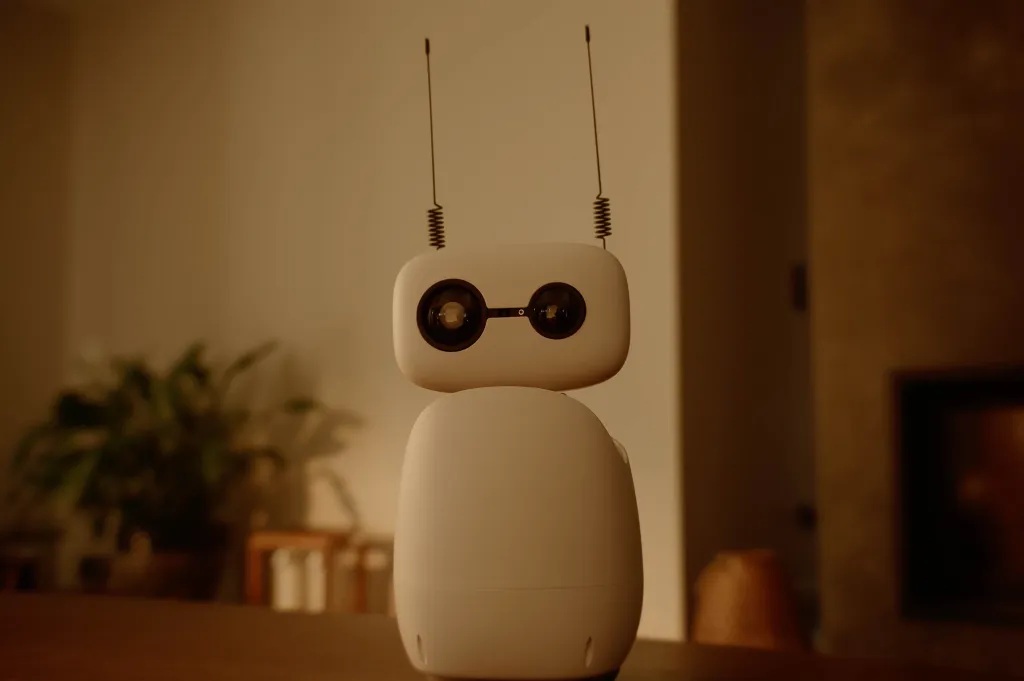
Hugging Face has discovered that the future of artificial intelligence may have feathers, wheels, and a surprisingly strong appetite from consumers. The AI company says sales of its small robotic ducks surpassed $2.6 million in just 24 hours, creating enough demand to leave buyers facing a backlog.
The product, known as the Reachy Mini, reflects a broader shift in the AI industry. Instead of keeping artificial intelligence confined to cloud servers, chatbots, and developer tools, companies are increasingly looking for ways to put AI into physical objects that people can see, touch, and interact with.
The appeal of Hugging Face’s robot is partly its unusual design. Rather than presenting itself as another intimidating humanoid machine, the duck-like robot is approachable and playful. That distinction matters.
Consumer robotics has historically struggled to move beyond novelty because expensive machines can feel impractical or intimidating. A friendly robot can make sophisticated technology feel more accessible.
Register for the next Tekedia Mini-MBA.
Register for Tekedia AI in Business Masterclass.
Join Tekedia Capital Syndicate and co-invest in great global startups.
The reported $2.6 million in sales demonstrates that there is a market willing to pay for that experience. More importantly, the speed of the sales suggests that demand is not limited to traditional robotics enthusiasts.
Developers, researchers, educators, AI hobbyists, and curious consumers are increasingly interested in experimenting with machines that can interact with the physical world.
Hugging Face is particularly well positioned for this trend because of its open-source identity. The company has built a large community around machine-learning models, datasets, and development tools.

Bringing robotics into that ecosystem potentially gives developers another platform on which to experiment with embodied AI. That concept is significant. AI systems have become remarkably capable at processing language, images, audio, and other digital information.
Yet interacting with the physical world presents a different challenge. A robot must perceive its surroundings, understand instructions, make decisions, control motors, and respond to unpredictable environments.
Robotics therefore represents one of the next major frontiers for AI development. The unexpected popularity of Hugging Face’s robot also highlights the changing economics of AI hardware. The biggest AI hardware stories revolved around data centers, GPUs, and enormous infrastructure investments.

Now, attention is increasingly moving toward smaller devices capable of bringing AI directly to consumers. A sales backlog is consequently more than a logistical problem. It can be interpreted as evidence of growing curiosity around embodied AI.
If developers and consumers are willing to wait for a robot after seeing its capabilities, manufacturers may have an incentive to accelerate production and develop additional consumer-focused machines. There is also a cultural dimension to the success.
AI can often feel abstract: algorithms operate invisibly inside servers, while users interact through screens. A physical robot changes that relationship. It gives artificial intelligence a personality and presence, making the technology easier to understand and potentially more emotionally engaging.
Whether robot ducks become a lasting consumer category remains uncertain. The novelty factor could eventually fade, and practical questions around price, software, durability, and usefulness will determine whether demand persists.
Hugging Face has demonstrated something the AI industry should pay attention to: consumers may not only want smarter software. They may want AI that moves, reacts, plays, and lives in the physical world.
A $2.6 million day—and a growing backlog—suggests that the transition from digital AI to embodied AI may already be underway.