

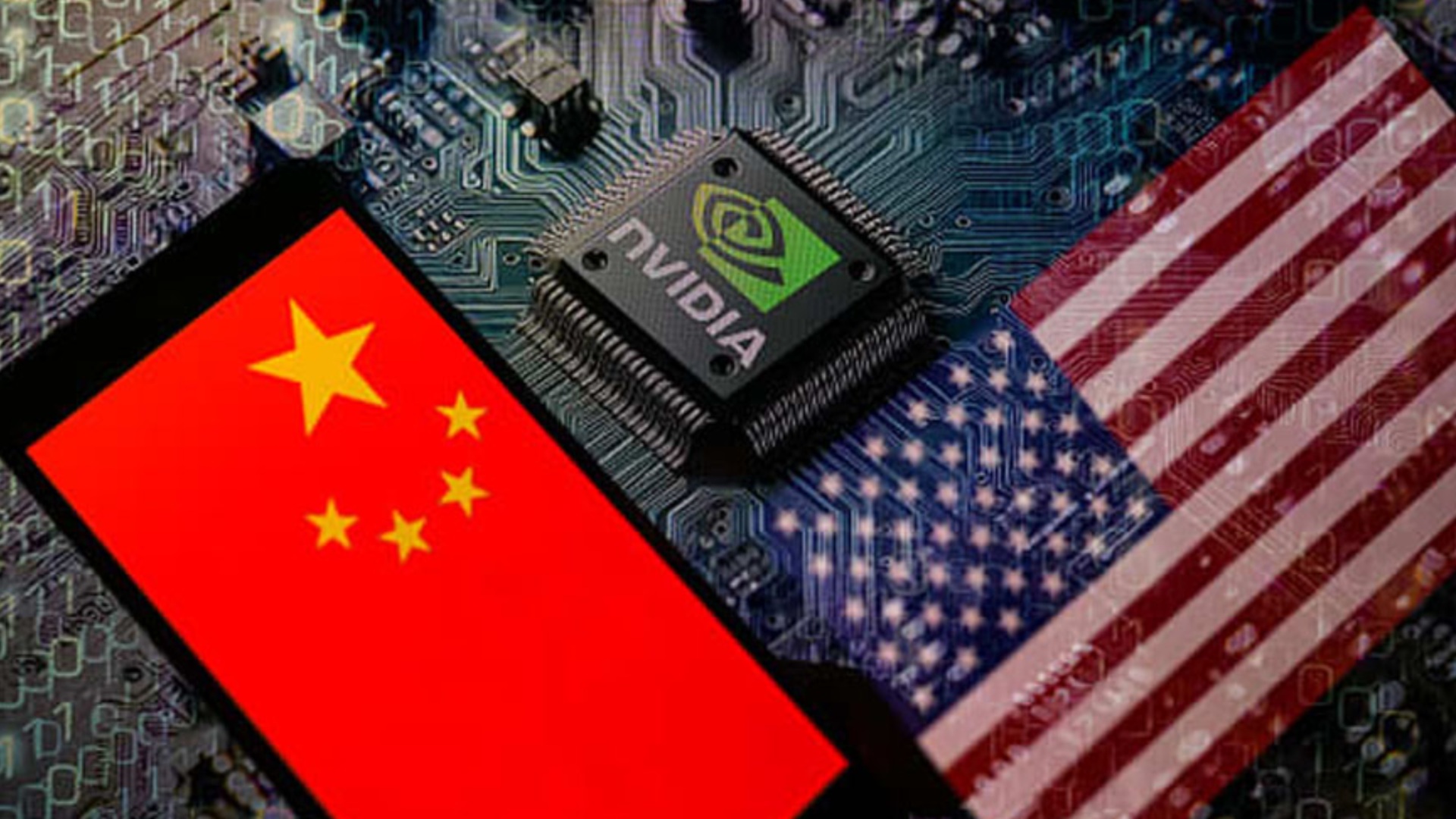
Nvidia chief executive Jensen Huang has weighed in on escalating tensions between Washington and Beijing after reports that China’s powerful cyberspace regulator had ordered some of the country’s biggest technology firms to halt purchases of the American company’s AI chips.
The Financial Times reported on Wednesday that the Cyberspace Administration of China (CAC) directed companies, including ByteDance, parent of TikTok, and e-commerce giant Alibaba, to terminate their testing and orders of the RTX Pro 6000D. The order also reportedly covered existing purchases, effectively forcing cancellations.
“We can only be in service of a market if a country wants us to be,” Huang said at a press conference in London when asked about the CAC order. “I’m disappointed with what I see, but they have larger agendas to work out between China and the United States and I’m patient about it. We’ll continue to be supportive of the Chinese government and Chinese companies as they wish.”
Register for Tekedia Mini-MBA edition 20 (June 8 – Sept 5, 2026).
Register for Tekedia AI in Business Masterclass.
Join Tekedia Capital Syndicate and co-invest in great global startups.
Register for Tekedia AI Lab.
Huang acknowledged the challenges of doing business in China in recent years, calling it “a bit of a rollercoaster.” He explained that Nvidia has told analysts not to factor China into financial forecasts because access to the market is now dependent on ongoing political negotiations.
The reported ban marks the latest flare-up in the intensifying tech trade war. Successive U.S. administrations have restricted China’s access to advanced semiconductors, citing national security concerns. In response, Beijing has pressured its domestic firms to turn away from American suppliers. The measures have hit Nvidia particularly hard, given its dominance in the AI chip market. The chipmaker has touted the Chinese market, criticizing U.S. restrictions on chip exports to the Asian country as undercutting its revenue by billions of dollars.
A series of setbacks
The Financial Times report noted that several Chinese companies had signaled plans to buy tens of thousands of RTX Pro 6000D chips and had begun testing and verification work with Nvidia’s server suppliers. These firms halted orders after receiving the CAC directive, according to sources cited by the paper.

Nvidia’s RTX6000D, a tailored version of its AI chip designed to comply with U.S. export controls, has so far seen lukewarm demand, with some major Chinese companies opting not to place orders. The new restrictions, however, are far stronger than earlier guidance that focused on a previous generation of chips known as the H20.
Earlier this month, China’s State Administration for Market Regulation (SAMR) also opened an antitrust investigation into Nvidia’s $6.9 billion acquisition of Israeli networking solutions provider Mellanox — a deal completed in 2020. Beijing accused Nvidia of potential anti-monopoly violations, adding another layer of regulatory scrutiny.
The strain comes even after Nvidia and Washington appeared to reach a compromise in August. At the time, the White House announced that President Donald Trump and Huang had struck a deal under which Nvidia would receive export licenses in exchange for directing 15% of Chinese H20 chip sales back to the U.S. government.

U.S.-China tensions overshadow global push
The latest order underscores how Nvidia’s business in China remains highly vulnerable to political crosscurrents. Huang admitted that the market could not be reliably included in the company’s financial projections.
“That’s largely going to be within the discussions of the United States government and Chinese government,” he said.
Nevertheless, Huang stressed China’s importance: “The Chinese market is important. It’s large. The technology industry is vibrant. We’ve been in service of it for 30 years.”
He added that Nvidia would continue to support Chinese companies “as they wish” while also working closely with the U.S. government as geopolitical policies evolve.
Huang’s comments came during his trip to the U.K., where he joined U.S. President Donald Trump on a state visit. On Tuesday, Nvidia announced £11 billion ($15 billion) in investment into Britain’s AI infrastructure, part of a wave of pledges by U.S. tech giants including Microsoft, Google, and Salesforce to bolster their presence in the country.
The Implications
The dispute leaves Nvidia in a precarious position. On one hand, China represents a massive and growing AI market, with demand for high-performance chips expected to soar as its companies expand in cloud computing, social media, and autonomous technologies. On the other hand, U.S. restrictions and Beijing’s retaliatory measures make sustained access uncertain.
If U.S.-China tensions deepen, Nvidia could face a prolonged shutout from one of its most important markets, forcing it to double down on North America, Europe, and emerging hubs in the Middle East and Africa. That could slow growth but also push the company to diversify its revenue streams and accelerate investments in friendlier jurisdictions.
Conversely, a diplomatic thaw or a carve-out agreement — similar to August’s export-license deal — could reopen selective access to China’s tech firms, allowing Nvidia to salvage parts of its Chinese business. Such an outcome would likely require delicate balancing between national security concerns in Washington and Beijing’s desire for technological self-reliance.