

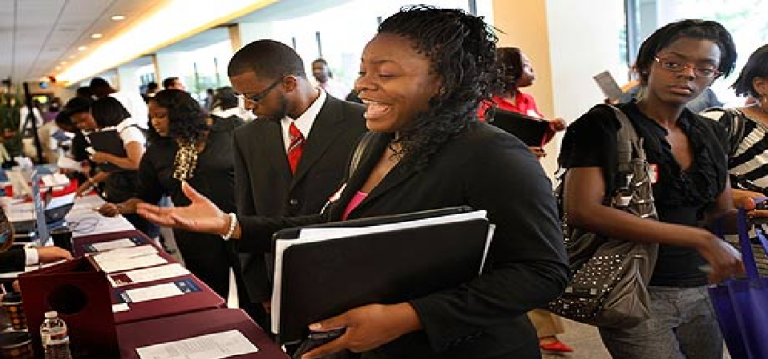
The U.S. Bureau of Labor Statistics (BLS) released the delayed November 2025 Employment Situation report on December 16, 2025, showing the seasonally adjusted unemployment rate rose to 4.6% — up from 4.4% in September 2025.
This is the highest level since September 2021 when it was around 4.7-4.8%. +64,000 jobs added in November, but the economy lost 105,000 jobs in October largely due to federal government cuts.
A 43-day federal government shutdown disrupted data collection. No unemployment rate was calculated for October, and November figures have higher-than-usual statistical uncertainty e.g., larger standard errors due to lower response rates and methodological adjustments.
Register for Tekedia Mini-MBA edition 20 (June 8 – Sept 5, 2026).
Register for Tekedia AI in Business Masterclass.
Join Tekedia Capital Syndicate and co-invest in great global startups.
Register for Tekedia AI Lab.
Wage growth slowed average hourly earnings up 3.5% year-over-year, the smallest since May 2021, and disparities persisted (e.g., Black workers’ unemployment at 8.3%). The labor market has shown signs of cooling throughout 2025, with little net job growth since April.
Economists note the 4.6% rate remains low historically but signals softening, potentially influenced by reduced immigration, government downsizing, and slower hiring. The next report is due January 9, 2026.
The rise in the U.S. unemployment rate to 4.6% in November 2025—the highest since September 2021—coincided with a notable slowdown in wage growth, aligning with basic economic theory: A softening labor market reduces workers’ bargaining power, easing pressure on employers to raise wages.

This slowdown occurred amid weak job growth, +64,000 in November after -105,000 in October and cooling hiring. In a tight labor market, employers compete for workers, driving faster wage increases to attract and retain talent.
As unemployment rises and job opportunities dwindle, workers have less leverage to demand higher pay, leading to moderated wage gains. Economists widely noted this dynamic in reactions to the report: “Slowing job growth is curbing wage growth”, boosting the fight against inflation but risking weaker consumer spending.
Slower wage growth helps cool inflationary pressures, as wages are a key input cost for businesses. Real wage gains adjusted for inflation are minimal—November’s 3.5% YoY was only ~0.5% above recent inflation readings—limiting purchasing power improvements.

Wage growth remains above pre-pandemic norms but has trended down throughout 2025 as the labor market cooled from post-pandemic highs. As previously noted, year-over-year wage growth slowed to 3.5% smallest since May 2021, reducing workers’ bargaining power.
This helps cool inflation, a positive for the Fed’s 2% target by lowering cost pressures on businesses, but it limits real income gains amid persistent price pressures from tariffs.
Consumer spending, accounts for ~70% of GDP. Higher unemployment erodes confidence, reduces discretionary spending especially for lower/middle-income households, and polarizes demand—affluent consumers thrive while others cut back. Retail sales were flat in recent months, risking slower growth.
Little net job creation since April points to stagnation. Reduced labor force growth from immigration curbs and boomer retirements means fewer jobs are needed to stabilize unemployment, but persistent weakness could tip into recession if hiring “cracks” further.
Sectoral effects gains concentrated in health care +46,000 and construction; losses in government -168,000 over Oct-Nov, transportation, and most private sectors. Long-term unemployment rose, and involuntary part-time work increased.
The Fed has cut rates three times in late 2025 to 3.50%-3.75%, citing labor market risks. This report reinforces downside risks to employment, but data distortions from the 43-day government shutdown led Chair Powell to urge caution. Analysts expect a pause in cuts to assess impacts, with potential for more easing if unemployment rises further toward 5%.