

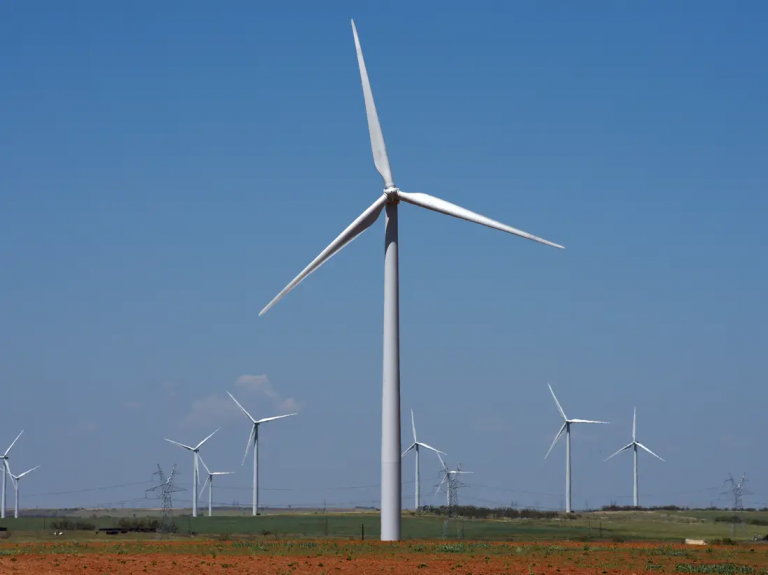
President Trump criticized wind energy—often calling it part of the “Green New Scam”—and specifically targeted wind turbines which he frequently refers to as “windmills”. In his remarks, he said:” There are windmills all over Europe.
There are windmills all over the place and they are losers. One thing I’ve noticed is that the more windmills a country has, the more money that country loses, and the worse that country is doing.”
He tied this to broader claims that China manufactures most of the turbines, sells them profitably to “stupid people” or “foolish people” who buy them, while rarely using them domestically, and that energy should make money rather than lose it (e.g., “You’re supposed to make money with energy, not lose money”).
This fits into Trump’s long-standing and well-documented opposition to wind power, which dates back over a decade. His criticism intensified during his first term and has continued, often citing concerns like:High costs and inefficiency requiring heavy subsidies.
Register for Tekedia Mini-MBA edition 20 (June 8 – Sept 5, 2026).
Register for Tekedia AI in Business Masterclass.
Join Tekedia Capital Syndicate and co-invest in great global startups.
Register for Tekedia AI Lab.
Many articles describe this as a “personal vendetta,” partly tracing back to his 2010s legal battle in Scotland to block an offshore wind farm near his golf course which he lost. In his current administration, this has translated into policy actions like pausing offshore wind leasing, halting permits, and broader anti-renewable pushes, though some efforts have faced court setbacks.
Trump’s claim that more wind turbines directly cause economic losses isn’t supported by mainstream energy economics. Countries with high wind penetration have seen wind become one of the cheapest new sources of electricity in many markets, though integration challenges, grid upgrades, and intermittency can add system costs.
China actually leads the world in installed wind capacity by a wide margin far more than the US or Europe, contradicting part of his narrative about them avoiding their own product. The quote has circulated widely on X in news clips, and commentary, often framed as a blunt, signature Trump takedown of green energy policies.

Trump’s “Scotland wind battle” refers to a long-running legal and public dispute in the early 2010s over an offshore wind farm proposed near his luxury golf resort in Aberdeenshire, Scotland.
Many observers and media outlets trace much of his intense, long-standing opposition to wind turbines which he often calls “windmills” back to this episode, describing it as the origin of what some call his “personal vendetta” against wind energy.
In 2006, Donald Trump purchased the Menie Estate north of Aberdeen and developed the Trump International Golf Links Scotland often called Trump Turnberry or Menie in references, promising it would become “the world’s greatest golf course.”
The site overlooks the North Sea, with sweeping coastal views that were a key selling point for the high-end resort.Around the same time, the Scottish government was aggressively promoting renewable energy, including offshore wind, as part of its climate goals.

In 2011–2012, the Aberdeen Offshore Wind Farm also known as the European Offshore Wind Deployment Centre or “EOWDC” received approval for development. This project involved 11 wind turbines located in the North Sea, several miles offshore but visible from parts of Trump’s golf course property on clear days.
Trump strongly opposed the project, arguing the turbines would: Ruin the scenic views from his golf course. Harm property values and the resort’s luxury appeal. Be “ugly” industrial monstrosities that would devastate the landscape and tourism.
He launched a high-profile public campaign against it, writing letters, giving interviews, and calling Scottish officials including then-First Minister Alex Salmond misguided for supporting “ugly” wind power over his development.
The Legal BattleIn 2013, Trump’s company filed a formal legal challenge against the Scottish government’s approval of the wind farm under Section 36 of the Electricity Act 1989. He argued the decision was flawed, that there should have been a public inquiry, and that political interference had improperly influenced the approval.
Courts at multiple levels heard the case: Lower Scottish courts rejected his claims in 2014. He appealed further. In December 2015, the UK Supreme Court unanimously dismissed his final appeal (Trump International Golf Club Scotland Ltd v The Scottish Ministers [2015] UKSC 74), ruling that the Scottish Ministers had the authority to grant consent without modification restrictions and that the process was lawful.
The wind farm (EOWDC) went ahead and became operational around 2018–2019. Trump lost every stage of the litigation. In 2019, after further proceedings on costs, his organization was ordered to pay the Scottish government’s legal expenses.
They eventually settled for about £225,000 roughly $290,000 USD at the time. The golf resort has reportedly faced financial challenges though it’s unclear how directly the wind farm contributed versus other factors like market conditions or management.
This episode is widely cited as fueling Trump’s vocal criticism of wind power ever since. He has repeatedly referenced it in speeches, interviews, and policy positions: Claiming turbines kill birds, are unreliable, expensive, and subsidized.
Arguing they ruin views and economies. In recent years, including during his 2025–2026 administration, this has influenced actions like pausing new offshore wind leasing and permits in U.S. waters.
While the Scotland case was primarily about visual and aesthetic impact on his private business, it became a symbolic flashpoint. Supporters see it as Trump fighting “green overreach”; critics view it as NIMBYism from a wealthy developer who lost to broader public renewable energy priorities.
The turbines are still there today, and the views from the golf course include distant offshore wind installations on the horizon—exactly what Trump fought (and failed) to prevent.