

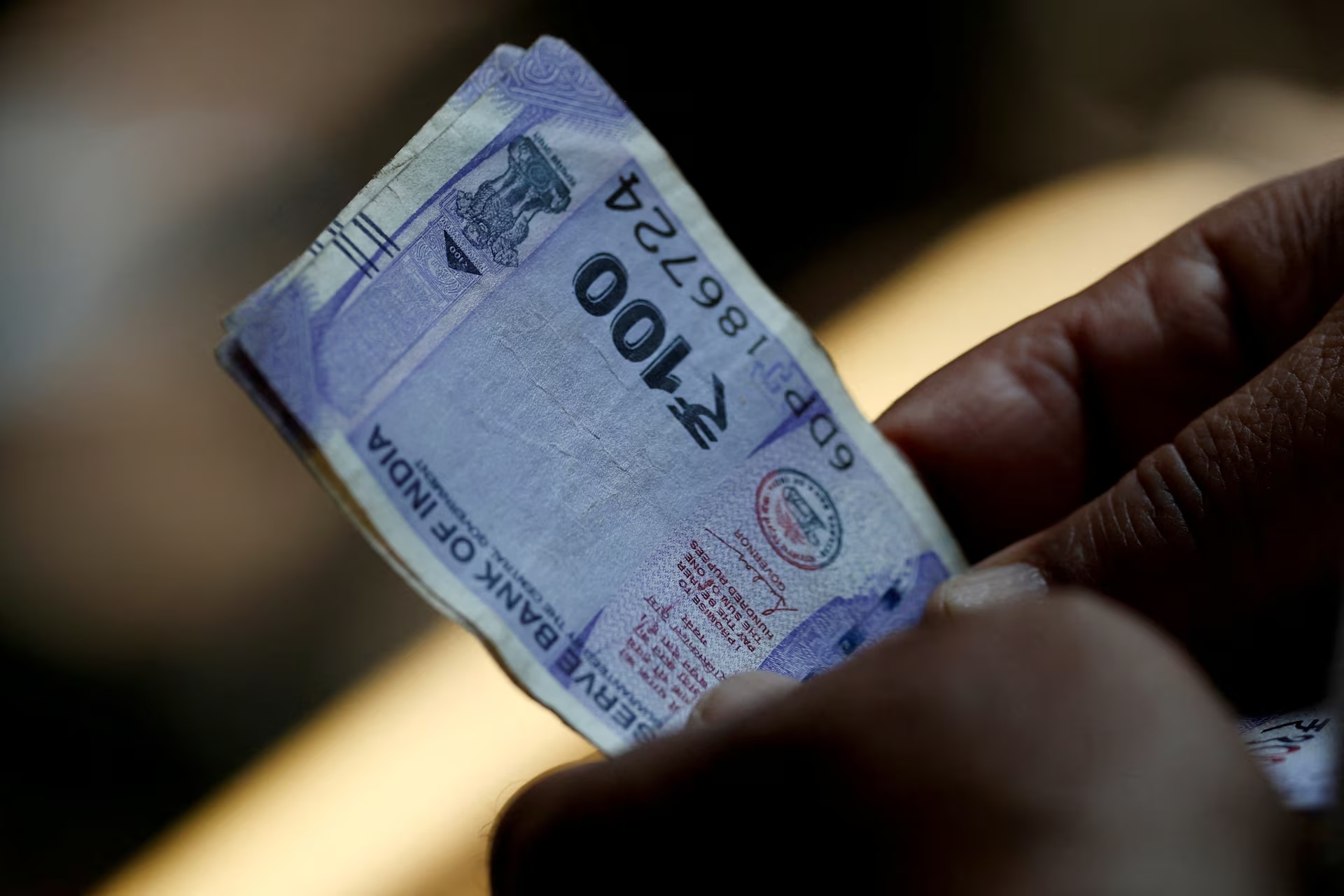
The Indian rupee strengthened to a two-week high on Monday after a combination of Reserve Bank of India (RBI) intervention, lower crude oil prices and a wave of stop-loss dollar selling triggered its sharpest rally in weeks, offering temporary relief to a currency that has come under sustained pressure this year.
The rupee rose to 95.7950 against the U.S. dollar after closing at 96.5625 in the previous session, with traders attributing the move to coordinated action by the central bank and improving external conditions following a pause in hostilities between the United States and Iran.
The currency’s advance accelerated after the dollar-rupee pair broke below a key technical support zone around 96.14-96.16, prompting investors to unwind long-dollar positions and triggering automated stop-loss orders that intensified the rally within minutes.
Register for the next Tekedia Mini-MBA.
Register for Tekedia AI in Business Masterclass.
Join Tekedia Capital Syndicate and co-invest in great global startups.
Market participants said the RBI’s intervention amplified the move.
According to traders, the central bank actively sold dollars in the spot market while simultaneously conducting buy-sell swap operations in the forward market, a strategy designed to support the rupee without significantly tightening domestic liquidity.
The intervention also pushed down forward premiums, with the one-year implied interest rate falling about 10 basis points to 2.82%.

Estimates from traders placed the RBI’s intervention on Monday at between $1.5 billion and $3 billion, with the central bank reportedly active in both the domestic spot market and the offshore non-deliverable forward (NDF) market, where foreign investors frequently hedge rupee exposure.
Bankers said the RBI likely employed a similar strategy on Friday when the rupee was approaching a record low, suggesting policymakers have become increasingly proactive in limiting excessive currency volatility rather than defending a specific exchange-rate level.
The intervention underpins the RBI’s preference for using foreign exchange reserves and market operations to smooth fluctuations instead of relying on interest rate increases to support the currency. A weaker rupee raises the cost of imports, particularly crude oil, and can fuel inflation in one of the world’s largest energy-importing economies. However, aggressive rate hikes to defend the currency could slow economic activity at a time when growth is already expected to moderate.

Declining Oil Prices Offered Further Boost
Brent crude fell below $90 a barrel during Asian trading after the United States paused military operations against Iran to allow more time for diplomatic efforts, easing concerns over severe supply disruptions in the Middle East.
The decline in oil prices is particularly beneficial for India, which imports more than 80% of its crude oil requirements. Lower oil prices reduce the country’s import bill, improve the current account balance, and lessen demand for dollars by oil marketing companies, all of which tend to support the rupee.
The combination of central bank intervention and cheaper crude created a favorable environment for the currency, encouraging traders to reverse bearish positions that had accumulated during the rupee’s recent decline.
Sentiment was further bolstered by the RBI’s recent initiatives to attract foreign currency inflows.
Governor Sanjay Malhotra told The Hindu BusinessLine that dollar-mobilization schemes introduced in June have already attracted nearly $32 billion, strengthening the central bank’s capacity to counter depreciation pressures and maintain orderly conditions in the foreign exchange market.
Those measures form part of a broader strategy to increase the availability of foreign currency without relying solely on intervention through India’s foreign exchange reserves.
Despite Monday’s rebound, the rupee remains under pressure over the longer term.
The currency has fallen nearly 7% against the U.S. dollar this year, reflecting a combination of higher global oil prices, persistent dollar strength, geopolitical uncertainty and capital outflows from emerging markets.
That depreciation has increased speculation that the RBI could eventually tighten monetary policy to stabilize the currency.
However, economists overwhelmingly believe the central bank will resist using interest rates as a tool to defend the exchange rate.
A Reuters survey conducted between July 21 and July 27 found that 68 of 72 economists expect the RBI’s Monetary Policy Committee to leave the benchmark repo rate unchanged at 5.25% when it concludes its August 3-5 policy meeting. Only four economists forecast a 25-basis-point increase.
The results mark a notable shift from expectations earlier this year.
In May, many economists anticipated a rate increase in the third quarter as inflation accelerated. Those expectations have since moderated after Governor Malhotra indicated it would be “premature” to discuss higher interest rates given the uncertain economic environment.
The RBI reduced the repo rate by 25 basis points to 5.25% in December and has maintained that level ever since.
While inflation accelerated to 4.38% in June, its first reading above the RBI’s 4% target since January 2025, economists generally believe the increase remains manageable.
The Reuters poll projects average inflation of 4.8% during the current fiscal year, slightly above the 4.7% forecast in May but still below the RBI’s own projection of 5.1%.
That outlook has reinforced expectations that policymakers will prioritize economic growth over exchange-rate stabilization.
India’s economy is expected to expand by 6.6% this fiscal year, slowing from 7.7% in the previous year. Against that backdrop, economists argue that higher borrowing costs could unnecessarily weaken domestic demand while offering only limited support to the currency.
“We have already seen some of the effects of the war trickle down to inflation, but it will be too quick a reaction by the central bank to hike rates now because growth will be affected adversely, and the situation outside is too fickle to react in haste,” said Aditya Vyas, chief economist at STCI Primary Dealer.
Other analysts expressed similar views, noting that several sectors of India’s economy remain under pressure from U.S. tariffs and the economic fallout of the Middle East conflict.
“While overall macro indicators are resilient, the more vulnerable sectors that have been exposed to both tariffs and the Middle East conflict have been hit hard,” said Kanika Pasricha, chief economic adviser at Union Bank of India.
Pasricha added that a sustained period of oil prices above $90 a barrel could eventually prompt the RBI to consider raising interest rates during the second half of the fiscal year if inflationary pressures become more persistent.
For now, however, economists expect the central bank to continue relying primarily on foreign exchange intervention and liquidity management rather than monetary tightening.
“I do not think the RBI will use interest rate tools to target the rupee because it is ineffective… they cannot simply discard the growth objective, and rate hikes are way more costly now at this particular juncture,” said Apoorva Javadekar, chief economist at Muthoot Fincorp.
Javadekar said the RBI would likely consider raising rates only if inflation rose above 6% and appeared likely to remain elevated for an extended period.