

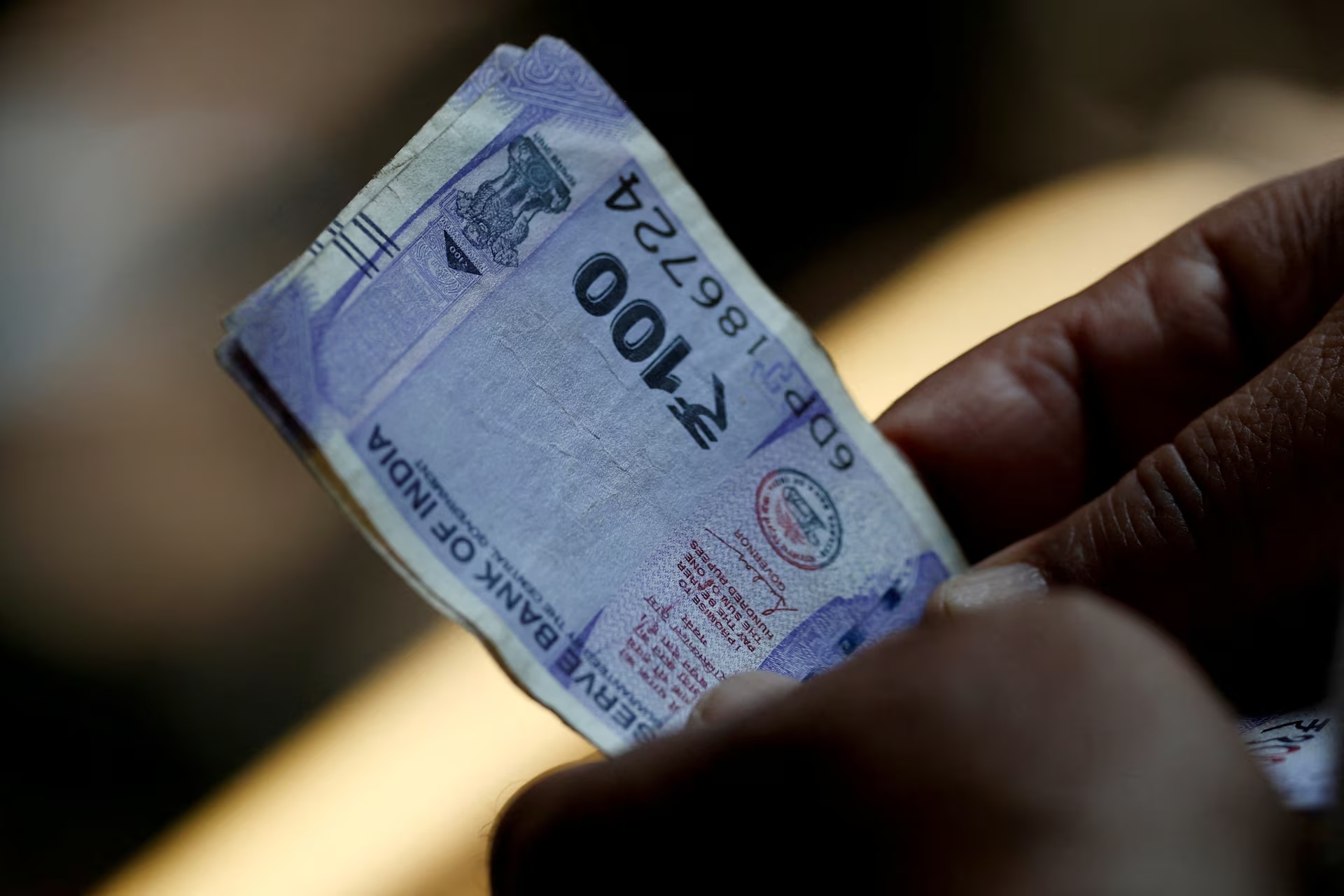
The Indian rupee slumped to a record low on Tuesday as fading hopes for a U.S.-Iran peace agreement triggered another spike in global oil prices, intensifying pressure on one of the world’s largest energy-importing economies and exposing growing vulnerabilities in India’s financial markets.
The currency weakened to an all-time low of 95.7375 against the dollar before recovering slightly to close at 95.6275, with traders citing likely intervention by the Reserve Bank of India to limit steeper losses.
The latest decline marks a significant deterioration in investor sentiment toward India and reflects how the prolonged Middle East conflict is beginning to destabilize major emerging-market economies far beyond the Gulf region.
Register for the next Tekedia Mini-MBA.
Register for Tekedia AI in Business Masterclass.
Join Tekedia Capital Syndicate and co-invest in great global startups.
India, which imports more than 80% of its crude oil needs, has emerged as one of the countries most exposed to the energy shock created by the U.S.-Israeli conflict with Iran and the disruption of shipping through the Strait of Hormuz. Since the war began, Brent crude prices have surged nearly 50%, sharply increasing import costs for oil-dependent economies across Asia.
The rupee has become one of the biggest casualties of that shift. Other regional currencies, including the Indonesian rupiah and Philippine peso, have also weakened sharply, but analysts say India’s large external financing needs and dependence on foreign capital flows make it particularly vulnerable.
“Defensive currencies, specifically the INR, IDR, and PHP, are currently trading with a heavy bias,” analysts at DBS Bank said.

“These regional pairs will be looking for relief in the form of oil prices declining sustainably below $100 to ease imported inflationary pressures and improve current account outlooks.”
The pressure on the rupee highlights how quickly geopolitical crises can morph into broader macroeconomic threats for emerging markets. Higher oil prices directly worsen India’s current account deficit because the country must spend more foreign exchange to secure energy imports. At the same time, elevated fuel costs feed inflation across the economy by increasing transport, manufacturing, and logistics expenses.
That combination often forces investors to pull money from emerging markets, accelerating currency weakness further.

That process now appears well underway in India. Foreign investors have withdrawn more than $20 billion from Indian equities since the war began, according to market estimates, with year-to-date outflows already surpassing last year’s record levels. Preliminary data showed overseas investors sold nearly $900 million worth of Indian shares on Monday alone.
The selling pressure has rattled local financial markets. India’s benchmark Nifty 50 index fell 1.8% on Tuesday, marking its worst one-day decline in more than a month.
The currency slump also reflects fading optimism that the Middle East conflict can be resolved quickly. Hopes for a diplomatic breakthrough had briefly supported emerging-market currencies in recent weeks. But those expectations weakened sharply after President Donald Trump said a ceasefire with Iran was “on life support” and dismissed Tehran’s demands as “garbage.”
The comments stoked concerns that the conflict could drag on for months, keeping oil prices elevated and prolonging volatility across global markets. Analysts say that scenario could prove particularly dangerous for India because the country is already navigating a delicate economic balancing act.
While India remains one of the fastest-growing major economies, much of that growth has relied heavily on domestic consumption, infrastructure spending, and stable foreign capital inflows.
A prolonged energy shock threatens all three pillars simultaneously. Higher fuel prices reduce household purchasing power, pressure government finances, and weaken investor confidence.
The situation is beginning to revive memories of past currency crises. Several analysts have drawn comparisons to India’s 2013 “taper tantrum,” when the rupee collapsed after investors fled emerging markets following signals that the U.S. Federal Reserve would reduce monetary stimulus.
That episode forced Indian authorities to implement emergency measures to stabilize the currency and attract foreign capital. Markets are increasingly speculating that policymakers may again resort to extraordinary interventions if pressure on the rupee intensifies further.
Nomura said potential policy responses could include restrictions on non-essential imports such as gold, tighter rules on overseas remittances, special foreign-currency deposit schemes, and increases in domestic fuel prices.
Indian Prime Minister Narendra Modi has already begun signalling concern over the country’s foreign-exchange position. On Sunday, Modi urged citizens to reduce fuel use, limit travel, and curb imports to conserve foreign exchange reserves.
The appeal underscores growing anxiety within government circles that persistently high oil prices could significantly strain India’s balance of payments. Notably, India has so far avoided sharply increasing domestic fuel prices even as global oil costs have surged. That approach differs from many other emerging economies and appears aimed at limiting inflationary pressure on households.
But economists warn the strategy may become increasingly difficult to sustain if crude prices remain above $100 for an extended period. The longer authorities delay passing costs on to consumers, the greater the fiscal burden on state-owned fuel retailers and public finances.
Some analysts now see the rupee approaching psychologically critical territory. Last week, ANZ lowered its year-end rupee forecast to 97.5 per dollar from 93 previously. Meanwhile, BMI warned the currency could weaken toward 100 if the Iran conflict escalates further.
A move to 100 rupees per dollar would carry symbolic and economic significance. It would sharply increase import costs, risk imported inflation, and potentially force the central bank into more aggressive intervention or tighter monetary conditions.
For investors, the rupee’s decline is increasingly becoming a referendum on whether India can withstand a prolonged global energy shock without broader financial instability. The concern is not merely about oil prices themselves, but about the cumulative effects: widening deficits, weakening capital flows, higher inflation, and slowing growth occurring simultaneously.
India still retains substantial foreign-exchange reserves and stronger macroeconomic buffers than during previous crises. But the speed of the rupee’s recent decline suggests markets are beginning to test how resilient those defenses truly are if the Middle East conflict drags on deeper into the year.