

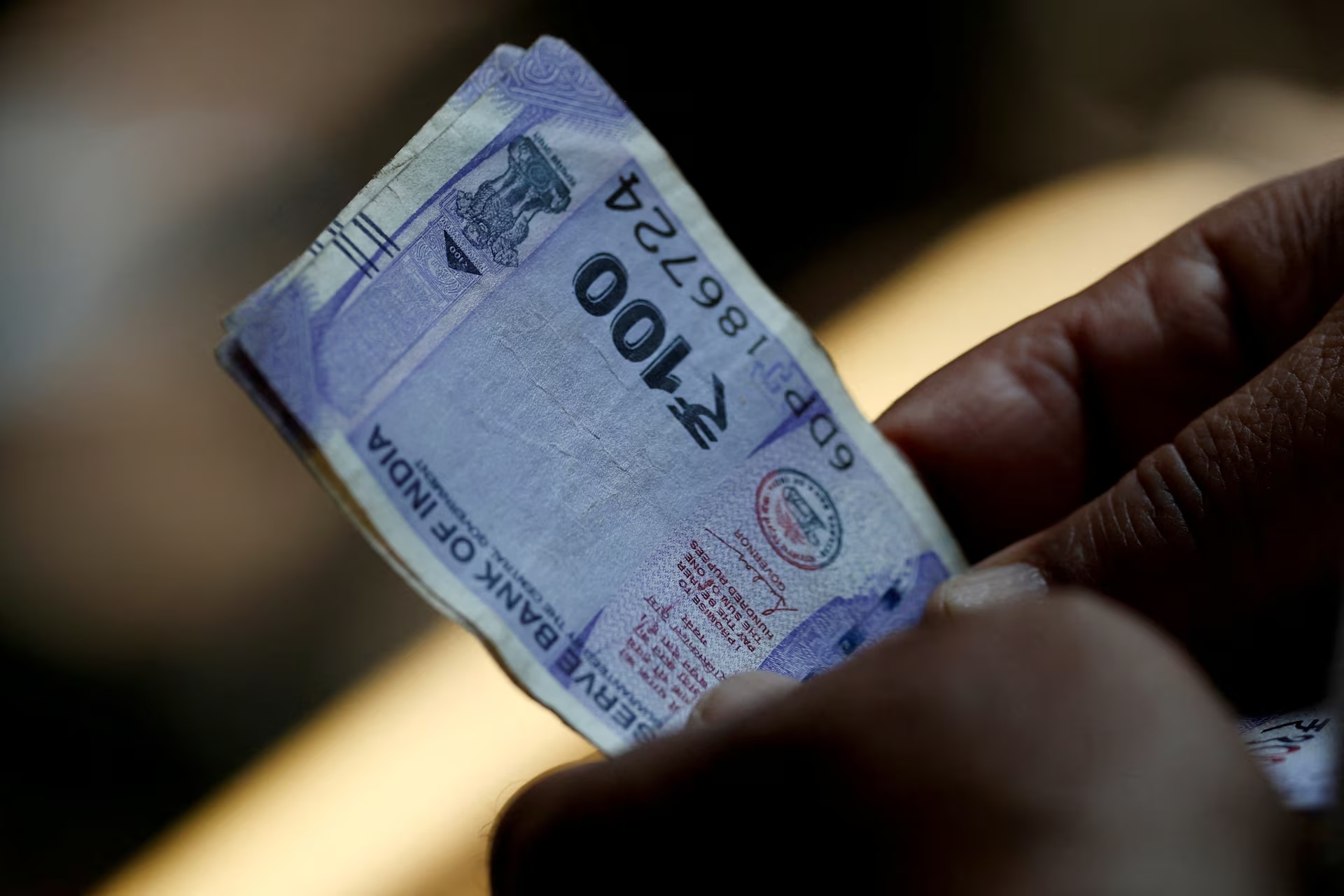
Rupee closes at 95.435 per dollar as fading hopes for U.S.-Iran deal lift crude; RBI intervention limits losses while stocks and bonds weaken
The Indian rupee fell to its weakest level in nearly two weeks on Tuesday as a sharp rise in oil prices renewed pressure on the currency, with fading hopes for a U.S.-Iran agreement to end the war and reopen the Strait of Hormuz raising concerns over India’s import bill.
The rupee closed at 95.4350 per dollar, down 0.15% from its previous close, after coming under pressure as Brent crude futures climbed nearly 2.5% to around $89.90 a barrel.
Register for the next Tekedia Mini-MBA.
Register for Tekedia AI in Business Masterclass.
Join Tekedia Capital Syndicate and co-invest in great global startups.
The currency’s decline was limited by suspected dollar-selling intervention from the Reserve Bank of India, traders said, underscoring the central bank’s role in containing volatility as geopolitical risks return to global energy markets.
“The absence of large outflows or derivative maturities was helpful to the rupee on the day but if oil keeps rising, expect it hover around 95.80 soon, unless the RBI stands firmly in the way,” Reuters reported a trader at a private bank as saying.
India is particularly exposed to swings in global oil prices because it imports nearly 90% of its crude oil requirements. A sustained increase in crude therefore threatens to widen the country’s trade deficit, increase demand for dollars and put additional pressure on the rupee, according to analysts.

Higher energy costs could also complicate India’s inflation outlook. Although the impact depends on the duration and magnitude of the oil shock, a prolonged rise in crude prices can increase transportation and production costs across the economy, potentially limiting the scope for monetary easing.
The currency pressure extended to India’s financial markets. The benchmark Nifty 50 fell 0.5%, while the benchmark 10-year government bond declined, pushing its yield 3 basis points higher.
The RBI’s repeated interventions in the foreign-exchange market have nevertheless helped keep expectations for large rupee swings contained. The one-month implied volatility of the dollar-rupee pair, a market measure of expected currency fluctuations, fell to 4.6% on Tuesday, its lowest level since late June.

That decline suggests traders expect the central bank to continue resisting abrupt moves in the exchange rate, particularly if higher oil prices trigger renewed demand for dollars.
But analysts have warned that the RBI’s intervention, however, cannot eliminate the underlying pressure indefinitely. This is because if crude prices continue rising, the central bank could face a trade-off between using its foreign-exchange reserves to smooth the rupee’s decline and allowing the currency to adjust to higher energy costs.
The geopolitical backdrop remains the principal near-term risk.
Expectations that Washington and Tehran could reach an agreement to reopen the Strait of Hormuz had helped push oil prices lower in recent sessions. The reversal of those expectations has now renewed the risk premium in crude.
For India, the importance of the Strait extends well beyond energy prices. The waterway is a major transit route for global oil and liquefied natural gas supplies, meaning prolonged disruption could increase shipping costs and create additional pressure on import-dependent economies.
Investors are also looking for fresh economic data to determine whether the currency’s weakness will persist. India’s consumer inflation data and U.S. inflation figures, both due Wednesday, are likely to influence expectations for monetary policy and global capital flows.
A stronger-than-expected U.S. inflation reading could support the dollar by reducing expectations for Federal Reserve easing, adding another source of pressure on emerging-market currencies such as the rupee. Conversely, softer U.S. inflation could weaken the dollar and provide some relief.
“If Brent crude prices stabilize around $70-100 per barrel, it reduces the geopolitical tail risks around the U.S.-Iran conflict and keeps the FX market highly data-dependent,” DBS analysts said in a note.
The rupee’s immediate direction is therefore likely to depend on the interaction between oil prices, the dollar’s global trajectory and the RBI’s willingness to intervene. For now, the central bank’s presence is helping prevent a sharper move, but a sustained oil rally would make it increasingly difficult to shield the rupee from the underlying deterioration in India’s external balance.