

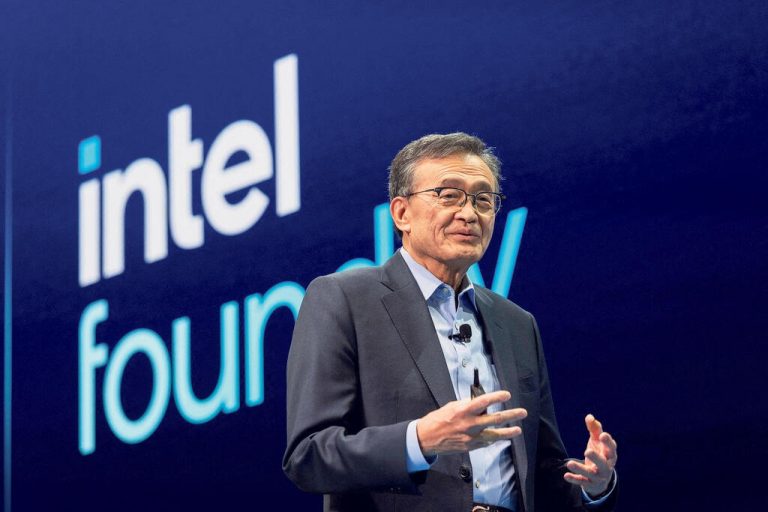
ntel has expanded its planned share sale to $20 billion, seeking to capitalize on a dramatic rally in its stock and raise fresh capital for the costly expansion of its chip manufacturing and foundry operations as demand for artificial intelligence computing accelerates.
The company said on Tuesday it would sell common stock at $95 a share, up from the $15 billion offering announced a day earlier. The offering is expected to generate about $19.7 billion in net proceeds after underwriting discounts, commissions and other expenses. It is scheduled to close on August 12.
The enlarged offering is one of the clearest signs yet that Intel is using the sharp recovery in its share price to strengthen its balance sheet and finance a capital-intensive turnaround. Intel shares have surged 175% in 2026 and have quintupled over the past year, giving the company a substantially stronger currency with which to fund its manufacturing ambitions.
Register for the next Tekedia Mini-MBA.
Register for Tekedia AI in Business Masterclass.
Join Tekedia Capital Syndicate and co-invest in great global startups.
The move also highlights the enormous financing requirements created by the global AI infrastructure boom. Technology companies are spending hundreds of billions of dollars on data centers, processors, networking equipment and advanced semiconductor manufacturing as they race to expand computing capacity.
Goldman Sachs estimates that capital spending by major technology companies will reach about $765 billion this year and $1.2 trillion in 2027, underscoring the scale of the investment cycle that Intel is seeking to capture.
Intel said the proceeds would be used for general corporate purposes, including capital expenditures and working capital. The company has identified physical AI, purpose-built silicon and advanced packaging as major growth opportunities, while its foundry business remains central to its strategy of becoming a major contract chip manufacturer.

The company has been increasing investment in new manufacturing capacity and advanced packaging as it attempts to compete with industry leader TSMC in the contract manufacturing market. Intel raised its 2026 capital expenditure forecast to $20 billion last month after reporting its fastest revenue growth in nearly 15 years.
Chief Financial Officer David Zinsner said at the time that most of the spending would go toward factory tooling and warned that investment could rise meaningfully in 2027.
The capital raise therefore comes at a critical point in Intel’s transformation. The company needs to fund new factories and process technologies while also proving that its foundry business can attract enough external customers to justify the enormous investment required.

Intel’s 14A manufacturing process is scheduled for high-volume production in 2028. The company had previously warned that the technology could be shelved if it failed to secure a major external customer, highlighting the importance of customer commitments to its foundry strategy.
The company has said Tesla is a customer for its 14A technology, while President Donald Trump has said Apple will manufacture processors with Intel. Apple has not confirmed that arrangement.
Intel is also benefiting from a broader push by Washington to rebuild domestic semiconductor manufacturing and reduce U.S. reliance on overseas production. The U.S. government agreed to take a 10% equity stake in Intel as part of efforts to strengthen domestic chipmaking capacity, providing another source of political and financial support for the company’s turnaround.
The share sale, however, comes with an immediate cost for existing shareholders: dilution. Intel’s decision to increase the offering from $15 billion to $20 billion means substantially more new shares will enter circulation. The market’s reaction will therefore depend on whether investors view the additional capital as a necessary investment in future growth or as evidence that Intel’s transformation requires more cash than previously expected.
Intel has given underwriters a 30-day option to purchase an additional $2.25 billion of common stock, potentially taking the total size of the transaction above $22 billion.
This move is happening as Intel is attempting to finance its expansion after one of the strongest periods for its stock in years. The rally has given the company an opportunity to raise capital at a much higher valuation than would have been possible during its prolonged downturn.
But execution has been fingered as a major challenge. Analysts note that Intel must convert the capital into manufacturing capacity, secure external foundry customers and generate returns that justify continued investment. The AI boom has created a powerful demand tailwind, but the company is competing against established semiconductor manufacturers with deeper foundry relationships and extensive manufacturing expertise.
The offering also boosts the view that AI demand is no longer benefiting only GPU designers such as Nvidia. It is driving investment across the entire chip supply chain, from memory and advanced packaging to semiconductor fabrication and data-center infrastructure.