

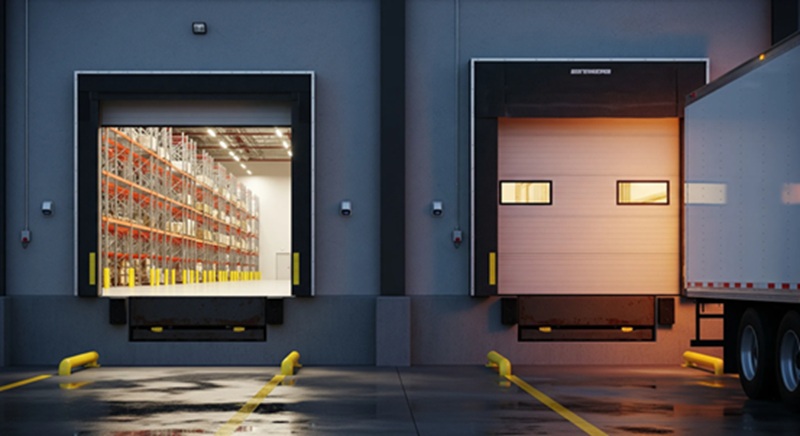
Tekedia readers know that competitive advantage is won or lost in day to day execution. Supply chains get the headlines, yet the smallest choke points often create the largest losses. One of those choke points is the loading dock and the commercial garage door that guards it. If that door sticks, the entire flow of goods slows. Trucks idle, labor waits, and customer promises slip. Treating the dock door as a strategic asset, not a background fixture, is a practical way to lift uptime, safety, and margins.
The dock door as a system, not a slab
A commercial door is a bundle of interdependent parts. Panels, tracks, rollers, springs, openers, sensors, and controls all need to be sized and tuned for the duty cycle of the site. Retail distribution centers see high cycle counts. Food and life sciences require tighter environmental control. Manufacturing plants prioritize safety and forklift traffic throughput. When the door specification matches the workload, motor torque stays lower, parts last longer, and the door moves at a predictable cadence that planners can rely on.
The true cost of downtime
Managers often think of a broken door as a maintenance nuisance. In reality, it is an operations problem. Add up detention fees for trucks, overtime for crews, spoilage risk for temperature sensitive goods, and the customer satisfaction hit from late arrivals. The hourly cost can exceed the price of a full repair by an order of magnitude. That is why leading facilities track dock door availability as a key performance indicator alongside pick rate and on time shipping.
Safety and compliance by design
High cycle springs under tension, moving panels, and mixed pedestrian and forklift lanes create risk. Modern doors mitigate that risk with photo eyes, light curtains, soft edge detection, and smart controllers that auto reverse when they sense resistance. Many sites add interlocks that tie the door to dock levelers and vehicle restraints, reducing human error during trailer loading. Documented inspections and test logs also support OSHA compliance and lower insurance exposure.
Sensors, data, and predictive maintenance
Industry 4.0 is not only for production lines. New openers and controllers ship with vibration, temperature, and cycle count sensors that stream data to a central dashboard. Machine learning models spot abnormal torque spikes that signal worn bearings or misalignment. Maintenance can then schedule a short service window before the failure, rather than reacting to a breakdown at peak throughput. Over time, the dataset informs better specifications for springs, rollers, and motors at each dock position.
Energy performance that pays back
A dock door is a big thermal opening. In cool, damp climates, every minute that the door stays open or leaks air drives fuel and electricity spend up. Insulated sectional or high speed fabric doors paired with perimeter seals and smart controls help retain conditioned air. Some sites add vestibules and air curtains. Facilities teams can measure the improvement with simple temperature sensors before and after installation, then model the annual savings in kilowatt hours and therms to justify capex.
Cyber meets physical security
Access control is moving from fixed radio codes to encrypted rolling codes tied to user identities. Wi Fi and hardwired Ethernet options enable logs that show who opened which door and when. Cameras and analytics detect tailgating, while alerts push to phones if a door is propped open beyond policy limits. This convergence of cyber and physical security reduces shrink and supports audits for customers that require chain of custody.
Procurement and vendor selection
Price matters, but total cost of ownership matters more. Look for service partners who size springs to the real cycle load, spec corrosion resistant hardware for local weather, and stock critical spares to cut lead times. Response time service level agreements, documented checklists, and technician training credentials are worth real money over the life of the asset. References from operators with similar duty cycles often predict outcomes better than glossy brochures.
Midway through any upgrade plan, it helps to map your options and timelines. If your team needs outside help with specifications, repairs, or planned upgrades, specialized partners in commercial garage door services can design a maintenance program that fits your hours of operation and compliance needs. For a practical overview of why dock door care translates directly into better throughput and fewer surprises, see Why Well-Maintained Commercial Garage Doors Keep Local Business Moving for additional context and examples.
Implementation playbook
- Assess current state
Audit cycle counts by dock, log failure modes, and calculate average time to repair. Photograph wear patterns on rollers, cables, and tracks. - Prioritize by risk and value
Fix the doors that gate the highest revenue lanes or the most temperature sensitive inventory first. - Standardize components
Harmonize rollers, springs, and controllers across doors where possible to simplify spares. - Instrument the assets
Add sensors and a simple dashboard. Even weekly CSV exports can reveal trends. - Lock in a preventive schedule
Quarterly lubrication and alignments, biannual safety tests, annual spring balance checks. - Close the loop
Track uptime, energy spend at the dock, and incident rates. Feed those metrics back into the maintenance plan and future specs.
People and process
Technology is only as good as the habits around it. Train dock leads to do a five minute daily walkdown. Check seals, clear tracks, test photo eyes, and listen for new noises. Create a simple escalation path so issues jump from floor to maintenance quickly. Share uptime metrics with teams to reinforce good practices and celebrate improved availability.
The business case
A well planned program usually pays for itself within the first year through avoided emergency calls, reduced detention, and energy savings. Add softer gains like quieter operation, lower injury risk, and better customer service, and the ROI becomes hard to ignore. For companies moving to 24 by 7 operations, the case is even clearer, since overnight failures carry premium costs.
Keep Seattle Operations Moving with CHS
When a dock door fails at the wrong hour, you need a team that understands logistics, safety, and uptime. CHS Garage Door Repair designs preventive programs, upgrades motors and controls, and delivers fast on site service that fits your production schedule. From high cycle spring packages to encrypted access control and insulated panels, CHS aligns door performance with business outcomes so your people and freight keep moving.
CHS Garage Door Repair of Seattle
12544 15th Ave NE UNIT 309, Seattle, WA 98125
(206) 245-5495
chsgaragerepair.com