

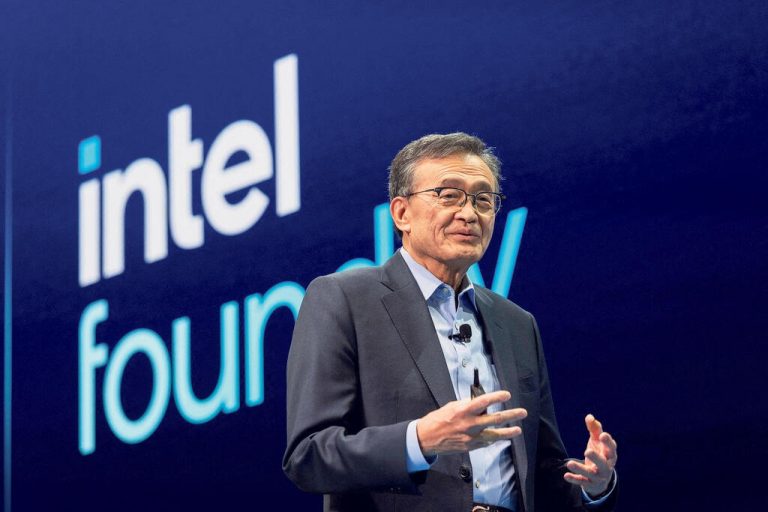
Intel is making the deepest cuts in its history, shedding nearly a quarter of its workforce, retreating from multi-billion-dollar projects in Europe and Latin America, and warning it may abandon its foundry ambitions altogether if it cannot secure anchor clients — all part of an aggressive strategy under new CEO Lip-Bu Tan to reverse the company’s prolonged decline.
The chipmaker on Thursday revealed in its Q2 2025 earnings that it would end the year with approximately 75,000 core employees, down from 99,500 at the end of 2024. That’s a cut of roughly 24,000 workers, or about 15% of the company’s total workforce, when factoring in other organizational trimming. The layoffs are not just numbers on a spreadsheet — they reflect Intel’s decision to shut down or scale back major operations in Costa Rica, Poland, Germany, and even Ohio.
This massive restructuring underscores just how far Intel has fallen from its former glory. Earlier this month, Tan delivered a sobering admission that stunned the tech world: “We are not in the top 10 semiconductor companies anymore.”
Register for Tekedia Mini-MBA edition 20 (June 8 – Sept 5, 2026).
Register for Tekedia AI in Business Masterclass.
Join Tekedia Capital Syndicate and co-invest in great global startups.
Register for Tekedia AI Lab.
Abandoning Global Projects, Consolidating Plants
Intel is abandoning its much-publicized plans to build chip “mega-fabs” in Germany and an assembly and test facility in Poland. Both projects were once seen as symbols of Intel’s global resurgence — €30 billion was earmarked for the German facility alone — but Tan’s new leadership has opted to axe them entirely, saying they no longer fit the company’s demand-aligned model.
In Costa Rica, where Intel employs over 3,400 people, the company will shutter its assembly and test operations, shifting those functions to Vietnam. A spokesperson told The Verge that around 2,000 employees will remain in engineering and corporate roles.
Even domestic expansion is taking a hit. Intel will slow construction at its Ohio plant, citing the need to match spending with real market demand. It’s a direct rebuke of the old strategy of “build it and they will come” — a model Tan flatly rejects.

“We will build what customers need when they need it, and earn their trust,” he said during the earnings call.
The turnaround plan is not just about layoffs. It’s a reckoning with Intel’s strategic missteps in recent years — overbuilding fabs without firm orders, fragmented operations, and chronic underperformance in the fast-growing AI sector, where Nvidia has raced far ahead.
Intel’s problems have lingered for a long time. The company’s stock lost 60% of its value in 2024, its worst year ever. It has hemorrhaged market share in CPUs, fallen behind in AI chip development, and seen key business units underperform. Even as competitors like AMD and Nvidia surged, Intel’s attempt to regain momentum with its foundry business stalled.

This quarter, Intel posted a $2.9 billion net loss on $12.9 billion in revenue, flat from a year earlier. The loss widened from $1.6 billion in the same period last year. The hit included an $800 million impairment charge tied to “excess tools with no identified re-use.”
Despite the loss, Intel slightly beat analyst expectations, delivering adjusted earnings of 10 cents per share, compared to estimates of just a penny. Revenue guidance for Q3 also topped Wall Street estimates.
Still, the small upside was overshadowed by Intel’s warning that it may pause or discontinue its foundry business if it cannot land a major external customer for its next-gen 14A process node. The company disclosed in an SEC filing that it has yet to secure significant external customers for any of its advanced nodes — a devastating blow for its foundry ambitions.
The AI Boom Left Intel Behind
While the broader semiconductor industry is booming, driven by artificial intelligence workloads and hyperscaler demand, Intel’s slice of that pie remains small. In Q2:
- Data center business rose just 4% to $3.9 billion
- PC chip sales declined 3% to $7.9 billion.
- Foundry revenue increased only 3% to $4.4 billion.
Tan acknowledged Intel had missed the AI wave but insisted that course correction is underway. He’s promised to personally oversee every major chip design — a rare move at his level — saying that “every major chip design needs to be personally reviewed and approved by me before tape out.”
Reshaping Intel’s Future
Tan has already taken bold action in his first few months. In addition to the layoffs and project cancellations, Intel:
- Shut down its automotive chip unit in June
- Spun off the RealSense computer vision division in July
- Plans to cut $17 billion in expenses this year alone
- Will launch the Panther Lake laptop chips later in 2025, with Nova Lake to follow by the end of 2026
- Is ramping up production of Lunar Lake chips in the next quarter
He also plans to name new leadership for the data center business next quarter and will unveil a “full-stack AI strategy” in the coming months.
“No More Blank Checks”
Tan’s internal memo to employees revealed a tough-love assessment of Intel’s past mistakes. “Over the past several years, the company invested too much, too soon – without adequate demand,” he wrote. “Our factory footprint became needlessly fragmented and underutilized.”
Intel will no longer approve projects without customer demand in hand. The upcoming 14A node — a critical part of Intel’s foundry roadmap — will be developed only if customer commitments are secured. “There will be no more blank checks,” Tan said.
Intel’s stock dropped 9% following the earnings release, erasing much of the modest gains it had posted earlier in the year. Analysts at Barclays warned that the company’s warning about its foundry future creates “more uncertainty to product roadmaps”, which in turn “makes customer adoption more unlikely.”
Still, JPMorgan analysts said the foundry pullback was a “positive step”, acknowledging that Intel’s recent spending spree was unsustainable.
A Path to Recovery?
The transformation underway at Intel may offer the most credible shot at recovery in years. While painful, the layoffs and strategic retreats are designed to stem the bleeding, consolidate the company’s core competencies, and focus on real market demand, not hopes or hype.
There’s no guarantee it will work. But Tan’s leadership marks a sharp break from Intel’s recent past — and for the first time in years, investors and employees alike have a clear, although difficult, roadmap for what comes next.