

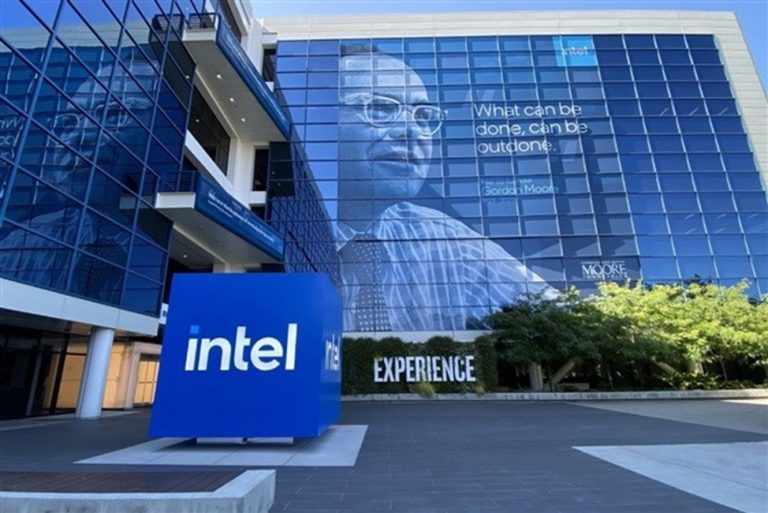
Intel Corporation has announced an agreement with the Trump Administration to support the continued expansion of American technology and manufacturing leadership with 10% stake in the company.
Under the terms of the deal, the United States government will invest $8.9 billion in Intel common stock, underscoring Washington’s confidence in Intel to advance national priorities and bolster the domestic semiconductor supply chain at a time when the industry is seen as critical to both economic and national security.
The government’s equity stake will be funded by the remaining $5.7 billion in grants previously awarded, but not yet disbursed, to Intel under the U.S. CHIPS and Science Act, along with $3.2 billion awarded under the Pentagon’s Secure Enclave program. Intel reaffirmed its commitment to delivering trusted and secure semiconductors to the Department of Defense as part of that program.
Register for Tekedia Mini-MBA edition 20 (June 8 – Sept 5, 2026).
Register for Tekedia AI in Business Masterclass.
Join Tekedia Capital Syndicate and co-invest in great global startups.
Register for Tekedia AI Lab.
The $8.9 billion investment builds on the $2.2 billion in CHIPS Act grants Intel has already received, bringing the government’s total support for the company to $11.1 billion.
“As the only semiconductor company that does leading-edge logic R&D and manufacturing in the U.S., Intel is deeply committed to ensuring the world’s most advanced technologies are American made,” said Lip-Bu Tan, CEO of Intel. “President Trump’s focus on U.S. chip manufacturing is driving historic investments in a vital industry that is integral to the country’s economic and national security. We are grateful for the confidence the President and the Administration have placed in Intel, and we look forward to working to advance U.S. technology and manufacturing leadership.”
Howard Lutnick, U.S. Secretary of Commerce, echoed the sentiment: “Intel is excited to welcome the United States of America as a shareholder, helping to create the most advanced chips in the world. As more companies look to invest in America, this administration remains committed to reinforcing our country’s dominance in artificial intelligence while strengthening our national security.”

Structure of the Deal
Under the agreement, the government will purchase 433.3 million primary shares of Intel common stock at $20.47 per share, equal to a 9.9 percent stake in the company. The purchase price represents a discount to Intel’s current market price, effectively giving U.S. taxpayers a value-based entry into Intel’s long-term success.
The government’s stake will be passive, with no board representation, governance, or information rights. Washington also agreed to align with Intel’s board of directors on shareholder votes, with limited exceptions.
In addition, the deal gives the government a five-year warrant to purchase up to an additional 5 percent of Intel shares at $20 apiece, though this warrant can only be exercised if Intel ever ceases to own at least 51 percent of its foundry business.

To support Intel’s investment stability, the existing claw-back and profit-sharing provisions tied to the earlier $2.2 billion CHIPS Act grant will be eliminated, ensuring permanency of capital as Intel pursues its U.S. expansion.
Historic U.S. Expansion
Intel has been aggressively investing in U.S.-based chipmaking. Over the past five years alone, it has poured $108 billion into capital investments and $79 billion into research and development, the majority of which were aimed at strengthening domestic manufacturing and process technology.
Currently, Intel is building out what it describes as its most ambitious U.S. expansion in decades — a more than $100 billion investment to expand fabrication facilities across the country. The centerpiece of this effort is its newest mega-fab in Arizona, which is expected to begin high-volume production later this year using the most advanced process technology available on U.S. soil.
Since taking over as CEO in March, Lip-Bu Tan has sought to reposition Intel as the standard-bearer of American chipmaking, moving quickly to strengthen finances, enforce disciplined execution, and restore a culture of engineering excellence. Today’s agreement with Washington is viewed as a key step in reinforcing Intel’s strategy.
The government’s decision to become Intel’s second-largest shareholder represents an unprecedented level of public-private partnership in the semiconductor industry. It reflects the administration’s broader effort to reduce reliance on Asian chipmakers like Taiwan Semiconductor Manufacturing Company (TSMC) and South Korea’s Samsung, which currently dominate global production of cutting-edge logic chips.
President Trump has made semiconductor manufacturing a centerpiece of his industrial strategy, pressing for “Made in America” leadership in advanced technologies like artificial intelligence, 5G, and defense systems. The Intel deal marks the most direct equity stake the U.S. government has taken in a major private tech company in decades, drawing comparisons to past interventions during critical national industries’ development, such as aerospace.
Intel, for its part, is signaling that it intends to be the cornerstone of this policy. “Strengthening the U.S. technology ecosystem is not just about Intel, it’s about securing the entire supply chain,” the company said, highlighting its partnerships with customers and technology firms aligned with the administration’s push for a resilient and secure semiconductor base.
Legality Questions and Backdrop
However, the acquisition of nearly 10 percent of Intel has already sparked questions about its legality. While the CHIPS and Science Act authorized grants, loans, and incentives for domestic semiconductor manufacturing, it did not explicitly authorize the federal government to acquire stock in private corporations.
“The CHIPS Act did not authorize the U.S. government to acquire stock in private corporations,” Rep. Thomas Massie said, adding to other warnings that the deal could set a precedent for federal overreach into private industry.
Some analysts have noted that this equity structure blurs the line between industrial policy and corporate ownership, raising constitutional questions about the separation of legislative authority and executive action.
Administration officials argue that the transaction is consistent with the intent of the CHIPS Act — to secure America’s semiconductor future — and say the equity purchase is simply a restructuring of previously allocated funds.