

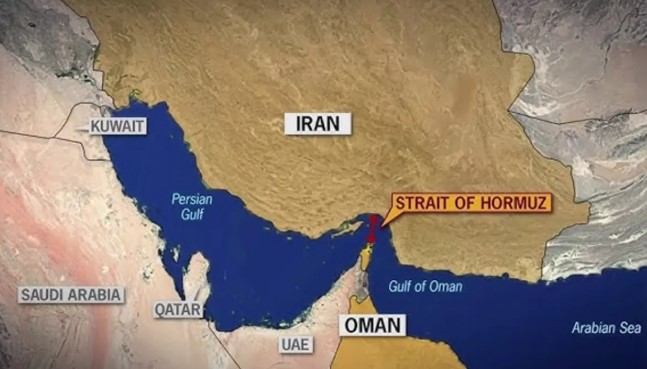
The US is not jointly charging a toll on oil traffic through the Strait of Hormuz with Iran, nor has the US agreed to or endorsed any such fee—especially not one paid in Bitcoin. This appears to be a misrepresentation or sensationalized take on recent reports about Iran’s unilateral plans during a fragile two-week ceasefire.
Iran is planning to impose a toll of roughly $1 per barrel of oil on tankers passing through the Strait of Hormuz. This is during the short US-Iran ceasefire announced by President Trump, which requires the strait to be “COMPLETELY, IMMEDIATELY, and SAFELY” reopened. Payments would be demanded in cryptocurrency explicitly including Bitcoin, stablecoins like USDT, or others or sometimes Chinese yuan.
Ships are reportedly told to email Iranian authorities with cargo details, receive a quote, and then have a very short window to pay in BTC or similar—framed as a way to evade tracing, seizure, or sanctions issues. Some reports mention figures like ~$2 million per ship depending on size/cargo or variations in the $0.50–$1.50/barrel range.
Register for Tekedia Mini-MBA edition 20 (June 8 – Sept 5, 2026).
Register for Tekedia AI in Business Masterclass.
Join Tekedia Capital Syndicate and co-invest in great global startups.
Register for Tekedia AI Lab.
Iran’s Islamic Revolutionary Guard Corps (IRGC) has been exerting control, escorting approved ships and threatening others. This is Iran’s move, not a joint US-Iran policy. The US position, per Trump and the White House, emphasizes unrestricted, safe, toll-free opening of the strait. Oil industry groups are pushing back hard, warning of higher costs passed to consumers, legal risks under sanctions, and dangerous precedents for other waterways.
The UK has also called for toll-free passage. The strait was effectively disrupted/blocked during recent US-Iran/Israel tensions. Reopening it was a key US demand. Iran has long claimed influence over the waterway and sees tolls as a way to generate revenue for rebuilding after conflict, while bypassing dollar-based systems and sanctions.
Crypto, Bitcoin in particular is attractive to Iran here because it’s hard for the US to freeze or trace in the same way as traditional banking—though on-chain analysis can still reveal a lot, and wallets can face sanctions. Reports triggered a short-term surge in Bitcoin and some other cryptos, as the story highlights real-world nation-state adoption of crypto for sanctions evasion and payments. Oil prices have also been volatile.

This is not a US and Iran toll agreement. It’s Iran testing leverage during a temporary truce, using crypto as a workaround. The US and allies are unlikely to accept it long-term without pushback—potentially through diplomacy, naval presence, or other pressure. Whether it sticks, escalates, or gets walked back will depend on how the ceasefire holds and negotiations proceed.
The idea of Bitcoin as a neutral, seizure-resistant payment rail in geopolitics is interesting and bullish for adoption arguments, but the underlying situation remains tense and fluid. If you’re trading or following this, watch official US statements and shipping insurance updates closely—rumors and toll booth practices have been circulating for weeks.
Germany States that Transit through the Strait of Hormuz Must Remain Toll-Free
Germany has publicly stated that transit through the Strait of Hormuz must remain toll-free, emphasizing this as a requirement under international maritime law, particularly UN maritime treaties like the UN Convention on the Law of the Sea (UNCLOS).

This position came from a German Foreign Office spokesman reported via DPA, shortly after Iran agreed to temporarily reopen the strait as part of a two-week ceasefire with the United States. The spokesman stressed that the strait is subject to international rules—not solely Iranian waters—and that safe, free, and toll-free maritime traffic must be guaranteed when operations resume.
The Strait of Hormuz is a critical chokepoint: roughly 20% of the world’s oil and significant liquefied natural gas pass through it daily. Disruptions during the 2026 Iran-related conflict involving the US and Israel sharply reduced traffic, spiking global energy and fertilizer prices.
Iran had reportedly begun charging vessels for safe passage, sometimes described as a toll booth operated by the IRGC, with fees up to ~$2 million per ship or per-barrel rates, often in yuan or crypto, and preferential treatment for friendly nations. As part of Iran’s 10-point proposal in ceasefire talks, Tehran and reportedly Oman sought formal rights to impose transit fees to help rebuild infrastructure damaged in the conflict.
Critics argue this would violate long-standing principles of freedom of navigation and innocent and transit passage under UNCLOS, which generally prohibits coastal states from charging fees solely for passage through international straits, except for specific services rendered. Article 26 of UNCLOS, for instance, bars charges on foreign ships for mere passage.
Germany’s stance aligns with broader European and Western concerns. The UK’s Foreign Secretary Yvette Cooper similarly insisted on toll-free, unrestricted reopening, calling freedom of navigation non-negotiable. Reports also mention China echoing support for freedom of navigation without single-state control. Shipping companies have sought clarity, with some risk assessments ongoing amid uncertainty.
Tolls could raise shipping costs significantly potentially adding millions per cargo, further inflating energy prices and affecting global trade. Allowing tolls here could encourage similar claims elsewhere e.g., other straits or canals, undermining the post-WWII international maritime order. Iran views control/fees as leverage for security and reconstruction; opponents see it as an attempt to monetize a global commons.
The US has floated ideas around security arrangements with some reports of Trump discussing toll-related concepts, while Europe has leaned toward diplomacy over direct military involvement in reopening efforts. The ceasefire is described as fragile and temporary, so the situation remains fluid. Germany and other EU partners have supported diplomatic solutions and efforts to restore open shipping, but have ruled out or limited military roles in some contexts.
In short, Berlin is reinforcing a core principle of open seas: the Strait of Hormuz should function as an international waterway for peaceful transit without unilateral fees, consistent with established maritime law. This reflects Germany’s heavy reliance on imported energy and its preference for rules-based navigation amid ongoing Middle East volatility. Developments will likely hinge on ceasefire negotiations and how major powers; US, Iran, Gulf states, Europe balance security, economics, and legal norms.